Licuala, Genus, grandis, Species,
- Genus & species
ruffled fan palm
Vanuatu (South Pacific) — Espiritu Santo and adjacent islands
Overview
Licuala grandis is a ruffled fan palm reaching 36-72 inches (90-180 cm) indoors and up to 180 inches (450 cm) in tropical outdoor cultivation. Bright green fan-shaped (palmate) fronds 12-24 inches (30-60 cm) across remain nearly undivided into a near-complete circular disc with shallow pleating only at the margins, in contrast to most cultivated fan palms whose fronds split deeply into narrow segments. The species epithet 'grandis' translates to 'large' in Latin. Native to lowland rainforest understory on Espiritu Santo and adjacent islands of Vanuatu in the South Pacific. Growth rate is very slow at 1-2 new fronds per year on indoor plants; outdoor specimens in zones 10-11 produce 3-4 fronds per year. Cultural requirements are demanding for indoor culture: relative humidity above 60% prevents brown leaf margins; ambient temperature below 55°F (13°C) causes leaf damage; soil moisture is maintained without waterlogging; bright indirect light (150-300 foot-candles) is required because direct afternoon sun scorches the thin fronds within hours. Frond tissue is thinner than most palms and tears in moving air, so positioning near drafts, fans, and HVAC vents produces accumulated cosmetic damage. Spider mites in dry indoor air are the primary pest. Non-toxic to dogs, cats, and humans. Container culture in 3-5 gallon (12-20 liter) pots with high-quality potting mix; outdoor planting limited to USDA zones 10-11.
Native Range
Licuala grandis is native to lowland rainforest understory on Espiritu Santo and adjacent islands of Vanuatu in the South Pacific, where it grows under closed canopy in consistently warm humid conditions.Suggested Uses
Used as an indoor specimen palm in containers of 3-5 gallons (12-20 liters) in bright indirect light with humidity above 60%. The undivided circular frond shape suits architectural and tropical interior styling. Outdoor culture is limited to USDA zones 10-11 in shaded humid microclimates with shelter from direct sun and wind. Non-toxic.How to Identify
Appearance
Size & Dimensions
Height3' - 6'
Width/Spread3' - 4'
Bloom Information
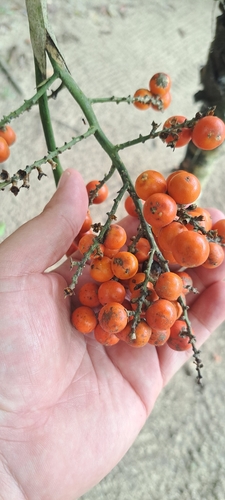
Small yellowish-green flower clusters 6-12 inches (15-30 cm) on branched inflorescences emerge from leaf axils on mature outdoor plants in tropical zones. Indoor plants rarely flower because indoor light levels are below the threshold for reproductive maturity. Small red-orange spherical fruits follow flowering on outdoor plants.
Detailed Descriptions
Flower Description
Yellowish-green, small, in branched clusters (rare indoors)Foliage Description
Bright green, large, nearly undivided circular fan-shaped frondsGrowing Conditions
Sun Requirements
Requires 1-4 hours of direct sunlight daily
• Full Sun: 6+ hours of direct sunlight
• Partial Shade: 3-6 hours of direct sunlight
• Full Shade: Less than 3 hours of direct sunlight
Care & Maintenance
Care Guide
Bright indirect light (150-300 foot-candles) supports steady growth; direct afternoon sun scorches the thin fronds within hours. Relative humidity above 60% is required to prevent brown leaf margins; dry winter indoor air below 30% causes rapid edge necrosis. Ambient temperature below 55°F (13°C) damages tissue and stalls growth; consistent warmth above 65°F (18°C) supports steady frond production. Soil moisture is maintained at evenly moist (not waterlogged); root rot develops within weeks of standing water. Spider mites colonize the underside of fronds in dry indoor conditions and produce thin webbing. Air movement from fans and HVAC vents tears the thin frond tissue.Pruning
Browned or damaged fronds are removed at the petiole base with clean shears. No structural pruning is required. Each frond represents 6-12 months of growth, so cosmetic frond loss is significant for this slow-growing species.Container Growing
Suitable for container growing
Minimum container size: 3 gallons