Lewisiopsis, Genus, tweedyi, Species,
- Genus & species
large flowered lewisia
Restricted range in the Wenatchee Mountains of central Washington State (Chelan County) and adjacent British Columbia; rocky cliff faces, talus slopes, and granitic outcrops at 3,000-7,500 feet (900-2,300 m) elevation
Overview
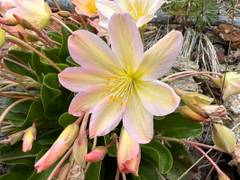
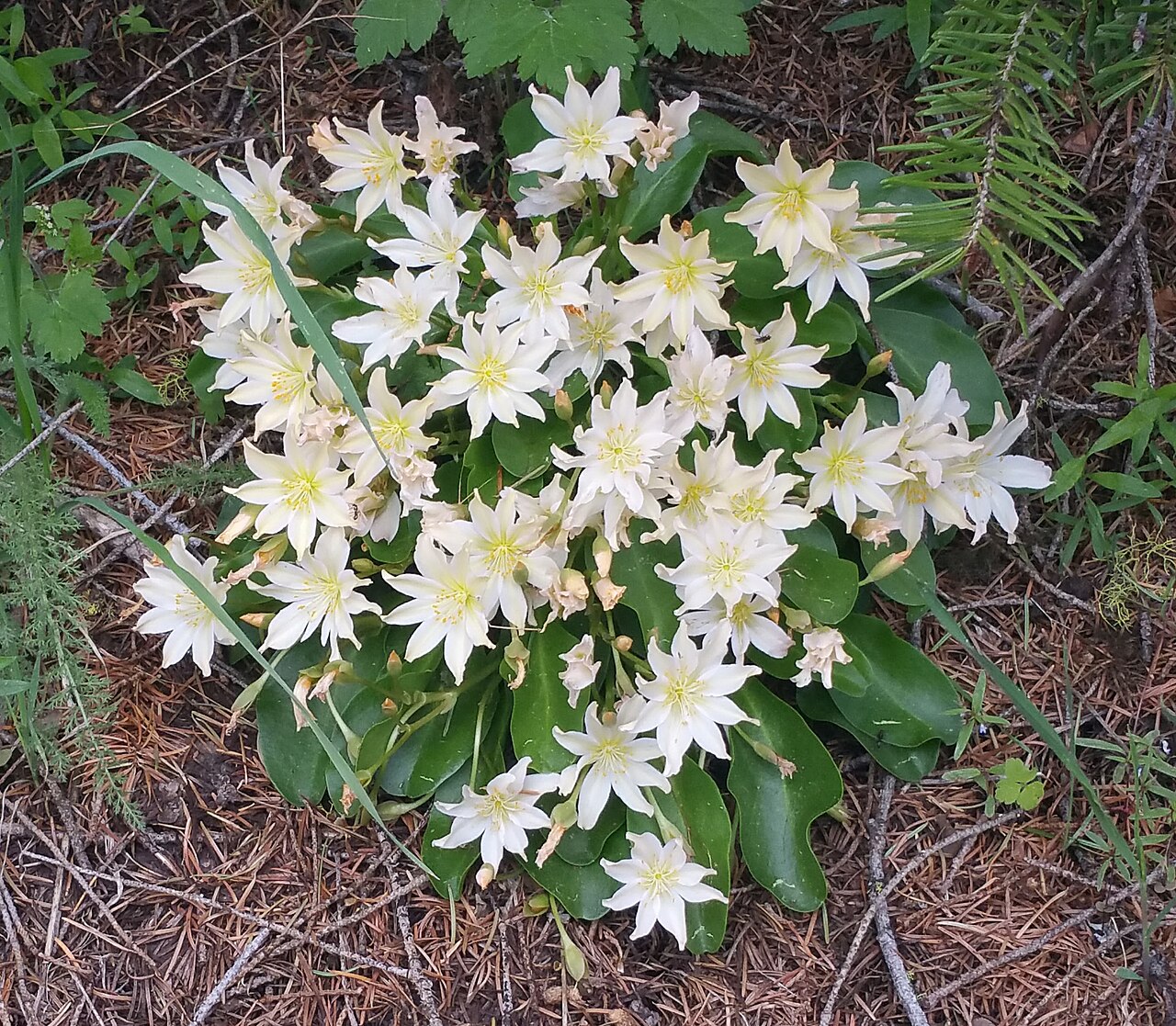
Lewisiopsis tweedyi is a small clumping evergreen perennial in the family Montiaceae growing 6–12 inches (15–30 cm) tall in bloom and 6–10 inches (15–25 cm) wide from a thick taproot topped by a fleshy basal rosette of blue-green spatulate leaves. The species was classified under Lewisia as Lewisia tweedyi for most of the 20th century, and molecular phylogenetic work in the early 2000s transferred it to the newly created monotypic genus Lewisiopsis because the species differs from the true Lewisia species in seed and root anatomy; most older garden references and many current specialist nurseries still carry the plant under the older Lewisia tweedyi name. The rosette carries 10–20 thick fleshy blue-green spatulate (spoon-shaped) leaves 2–4 inches (5–10 cm) long with a waxy glaucous surface that stores water through the summer dry period on the exposed rocky cliff faces of the native range. Open bowl-shaped flowers 2–3 inches (5–7 cm) across open on short stems above the rosette in April and May across a 2–3 week bloom period, and the flowers are peach, apricot, pale salmon, or soft yellow in the species type — these are the largest flowers of any species formerly classified in Lewisia, and the flower size combined with the soft-toned peach-apricot coloration is the main reason the species is grown by alpine specialists. The species is named in honor of Frank Tweedy (1854–1937), a topographer with the United States Geological Survey and a plant collector active in the Pacific Northwest during the late 19th century. Limitation: crown rot from winter moisture on the rosette is the main cause of failure in cultivation, and the species is regarded as the most challenging of the former Lewisia group to grow in temperate gardens because the rosette cannot tolerate standing water at any time of year — planting at a 30–45 degree angle in a vertical rock crevice, a tufa block, or a specifically tilted alpine trough allows water to drain away from the crown through the cool wet winter months that are fatal to level-planted specimens. Sharp mineral drainage in grit, pumice, coarse sand, or crevice substrate is required and organic-rich moisture-retentive soil is unsuitable because the fleshy roots rot under wet conditions. The species calls for 3–5 years from seed to first bloom and seedlings are slow to establish. Non-toxic and deer-resistant.
Native Range
Native to a restricted range in the Wenatchee Mountains of central Washington State (Chelan County) and adjacent British Columbia, growing on rocky cliff faces, talus slopes, and granitic outcrops at 3,000–7,500 feet (900–2,300 m) elevation on well-drained mineral substrates. The species is endemic to this narrow range and is listed as a species of conservation concern because of the limited geographic distribution and the pressure from rock-garden collectors who historically removed wild plants before cultivated seed became available through specialist nurseries.Suggested Uses
Used in crevice gardens, alpine troughs, tufa block plantings, and containers of at least 2 gallons (7.5 L) tilted at 30–45 degrees for drainage, at 6–10 inch (15–25 cm) spacing between plants. The crown-drainage requirement points the species toward vertical rock crevice positions rather than flat garden beds, and the species is considered a specialty alpine plant suited to collectors who can provide the sharp drainage and dry winter crown conditions that the species needs. Flat irrigated garden beds, organic-rich moisture-retentive soils, and wet winter climates without an alpine house or glass cover are unsuitable because of the absolute intolerance of standing moisture on the rosette at any time of year.How to Identify
Appearance
Size & Dimensions
Height6" - 1'
Width/Spread6" - 10"
Bloom Information
Peach, apricot, pale salmon, or soft yellow open bowl-shaped flowers 2–3 inches (5–7 cm) across open on short stems 6–10 inches (15–25 cm) above the rosette in April and May across a 2–3 week bloom period. Each plant carries 3–8 flowers during the bloom window, and the flowers open sequentially over several days rather than all at once. Native solitary bees and honeybees work the flowers for nectar and pollen during the spring bloom window in the Wenatchee Mountains native range and in cultivated alpine garden settings.
Detailed Descriptions
Flower Description
peach, apricot, pale salmon, or soft yellow open bowl-shaped flowers 2-3 inches (5-7 cm) across — the largest flowers of any species formerly classified in LewisiaFoliage Description
fleshy blue-green spatulate (spoon-shaped) evergreen leaves 2-4 inches (5-10 cm) long, carried in a basal rosette that stores water in the fleshy leaf tissue through the summer dry periodGrowing Conditions
Sun Requirements
Requires 3-5 hours of direct sunlight daily
• Full Sun: 6+ hours of direct sunlight
• Partial Shade: 3-6 hours of direct sunlight
• Full Shade: Less than 3 hours of direct sunlight
Care & Maintenance
Care Guide
Site in partial shade with 3–5 hours of direct sun per day (morning sun with afternoon shade is the suited exposure) in sharp-drained gritty mineral soil (grit, pumice, coarse sand, or crevice substrate) with a pH of 5.5–7.0. Organic-rich moisture-retentive soil is unsuitable because the fleshy roots rot under wet conditions, so garden loam is replaced with pure mineral substrate for this species. Crown rot from winter moisture on the rosette is the main cause of failure — planting at a 30–45 degree angle in a vertical rock crevice, a tufa block, or a specifically tilted alpine trough allows water to drain away from the crown through the cool wet winter months. Dry winter conditions are essential, and plants in wet winter climates are often grown under an alpine house or a glass cloche during the winter rest period to keep the rosette dry. Propagation from seed calls for 3–5 years to first bloom and seedlings are slow to establish. Non-toxic and deer-resistant. Hardy in USDA zones 4–8.Pruning
Spent flowering stems are cut at the base after the individual flowers drop to stop seed production and redirect the plant's energy back into the rosette and the taproot. Dead or damaged leaves are removed by a gentle twisting motion at the leaf base during the growing season to keep the rosette clean and to reduce rot sites where dead tissue can hold moisture against the living crown. No other pruning is needed because the evergreen rosette is self-maintaining and the plant does not require shearing or cutting back at any point in the year.Pruning Schedule
Prune: June–July
summer
Container Growing
Suitable for container growing
Minimum container size: 2 gallons