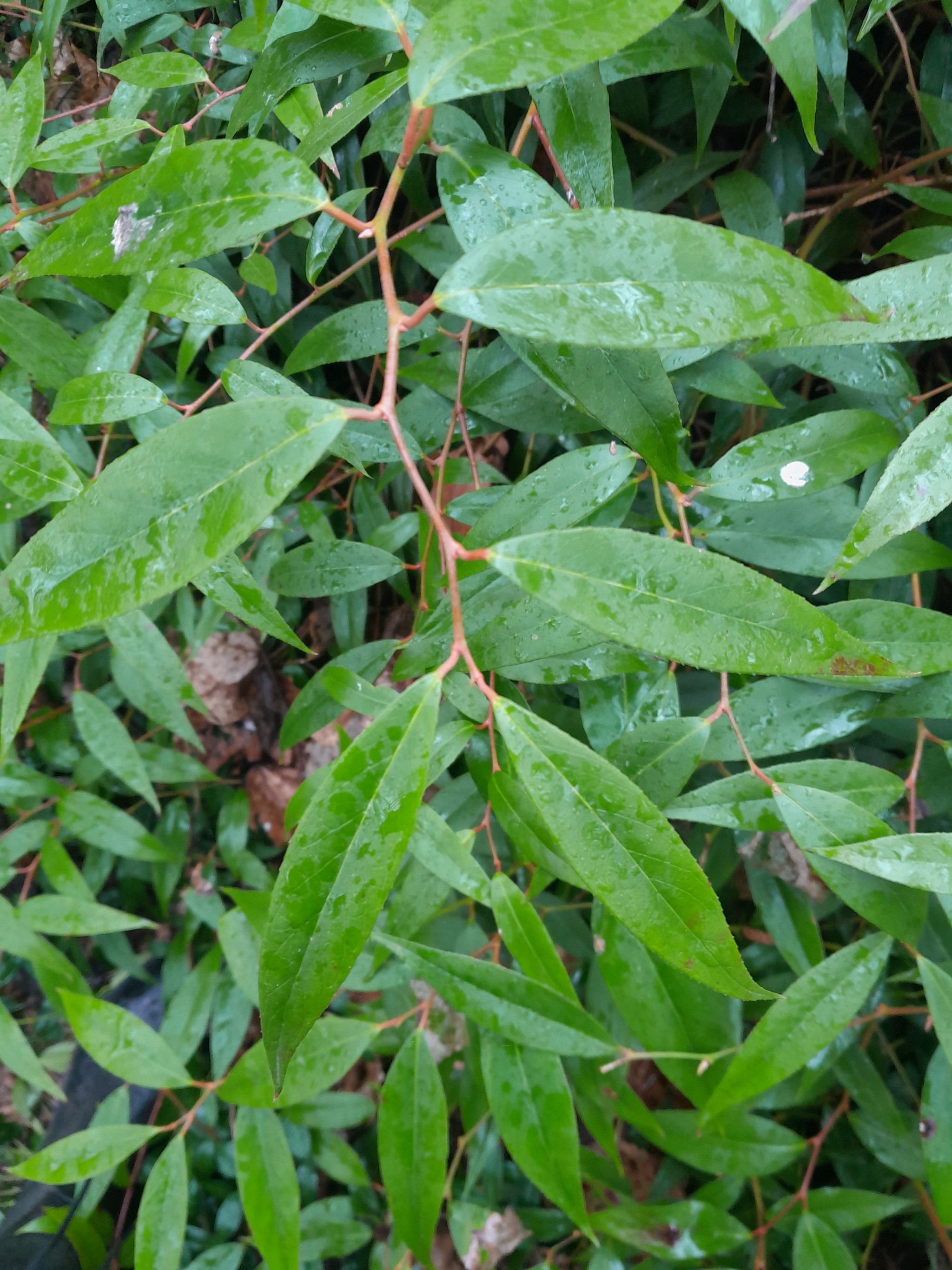
© Morten Kofoed-Hansen, some rights reserved (CC-BY) · GBIF
Leucothoë spp.
Doghobble
Eastern North America, East Asia, and South America
Overview
Leucothoë spp. is a genus of about 40 evergreen and deciduous shrubs in the heath family, Ericaceae, distributed across eastern North America, eastern Asia, and parts of South America. Plants form arching, spreading stems 2-6 feet (60-180 cm) tall and 3-6 feet (90-180 cm) wide, carrying leathery, lance-shaped leaves 2-6 inches (5-15 cm) long arranged in two ranks along the stems. In spring, small urn-shaped white flowers hang in axillary racemes 2-4 inches (5-10 cm) long. Evergreen species such as L. fontanesiana and L. axillaris hold glossy foliage that turns bronze to purple in winter, while deciduous species such as L. racemosa drop their leaves after fall color. Most species occupy moist, acidic woodland soils in partial to full shade and decline in dry or alkaline conditions. All parts contain grayanotoxins, which are poisonous to humans and animals if eaten. The genus spreads slowly by suckering at the stem base, forming colonies over time. Foliage scorches in full sun and exposed, windy positions, and leaf spot is common where air circulation is poor.
Native Range
Species of Leucothoë spp. are native to moist woodlands, streambanks, and mountain slopes of eastern North America, from Virginia to the Gulf states, with additional species in the temperate forests of Japan and China and in the Andes of South America.Suggested Uses
Used in shaded borders, woodland gardens, and foundation plantings on the north or east side of buildings. Evergreen species serve as groundcover massing on shaded banks and as underplanting beneath rhododendrons and other acid-loving shrubs. Container culture is possible in acidic potting mix kept consistently moist.How to Identify
Appearance
Size & Dimensions
Height2' - 6'
Width/Spread3' - 6'
Bloom Information
Flowering occurs in spring, generally April to May depending on species and climate. Urn-shaped white flowers open in pendent racemes along the previous season growth. The display lasts about 2-3 weeks, followed by small dry seed capsules.
Detailed Descriptions
Foliage Description
Glossy dark green, bronze to purple in winterGrowing Conditions
Sun Requirements
Requires 2-6 hours of direct sunlight daily
• Full Sun: 6+ hours of direct sunlight
• Partial Shade: 3-6 hours of direct sunlight
• Full Shade: Less than 3 hours of direct sunlight
Care & Maintenance
Care Guide
Most Leucothoë spp. species grow in partial to full shade in consistently moist, acidic soil rich in organic matter. They perform where soil pH stays between 4.5 and 6.0 and where roots remain cool and damp. Mulch helps retain moisture and moderates soil temperature. Foliage scorches in direct afternoon sun and in cold, drying winter wind. Leaf spot diseases appear where plants are crowded or air movement is limited. Species vary in cold tolerance, with evergreen types hardy to USDA zone 5 and others to zone 6.Pruning
Pruning is done after flowering, taking the oldest stems out at the base to renew arching growth. Thinning crowded stems improves air circulation and reduces leaf spot. Winter-damaged or scorched shoots are cut back to healthy wood in spring.Pruning Schedule
late spring
Container Growing
✓ Suitable for container growing
Minimum container size: 3 gallons