Leptosiphon, Genus, spp., Multiple species,
- Genus
- Multiple species
leptosiphon
Western North America and temperate South America
SunFull Sun
Overview
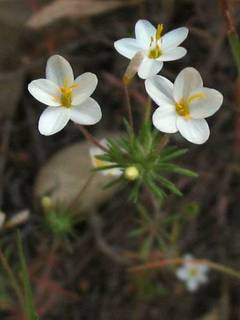
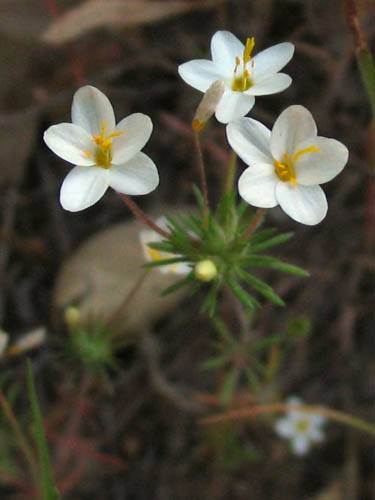
Leptosiphon is a genus of roughly 30-40 species of annual and perennial herbs in the phlox family (Polemoniaceae), most of them slender spring annuals of open grassland and chaparral. Plants are small, typically 2-16 inches (5-40 cm) tall, with wiry, often branching stems. The opposite leaves are palmately divided into 3-11 thread-like lobes 0.2-1 inch (5-25 mm) long, giving each node a whorl-like, needle-leaved look. Flowers are salverform, with a narrow tube 0.2-1.2 inches (5-30 mm) long opening to five spreading lobes 0.1-0.6 inch (3-15 mm) across; color ranges across white, cream, yellow, pink, rose, and lavender, often with a contrasting throat. Blooms are carried in dense, headlike terminal clusters above leafy bracts. The genus is centered in western North America, with most species occurring in California, and a smaller group in temperate South America. Most species germinate with autumn or winter rains and flower in spring before summer drought, completing their cycle in one season. Because the annual species are short-lived and weather-dependent, flowering is reliable only where winter moisture is adequate, and plants disappear by midsummer. Several species formerly placed in Linanthus are now treated within Leptosiphon.
Native Range
Native to western North America, with the center of diversity in California and adjacent Oregon, and a secondary group of species in temperate South America, chiefly Chile. Species occupy grassland, chaparral, oak woodland, and open coniferous forest from coastal bluffs to montane slopes.Suggested Uses
Used in wildflower meadows, rock gardens, and the front of seasonal borders, where plants are spaced 4-8 inches (10-20 cm) apart. The small scale and thread-like foliage also suit shallow containers and gravel plantings. Self-sowing colonies naturalize in dry, sunny sites.How to Identify
Appearance
Size & Dimensions
Height2" - 1'4"
Width/Spread2" - 8"
Bloom Information
Flowering occurs mainly in spring, from March to June across most of the range, shifting later at higher elevations. In the South American species bloom falls in the austral spring, roughly September to December. Each annual plant flowers for only a few weeks, and a population display depends on the amount and timing of winter rainfall.
Detailed Descriptions
Flower Description
white, cream, yellow, pink, rose, or lavenderFoliage Description
greenGrowing Conditions
Sun Requirements
Requires 6-10 hours of direct sunlight daily
• Full Sun: 6+ hours of direct sunlight
• Partial Shade: 3-6 hours of direct sunlight
• Full Shade: Less than 3 hours of direct sunlight
Water & Climate
Water Needs
Drought Tolerance
Drought tolerant when established
Care & Maintenance
Care Guide
Most Leptosiphon species are grown from seed sown in autumn or early spring where winters are mild. They grow in full sun in light, fast-draining sandy or gravelly soils with a near-neutral to slightly acidic pH of about 6.0-7.5. Growth follows the natural cycle of winter and spring moisture and summer drought, and the annual species die back as soils dry in early summer. Plants tolerate low-nutrient soils and need no supplemental feeding. Seedlings and crowns rot in soils that stay wet, which is the main limitation in cultivation. Self-sown seed often returns the following season where conditions suit.Pruning
No pruning is required. Spent annual plants can be pulled or left to scatter seed once flowering ends. Where self-seeding is not wanted, plants are removed before the seed capsules mature.Container Growing
Suitable for container growing