Image 1 of 8
1 / 8
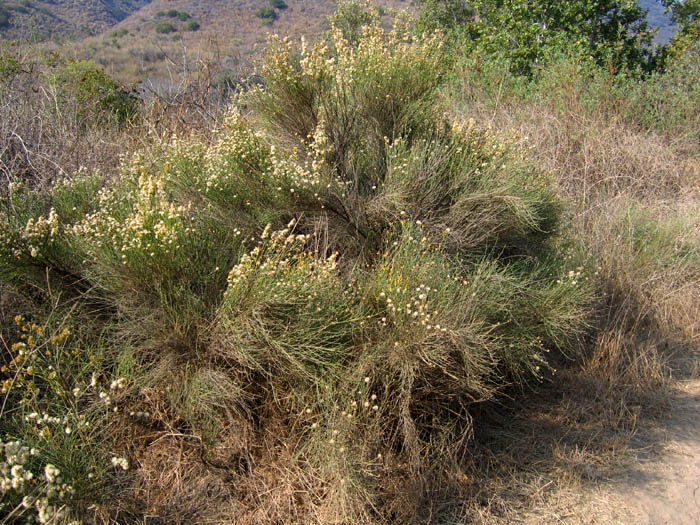
Anthony Valois and the National Park Service, no rights reserved (CC0) · Wikimedia Commons
Lepidospartum, Genus, squamatum, Species,
- Genus & species
California Broomsage
Overview
Lepidospartum squamatum is a densely branched shrub reaching 3-7 feet (0.9-2.1 m) tall and as wide, with stiff, broom-like, green to grey-green twigs covered in small scale-like leaves. Mature leaves are reduced to scales under 0.25 inch (6 mm) long, leaving the green stems to carry out most photosynthesis, while a few thread-like lower leaves up to 1 inch (2.5 cm) appear on young growth. Small yellow flower heads, 0.25-0.4 inch (6-10 mm) wide and composed only of disc florets, cluster at the branch tips from late summer into autumn. The heads give way to tufts of pappus-bearing seed carried on the wind. The overall form is upright and rounded, with a woody base and many slender erect branches. New stems are covered in a thin woolly coating that wears away with age. It grows on coarse, fast-draining alluvial soils and has low tolerance for heavy clay or standing moisture. Plants drop much of their foliage in drought and releaf after rain.
Native Range
Native to southern California, Arizona, and northern Baja California. Grows on sandy and gravelly washes, alluvial fans, and dry streambeds below about 4,500 feet (1,400 m).Suggested Uses
Planted in dry native and habitat gardens, wash and slope restoration, and erosion control on coarse soils. Spaced 4-6 feet (1.2-1.8 m) apart for screening or massing. Suited to unirrigated sites with sharp drainage.How to Identify
Appearance
Size & Dimensions
Height3' - 7'
Width/Spread3' - 7'
Colors
Bloom Information
Yellow flower heads open from August through October, with timing shifting earlier in hotter low-desert sites. Bloom lasts about four to six weeks, followed by wind-borne seed. Flowering is heavier in years with above-average late-summer moisture.
Detailed Descriptions
Foliage Description
Grey-greenGrowing Conditions
Sun Requirements
Requires 6-10 hours of direct sunlight daily
• Full Sun: 6+ hours of direct sunlight
• Partial Shade: 3-6 hours of direct sunlight
• Full Shade: Less than 3 hours of direct sunlight
Care & Maintenance
Care Guide
Grown in full sun on coarse, fast-draining sandy or gravelly soil; established plants tolerate prolonged drought. Heavy clay and standing water cause root rot. Watering is limited to the establishment period, after which rainfall is sufficient in its native range. Plants shed foliage during severe drought and releaf after rain. Pruning in late winter keeps the broom-like form dense. Few pests or diseases affect it in well-drained sites.Pruning
Cut back stem tips in late winter before new growth to maintain a dense, rounded form. Older plants can be cut harder to renew leggy growth. Removal of spent flower heads is not required.Pruning Schedule
Prune: February
winter