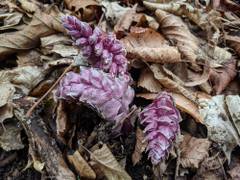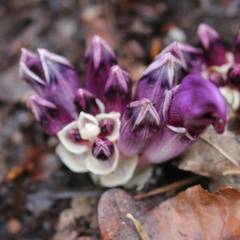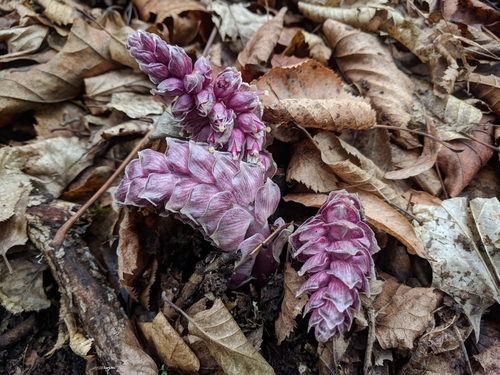
Lathraea, Genus, spp., Multiple species,
- Genus
- Multiple species
toothwort
Overview
Lathraea is a small genus of about five to seven perennial root parasites in the broomrape family (Orobanchaceae), found across Europe and temperate Asia. The plants contain no chlorophyll and draw all their water and nutrients from the roots of host trees and shrubs, so they are never free-living. Most of each plant is a branched underground rhizome clothed in fleshy white scale leaves; only the flowering shoots emerge above ground. L. squamaria, the common toothwort, sends up spikes 8-30 cm (3-12 in) tall in pale pink to ivory, attaching to the roots of hazel, elm, alder, and other woody plants. L. clandestina, the purple toothwort, produces clusters of violet flowers almost at soil level and parasitizes willow and poplar. Flowering occurs in early spring, often before the host trees leaf out, and the seed capsules can eject seed explosively. Because they depend entirely on a living host, these plants cannot be cultivated in ordinary soil and appear only in damp woodland, riverbanks, and hedgerows where suitable hosts grow. They cause little visible harm to established host trees.
Native Range
Lathraea is native to Europe and temperate Asia, growing in moist deciduous woodland, along streams and rivers, and in hedgerows wherever suitable host trees and shrubs are present. L. clandestina has become naturalized in parts of western Europe outside its original range.Suggested Uses
Grown only as a curiosity in woodland gardens and naturalistic plantings beneath established host trees such as willow, poplar, or hazel. It cannot be used in borders, containers, or any setting lacking a living host.How to Identify
Appearance
Size & Dimensions
Height3" - 1'
Width/Spread6" - 2'
Bloom Information
Flowering is brief and early, from March to May depending on region, frequently appearing before the host trees come into leaf. The two-lipped flowers are followed by capsules that split to release seed. Above-ground growth withers soon after seed set.
Detailed Descriptions
Flower Description
pale pink, ivory, or violetFoliage Description
white (chlorophyll-free scale leaves)Growing Conditions
Sun Requirements
Tolerates up to 4 hours of direct sunlight daily
• Full Sun: 6+ hours of direct sunlight
• Partial Shade: 3-6 hours of direct sunlight
• Full Shade: Less than 3 hours of direct sunlight