Lasiopetalum, Genus, spp., Multiple species,
- Genus
- Multiple species
velvet bush
Australia (mainly south-western Western Australia)
Overview
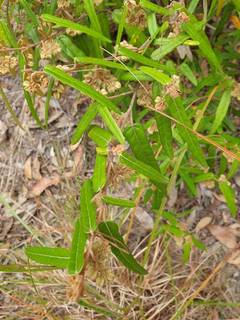
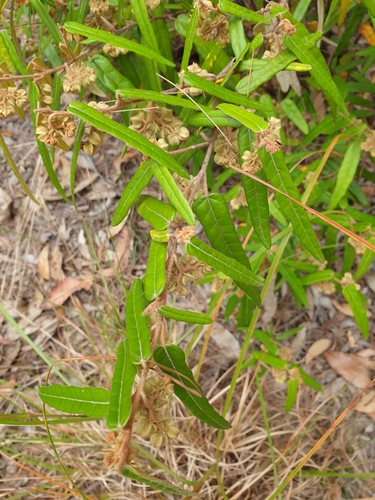
Lasiopetalum is a genus of about 40 evergreen shrubs in the family Malvaceae, all native to Australia and concentrated in the south-west of Western Australia. Most species form low to medium shrubs 0.3-2 m (1-6.5 ft) tall and wide, with branchlets, flower stalks, and leaf undersides densely coated in rusty or grey star-shaped (stellate) hairs that give the foliage a velvety surface. The simple leaves are usually narrow with margins that are recurved or shallowly wavy, dark green above and paler beneath. The visible part of each flower is the five-lobed calyx, which may be white, cream, pink, or greenish and 5-12 mm (0.2-0.5 in) across; the true petals are reduced to small scales. Flowers hang in loose clusters, mainly through winter and spring. The genus grows in heath, open woodland, and rocky scrub on sandy or gravelly, often nutrient-poor soils. Many species are adapted to dry summers and tolerate extended drought once established, though they are sensitive to root disturbance and to soils that hold water. Like other south-western Australian shrubs, several species are susceptible to the soil-borne pathogen Phytophthora cinnamomi.
Native Range
Lasiopetalum is endemic to Australia, with most species occurring in south-western Western Australia and a smaller number extending across southern and eastern states. Plants grow in heathland, mallee, and dry open forest, usually on sandy or gravelly soils.Suggested Uses
Grown in native and water-wise gardens, rockeries, and on embankments in mild climates. The compact habit and velvety foliage suit low borders and container culture, with plants spaced 0.5-1 m (1.5-3 ft) apart.How to Identify
Appearance
Size & Dimensions
Height1' - 6'7"
Width/Spread1' - 6'7"
Bloom Information
Most species flower from late autumn through spring, with peak bloom in winter and early spring, roughly June to October in the southern hemisphere. The nodding clusters of cup- or star-shaped calyces last several weeks. Flowering is followed by small capsules.
Detailed Descriptions
Flower Description
white, cream, pink, or greenishFoliage Description
dark green above, rusty-hairy beneathGrowing Conditions
Sun Requirements
Requires 5-10 hours of direct sunlight daily
• Full Sun: 6+ hours of direct sunlight
• Partial Shade: 3-6 hours of direct sunlight
• Full Shade: Less than 3 hours of direct sunlight
Care & Maintenance
Care Guide
Plants grow in full sun to light shade and require sharp drainage in sandy or gravelly soil. Established shrubs tolerate dry summers and need only occasional deep watering. Most species are sensitive to phosphorus, so high-phosphorus fertilizers are replaced with low-phosphorus native blends. Cold tolerance is limited, with most species hardy only to light frost. Good air movement and unwatered summer conditions reduce the risk of root rot from Phytophthora.Pruning
A light trim after flowering keeps plants compact and encourages branching. Cutting into bare leafless wood is generally unproductive, as many species are slow to reshoot from old stems. Spent flower clusters need no removal.Container Growing
Suitable for container growing
Minimum container size: 5 gallons