Image 1 of 25
1 / 25
Plant Reference
Koelreuteria, Genus, paniculata, Species,
- Genus & species
goldenrain tree
China, Korea, and Japan; found in disturbed ground, roadsides, and open woodlands in its native range; the species is classified as invasive in Florida, Texas, and several other southeastern US states
Overview
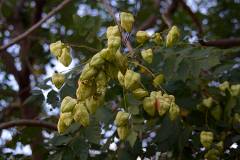
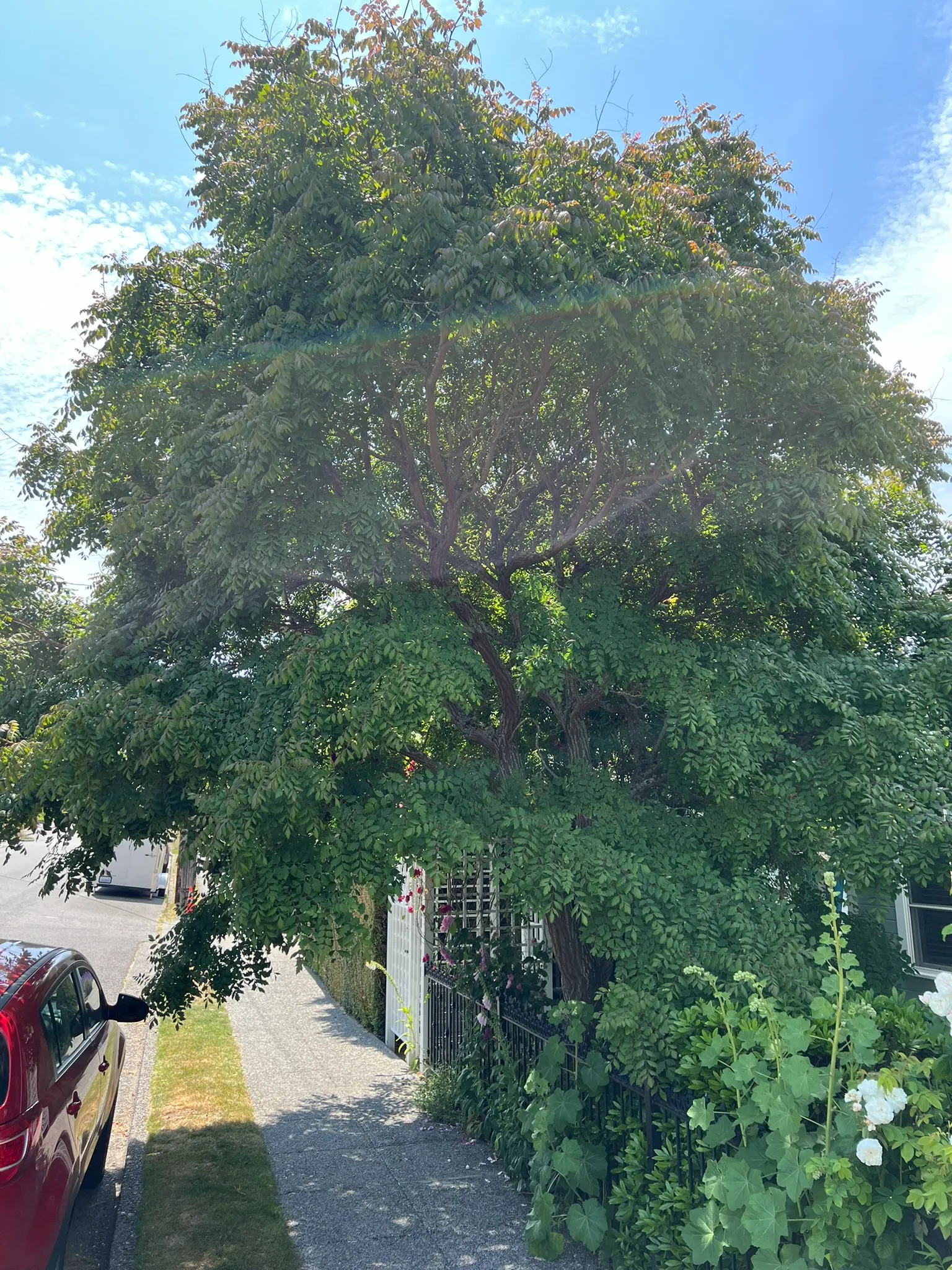
Koelreuteria paniculata is a spreading deciduous tree in the family Sapindaceae, reaching 25-40 feet (7.5-12 m) tall and wide with a rounded open crown. Leaves are pinnately compound, 6-15 inches (15-38 cm) long, with 7-15 irregularly lobed and toothed leaflets that emerge pinkish-purple in spring, mature to medium green through summer, and turn yellow in fall. Small yellow 4-petaled flowers 0.5 inch (1.3 cm) across open in large terminal panicles 12-15 inches (30-38 cm) long during July — the midsummer bloom falls during a period when most other cultivated temperate trees have already finished flowering. Papery lantern-like three-chambered seed capsules 1.5-2 inches (4-5 cm) long develop after bloom and shift from green through pink-bronze to brown as they ripen through late summer and fall. Native to China, Korea, and Japan, where the species occupies disturbed ground, roadsides, and open woodland, K. paniculata has naturalized aggressively across parts of North America since its introduction as an ornamental street tree. The species self-sows prolifically and has been classified as invasive in Florida, Texas, and several other southeastern US states where warm winters allow seedling survival; seedlings establish in sidewalk cracks, neglected beds, and disturbed roadside ground and mature trees can carry thousands of viable seeds in a single crop of capsules. The wood is weak-structured compared to most shade-tree species and mature trees lose branches in ice storms and high winds, and this brittleness is a secondary cultivation limitation alongside the self-seeding concern. The species tolerates drought, alkaline soil up to pH 8.0, compacted soil, heat, and urban air pollution.
Native Range
Koelreuteria paniculata is native to northern and central China, Korea, and Japan, where it grows in disturbed ground, roadsides, forest margins, and open woodland at low to mid elevations. The species was introduced to North America and Europe as an ornamental street tree during the 18th and 19th centuries and has since naturalized across warm-temperate regions of the United States, particularly in the Southeast. It is now classified as invasive in Florida, Texas, and several other southeastern US states.Suggested Uses
Planted as a small shade tree or ornamental street tree in urban landscapes at 25-40 foot (7.5-12 m) spacing in zones 5-9, where the midsummer yellow bloom and pink-brown fall capsules extend seasonal interest past the bloom window of most other cultivated trees. The broad tolerance of compacted urban soil, drought, heat, and alkaline conditions historically made the species a common street-tree choice before its invasive potential in warm climates was widely recognized. Not suited to planting in Florida, Texas, or other southeastern US states where the species is regulated or actively managed as invasive, positions adjacent to natural areas where bird-dispersed and gravity-dispersed seeds can establish volunteer populations, sites directly above structures or regularly-used walkways where ice-storm branch breakage becomes a hazard, or landscapes where the annual volunteer seedling cleanup is an unwelcome maintenance task.How to Identify
Appearance
Size & Dimensions
Height25' - 40'
Width/Spread25' - 40'
Bloom Information
Small yellow 4-petaled flowers 0.5 inch (1.3 cm) across open in large terminal panicles 12-15 inches (30-38 cm) long during July in zones 5-9, averaging 3 weeks of bloom. Flowers are bee-pollinated. Papery lantern-like three-chambered seed capsules 1.5-2 inches (4-5 cm) long develop after bloom and shift through green, pink-bronze, and brown as they ripen through late summer and fall, each containing three hard round black seeds that germinate readily in disturbed ground.
Detailed Descriptions
Flower Description
yellow; small 4-petaled flowers 0.5 inch (1.3 cm) across; borne in large terminal panicles 12-15 inches (30-38 cm) longFoliage Description
medium green; pinnately compound 6-15 inches (15-38 cm) long with 7-15 irregularly lobed and toothed leaflets each 1-3 inches (2.5-7 cm); emerging pinkish-purple in spring; turns yellow in fallGrowing Conditions
Sun Requirements
Requires 6-10 hours of direct sunlight daily
• Full Sun: 6+ hours of direct sunlight
• Partial Shade: 3-6 hours of direct sunlight
• Full Shade: Less than 3 hours of direct sunlight
Care & Maintenance
Care Guide
Plant in well-drained soil with a pH of 6.0-8.0 in full sun; tolerated soil types include loam, clay, and sand. The species tolerates compacted urban soil, alkaline chalk, heat, drought, and air pollution, and these tolerances underlie its historical popularity as a small street tree and urban shade tree. Water weekly through the first 1-2 growing seasons; established trees are drought-tolerant. The species self-sows prolifically in warm-winter climates and is classified as invasive in Florida, Texas, and several other southeastern US states where seedling survival is high; local invasive-species regulations govern whether the species is legal to plant in a given area. Volunteer seedlings in beds and cracks near mature trees are removed when they appear to limit unwanted spread. The wood is weak-structured and brittle — ice-storm and high-wind branch loss is a recurring concern on mature specimens, and the species is poorly suited to siting directly above structures, parked cars, or regularly-used walkways where dropped branches become a hazard. Pruning is done in late winter (February-March) to develop structural form.Pruning
Pruning is done in late winter (February-March) before bud break. A strong central leader with well-spaced scaffold branches and wide branch angles is developed in young trees through corrective pruning over the first 5-10 years after planting, because the natural branch structure often produces narrow included-bark unions that split under ice and wind loading as the tree matures. Dead, crossing, and weak-angled branches are removed at the branch collar. Volunteer seedlings around the parent tree are removed at their point of origin. Heavy pruning of mature trees stimulates a flush of weak water sprouts and is limited to what structural correction requires.Pruning Schedule
Prune: February–March
early spring