Image 1 of 7
1 / 7
Plant Reference
Kirengeshoma, Genus, palmata, Species,
- Genus & species
yellow waxbells
Japan (Honshu, Shikoku, Kyushu) and Korea (mountain forest understory)
Overview
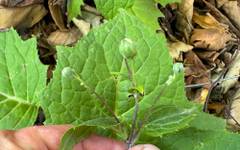
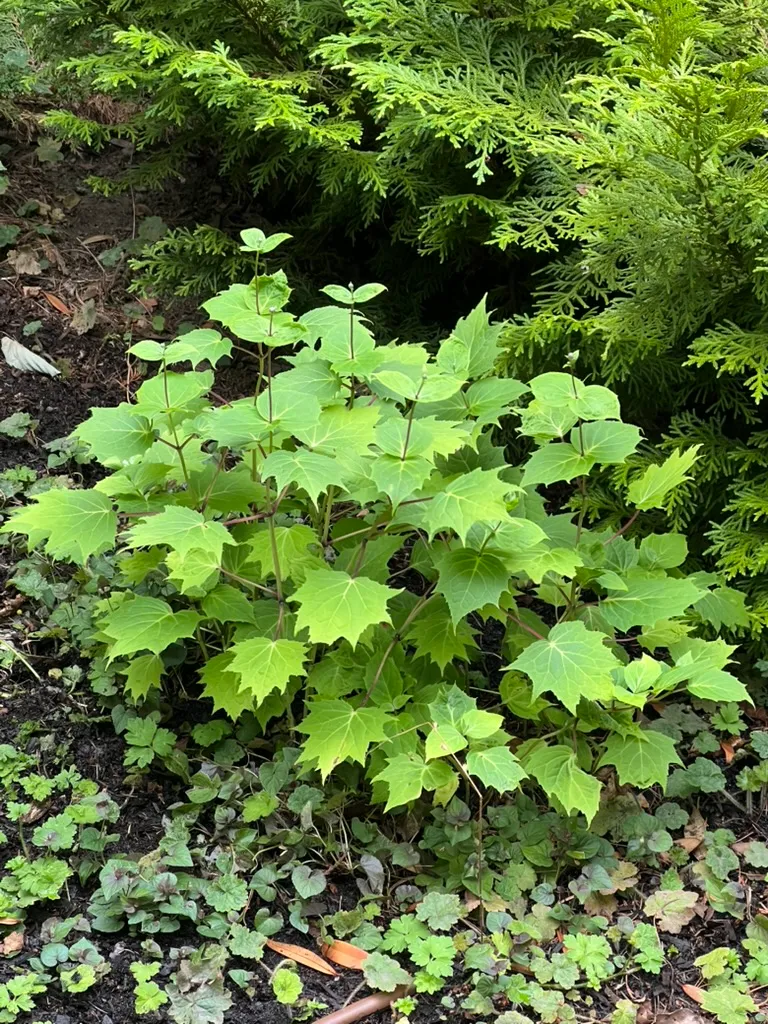
Kirengeshoma palmata, yellow waxbells, is a clumping, herbaceous, deciduous perennial reaching 36-48 inches (90-120 cm) tall and wide. The species carries pendant, shuttle-shaped, pale waxy yellow flowers 1-1.5 inches (2.5-4 cm) long with thick fleshy petals that remain partially closed; the waxy texture and narrowed shape give the common name waxbells. Flowers appear in loose terminal and axillary clusters from August through October for 4-5 weeks. The large palmately lobed leaves resemble maple leaves — 6-8 inches (15-20 cm) across, opposite, medium to dark green, and carried on dark purplish-black wiry stems that contrast with the green foliage. Shade perennials blooming in late summer are most often blue, white, or pink; waxbells carry a pale yellow that fills a color gap at that season. The Korean population, recognized as K. palmata var. koreana, has wider-opening flowers than the Japanese type. Kirengeshoma belongs in the hydrangea family, Hydrangeaceae. Requires acidic, humus-rich, consistently moist soil (pH 5.0-6.5); leaf margins brown and crisp in dry air or drought. Growth is slow: 3-4 years to reach full size. Hardy to USDA zone 5. Non-toxic. Deer-resistant.
Native Range
Kirengeshoma palmata is native to Japan (Honshu, Shikoku, Kyushu) and Korea, where it grows in the moist acidic understory of cool mountain forests.Suggested Uses
Used in shade borders, woodland gardens, and cool, moist shaded sites in USDA zones 5-8 at 36-48 inch (90-120 cm) spacing. The pale yellow flowers bloom in August-October, a period when most other shade perennials have finished. The dark purple-black stems and large maple-like foliage carry season-long texture before bloom. Requires acidic and consistently moist soil; browns in dry air or drought. Non-toxic; deer-resistant.How to Identify
Appearance
Size & Dimensions
Height3' - 4'
Width/Spread3' - 4'
Bloom Information
Pendant shuttle-shaped waxy pale yellow flowers 1-1.5 inches (2.5-4 cm) long, from August through October for 4-5 weeks. Thick fleshy petals remain partially closed. The Korean form (K. palmata var. koreana) carries more widely opening flowers than the Japanese type.
Detailed Descriptions
Flower Description
Pale waxy yellow, pendant shuttle-shaped, not fully opening, 1-1.5 inches (2.5-4 cm) long, with thick waxy petalsFoliage Description
Medium to dark green, large palmately lobed (maple-like), opposite, 6-8 inches (15-20 cm) across; on dark purplish-black stemsGrowing Conditions
Sun Requirements
Requires 2-4 hours of direct sunlight daily
• Full Sun: 6+ hours of direct sunlight
• Partial Shade: 3-6 hours of direct sunlight
• Full Shade: Less than 3 hours of direct sunlight
Care & Maintenance
Care Guide
Grows in partial shade to full shade in acidic (pH 5.0-6.5), humus-rich, consistently moist soil. Hardy to USDA zone 5. Intolerant of drought and alkaline conditions — leaf margins brown in dry air or dry soil. Slow to establish, reaching full size in 3-4 years. Winter stems and dried seed capsules protect the crown from frost heaving and are cut to the ground in early spring before new growth emerges.Pruning
Leave stems standing through winter for crown protection and seed-head interest. Cut to the ground in early spring (March) before new shoots emerge. No other pruning is required.Pruning Schedule
Prune: March
early spring