Keckiella, Genus, spp., Multiple species,
- Genus
- Multiple species
Western North America (California, Arizona, Baja California)
Overview
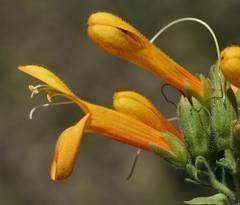
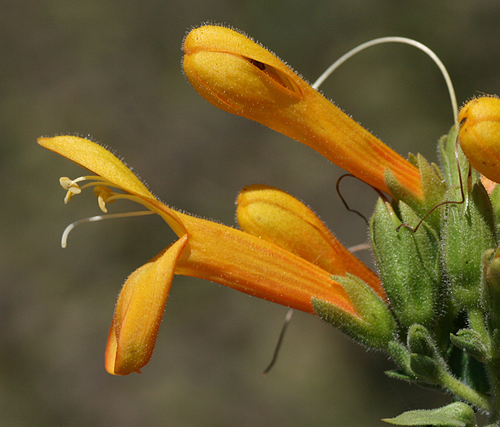
Keckiella is a genus of about seven species of shrubs and subshrubs in the family Plantaginaceae, ranging across the chaparral, woodland, and rocky slopes of California, Arizona, and Baja California. Species grow 1-6 feet (0.3-1.8 m) tall with woody or partly woody stems and opposite leaves 0.5-2 inches (1.3-5 cm) long, with margins that are smooth or finely toothed depending on the species. The tubular, two-lipped flowers measure 0.5-1.5 inches (1.3-3.8 cm) long and appear in scarlet, brick-red, yellow, and cream; red-flowered species such as K. cordifolia and K. ternata are visited by hummingbirds, while pale-flowered species such as K. antirrhinoides draw bees. Plants flower from late spring into summer and set dry capsules holding numerous small seeds. Most species drop or curl their leaves during summer drought and releaf with autumn and winter rain, so foliage cover varies through the year. Keckiella tolerates poor, rocky soils and extended dry spells once established but is sensitive to wet, poorly drained ground and prolonged hard frost. The genus was separated from Penstemon on the basis of its woody habit and seed structure.
Native Range
Keckiella is native to western North America, concentrated in California with species extending into Arizona, Nevada, and Baja California, Mexico. Plants occupy chaparral, oak woodland, and rocky canyon slopes from near sea level to about 8,000 feet (2,400 m).Suggested Uses
Keckiella is used in native and drought-tolerant gardens, on dry banks, and in wildlife plantings where its flowers attract hummingbirds and bees. It suits informal borders and rock gardens within its hardiness range. The seasonal leaf drop makes it less suited to plantings where year-round foliage cover is wanted.How to Identify
Appearance
Size & Dimensions
Height1' - 6'
Width/Spread1' - 5'
Bloom Information
Detailed Descriptions
Flower Description
scarlet, red, yellow, or creamFoliage Description
green to gray-greenGrowing Conditions
Sun Requirements
Requires 6-10 hours of direct sunlight daily
• Full Sun: 6+ hours of direct sunlight
• Partial Shade: 3-6 hours of direct sunlight
• Full Shade: Less than 3 hours of direct sunlight
Water & Climate
Water Needs
Drought Tolerance
Drought tolerant when established
Care & Maintenance
Care Guide
Plants grow in full sun to light shade on sharply drained soils, including rocky, sandy, or decomposed-granite ground. Young plants need water through their first dry season, after which most species persist on natural rainfall within their native range. Excess summer irrigation on heavy soil promotes root rot. Hardiness varies by species; the hardiest tolerate brief lows near 15-20F (-9 to -7C), while tender species are damaged by hard frost. Supplemental feeding is rarely needed on lean native soils. Summer leaf drop is a normal drought response rather than a sign of decline.Pruning
Light pruning after flowering keeps growth dense and removes spent flowering wood. Older stems can be cut back to low buds in winter to renew leggy plants. Hard pruning into bare old wood is slow to resprout in some species.Pruning Schedule
Prune: July–August
summer