Jacaranda, Genus, mimosifolia, Species,
- Genus & species
jacaranda
Overview
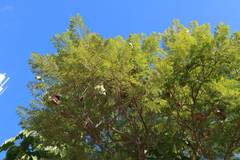
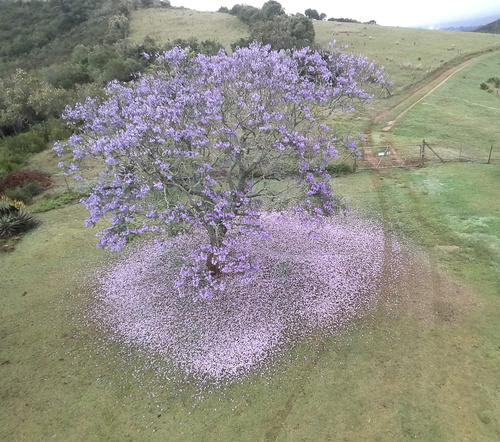
Jacaranda mimosifolia is a large flowering tree, growing 300–600 inches (750–1,500 cm) tall and 240–480 inches (600–1,200 cm) wide with a broad spreading canopy. Lavender-blue tubular flowers 2 inches (5 cm) in large terminal panicles 8–12 inches (20–30 cm), covering the canopy in late spring to early summer — the flowers appear before or simultaneously with the new foliage, creating a mass of blue-purple on leafless or partially leafed branches. Spent flowers drop and create a carpet of lavender-blue on the ground below — the fallen petals stain surfaces and become slippery when wet. Bright green bipinnately compound fern-like leaves 12–18 inches (30–45 cm) with very small leaflets 0.25–0.5 inch (6–12 mm). Flat woody seed pods 2 inches (5 cm) in diameter persist into winter. Native to northwestern Argentina and Bolivia. Widely planted as a street and park tree in Southern California, South Africa, Australia, and tropical regions worldwide. Classified as invasive in South Africa and parts of Australia, where it displaces native vegetation. Frost-tender: foliage damage at 28°F (−2°C); young trees killed at 25°F (−4°C). Full sun (6+ hours). Drought-tolerant once established. The large mature canopy requires ample overhead and lateral space — not suited to small gardens or near power lines. Brittle wood — branches break in wind storms. Non-toxic. Zones 9–11. Growth rate is fast — 24–36 inches (60–90 cm) per year.
Native Range
Native to northwestern Argentina and Bolivia. Widely planted as an ornamental in Southern California, South Africa, Australia, and tropical regions worldwide. Invasive in South Africa and parts of Australia.Suggested Uses
Grown as a street, park, or specimen tree in zones 9–11 with space for the 240–480 inch (600–1,200 cm) canopy spread. Full sun. Drought-tolerant once established. The lavender-blue flower mass is the display feature. Spent flowers stain below — position away from patios and walkways. Non-toxic.How to Identify
Appearance
Size & Dimensions
Height25' - 50'
Width/Spread20' - 40'
Bloom Information
Detailed Descriptions
Flower Description
Lavender-blue, tubular, in large paniclesFoliage Description
Bright green, bipinnately compound, fern-likeGrowing Conditions
Sun Requirements
Requires 6-10 hours of direct sunlight daily
• Full Sun: 6+ hours of direct sunlight
• Partial Shade: 3-6 hours of direct sunlight
• Full Shade: Less than 3 hours of direct sunlight
Care & Maintenance
Care Guide
Full sun (6+ hours). Well-draining soil. Drought-tolerant once established. Frost-tender at 28°F (−2°C). Brittle wood — branches break in storms. The large canopy requires ample space. Spent flowers stain surfaces and become slippery when wet. Invasive in some tropical regions. Non-toxic. Zones 9–11.Pruning
Train with a central leader in the first 5 years for structural strength. Prune for shape in early spring. Remove dead, crossing, or weak-crotched branches. The brittle wood is susceptible to storm damage — maintain a strong branch structure.Pruning Schedule
Prune: March
spring