Ixora, Genus, spp., Multiple species,
- Genus
- Multiple species
ixoras
Tropical Asia, Africa, and the Pacific
Overview
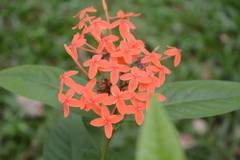
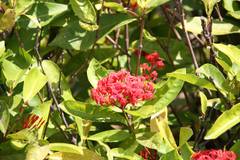
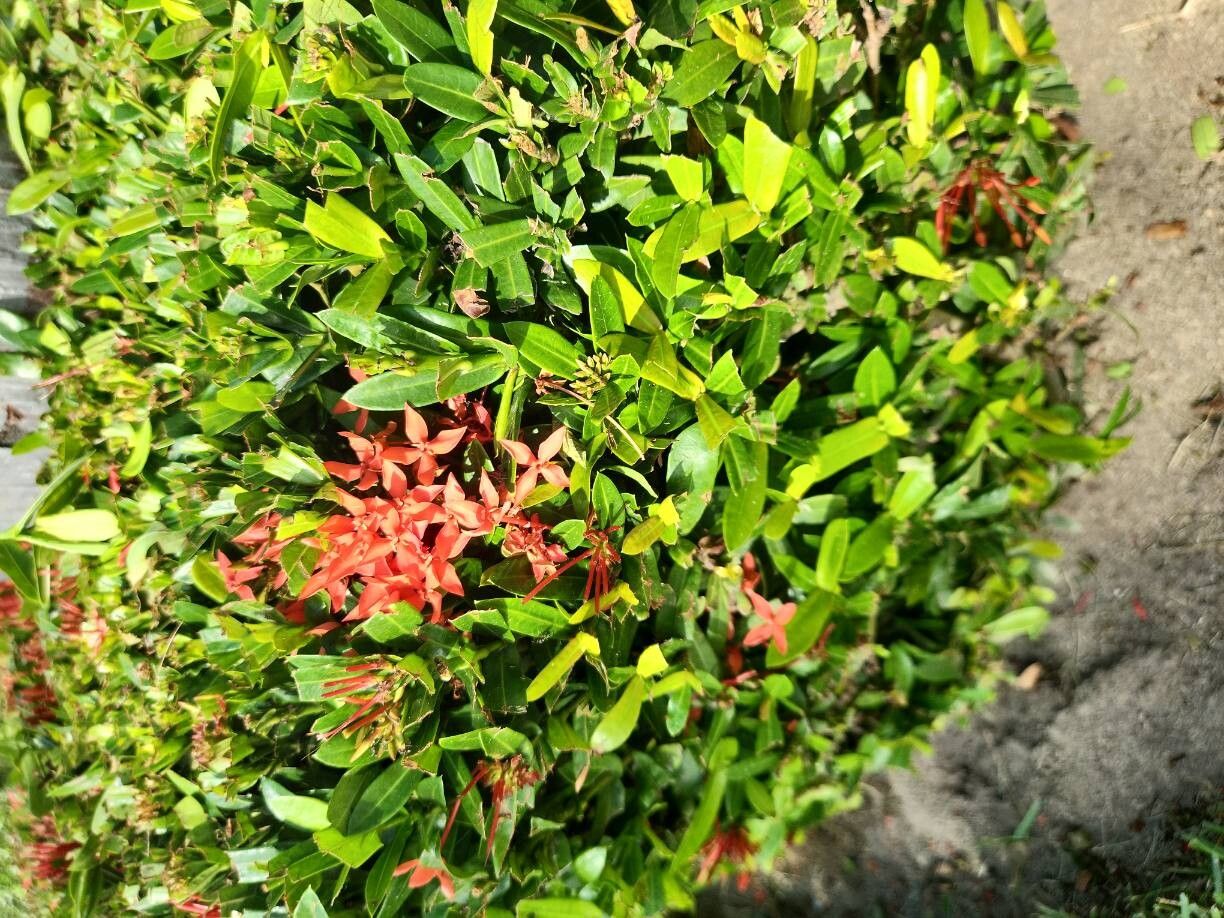
Ixora is a genus of roughly 500 species of evergreen shrubs and small trees in the coffee family, Rubiaceae, grown in the tropics for their dense clusters of bright flowers. Most cultivated plants stay 2 to 8 feet (0.6 to 2.4 m) tall, though some wild species reach 12 feet (3.6 m) or more, forming rounded, densely branched, leafy crowns. The opposite or whorled leaves are leathery, glossy dark green, and oval to lance-shaped, 2 to 6 inches (5 to 15 cm) long, with new growth often flushed bronze or red. Flowers appear in tight, rounded to flat-topped clusters of dozens of small blooms, each a slender tube 1 to 2 inches (2.5 to 5 cm) long opening to four spreading lobes, in red, orange, pink, yellow, or white. The chief ornamental species, I. coccinea, carries scarlet clusters and is widely planted as a hedge and foundation shrub. Flowering continues for much of the year in frost-free climates, and some flowers are lightly fragrant. The fruit is a small fleshy berry that ripens black. Ixora is native to the tropics of Asia, Africa, and the Pacific, and is frost-tender, grown outdoors only in USDA zones 9 to 11 and as a container or greenhouse plant elsewhere.
Native Range
Ixora is native to the tropical regions of southern and Southeast Asia, southern China, tropical Africa and Madagascar, and the Pacific islands, with the greatest number of species in Asia. Plants grow in warm, humid forest, woodland margins, and coastal scrub.Suggested Uses
Ixora is planted as a flowering hedge, foundation shrub, and mass border in tropical and subtropical gardens, and dwarf forms are grown in containers and low edging, spaced 18 to 36 inches (45 to 90 cm) apart. The long bloom and glossy foliage suit poolside and courtyard plantings. In cold regions it is grown as a greenhouse or conservatory shrub.How to Identify
Appearance
Size & Dimensions
Height2' - 12'
Width/Spread2' - 8'
Bloom Information
In frost-free climates Ixora flowers in repeated flushes through much of the year, peaking in the warm, wet months. Each rounded cluster holds 20 to 100 or more tubular flowers in red, orange, pink, yellow, or white and stays in color for several weeks. New flushes follow new growth, so flowering tracks warmth and moisture. Some species and forms carry a light, sweet scent.
Detailed Descriptions
Flower Description
red, orange, pink, yellow, or whiteFoliage Description
glossy dark green, bronze-red when newGrowing Conditions
Sun Requirements
Requires 5-10 hours of direct sunlight daily
• Full Sun: 6+ hours of direct sunlight
• Partial Shade: 3-6 hours of direct sunlight
• Full Shade: Less than 3 hours of direct sunlight
Care & Maintenance
Care Guide
Ixora grows in full sun to light shade and moist, well-drained, acidic soil at a pH of 5.0 to 6.5; alkaline soils cause iron and manganese deficiency that yellows the leaves. Plants need warmth above 60 F (16 C), steady moisture, and protection from frost, which kills or sets back the shrubs. They are fed with an acidifying fertilizer during growth and watered to keep the root zone evenly moist but not soggy. Aphids, scale, mealybugs, and sooty mold are common, and root rot follows poor drainage. In cool climates Ixora is grown in containers and moved indoors before frost. Most are hardy only in USDA zones 9 to 11.Pruning
Ixora is pruned after a flush of bloom to shape the plant and encourage branching, since flowers form on new growth. Light, frequent tip pruning produces a denser shrub and more flower clusters, while old or leggy plants are cut back hard in spring to renew them. Hedges are sheared, though heavy shearing removes forming flower buds.Pruning Schedule
Prune: March–April
early springsummer
Container Growing
Suitable for container growing
Minimum container size: 3 gallons