Iva, Genus, annua, Species,
- Genus & species
sumpweed
Overview
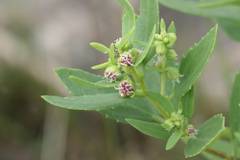
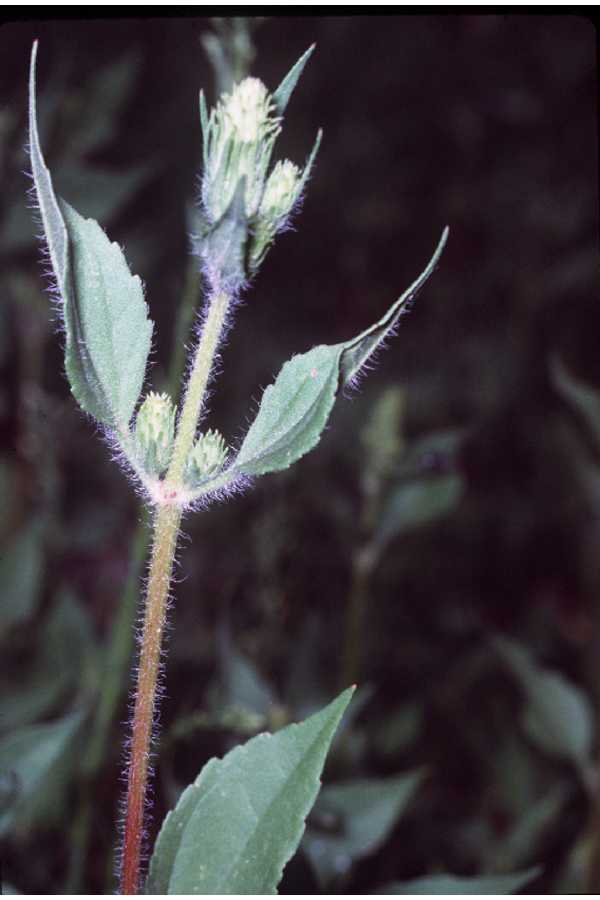
Iva annua is an annual herb in the daisy family, growing 1.5-6 feet (0.5-2 m) tall on coarse, branching, rough-hairy stems. The opposite lower leaves are ovate to lance-shaped, 2-6 inches (5-15 cm) long, with toothed margins and three main veins, becoming smaller and alternate toward the top. Small greenish flower heads about 0.2 inch (5 mm) wide nod in leafy spikes along the upper branches, each head holding both staminate and pistillate florets. The wind-borne pollen is a recognized hay-fever allergen, like that of its ragweed relatives. Iva annua grows on moist, fertile, disturbed ground such as floodplains, ditches, marsh edges, and bottomland fields across central and eastern North America. The oily seeds were once a staple crop of the Eastern Agricultural Complex, domesticated by Indigenous peoples around 4,000 years ago before the larger-seeded form fell out of cultivation. As an annual it dies after setting seed in autumn. One limitation is the allergenic pollen and weedy spread, which keep it out of most planted settings. Populations rise and fall with seasonal flooding and soil disturbance.
Native Range
Iva annua is native to central and eastern North America, from the Great Plains and Texas east to the Mississippi Valley and the Atlantic coastal plain. It grows in floodplains, marsh margins, ditches, and disturbed bottomlands, and has spread beyond its original range as a weed of moist open ground.Suggested Uses
Iva annua is rarely planted and is studied chiefly as an archaeobotanical crop of the Eastern Agricultural Complex and as a wetland indicator. It supports research on early North American plant domestication. In the landscape it is managed as a weed of moist, disturbed ground.How to Identify
Appearance
Size & Dimensions
Height1'6" - 6'
Width/Spread1' - 3'
Bloom Information
Detailed Descriptions
Foliage Description
greenGrowing Conditions
Sun Requirements
Requires 6-10 hours of direct sunlight daily
• Full Sun: 6+ hours of direct sunlight
• Partial Shade: 3-6 hours of direct sunlight
• Full Shade: Less than 3 hours of direct sunlight
Water & Climate
Water Needs