Isocoma, Genus, spp., Multiple species,
- Genus
- Multiple species
Southwestern United States and northern Mexico
Overview
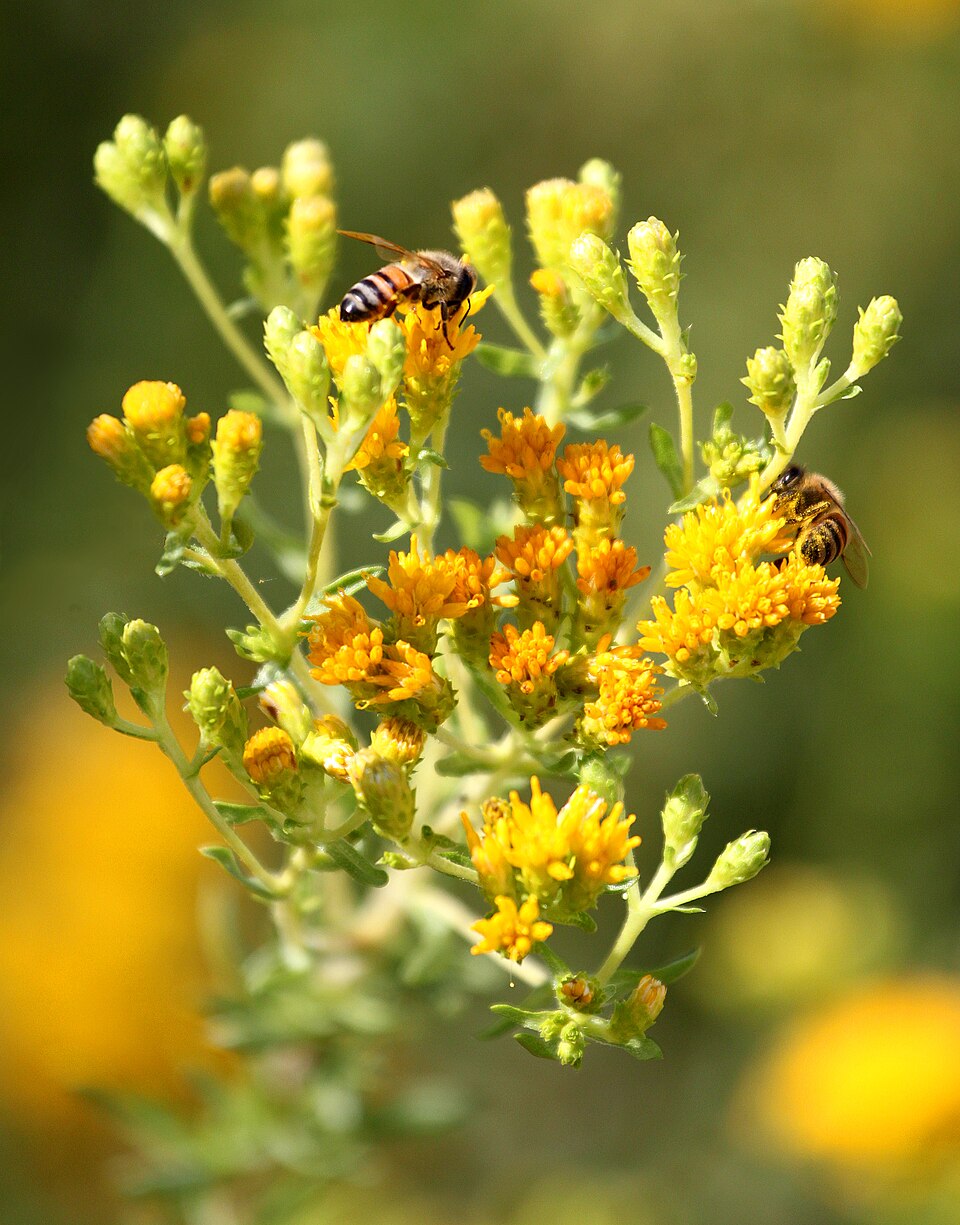
Isocoma is a genus of about sixteen species of bushy, resinous shrubs and subshrubs in the daisy family, Asteraceae, native to the southwestern United States and Mexico. Plants form rounded, much-branched bushes 1 to 4 feet (0.3 to 1.2 m) tall, with narrow, often sticky or gland-dotted leaves and a strong scent. Unlike many daisies, the small yellow flower heads have no spreading ray florets and are made up only of tubular disc florets, gathered into dense flat-topped clusters at the branch tips. Flowering comes mainly in late summer and autumn, when the bushes turn yellow with bloom. The genus grows across arid and semi-arid country, on alkaline flats, desert grassland, roadsides, and rangeland, often on poor or saline soils. Several species, including I. pluriflora (rayless goldenrod), contain the toxin tremetol; livestock that eat the plant can be poisoned, and the toxin can pass into milk and cause illness in people who drink it. The resinous foliage and late bloom suit dry gardens, though the plants can look weedy and spread on disturbed ground.
Native Range
Isocoma is native to the southwestern United States and northern Mexico. The plants grow in arid and semi-arid grassland, desert scrub, alkaline flats, and disturbed ground.Suggested Uses
Isocoma is used in dry, desert, and native gardens and in restoration of arid disturbed sites in its native range. The resinous foliage and late-season yellow bloom support pollinators when little else flowers. Because of the toxic foliage, the genus is planted in ornamental settings rather than on grazing land.How to Identify
Appearance
Size & Dimensions
Height1' - 4'
Width/Spread1' - 4'
Colors
Bloom Information
Detailed Descriptions
Foliage Description
green to grey-greenGrowing Conditions
Sun Requirements
Requires 6-12 hours of direct sunlight daily
• Full Sun: 6+ hours of direct sunlight
• Partial Shade: 3-6 hours of direct sunlight
• Full Shade: Less than 3 hours of direct sunlight
