Imperata, Genus, cylindrica, Species,
- Genus & species
Japanese blood grass
East and Southeast Asia, India, Africa, southern Europe, Australia
Overview
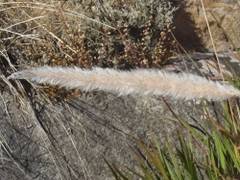
Imperata cylindrica is a rhizomatous perennial grass forming colonies of upright shoots 1-4 feet (30-120 cm) tall, with individual clumps 1-3 feet (30-90 cm) across that merge as the rhizomes run. Leaf blades are linear, 0.2-0.8 inch (5-20 mm) wide and up to 4 feet (1.2 m) long, with an off-centre whitish midrib and margins stiffened by silica that cut skin drawn along them. Rhizomes are sharp-tipped, white, and scaly, reaching 4 feet (1.2 m) deep and making up to 60 percent of the plant's mass; fragments 1 inch (2.5 cm) long regrow into new plants. Flowering stems carry a silvery-white cylindrical panicle 2-8 inches (5-20 cm) long from March to May, and each panicle releases up to 3,000 plumed seeds that travel on the wind. Dry foliage burns at high temperature and carries fire through stands that then regrow from the rhizomes. The cultivar Rubra, sold as Japanese blood grass, holds at 12-18 inches (30-45 cm), colours blood-red from the leaf tips through summer and autumn, and seldom flowers, though plants revert to the green form. The species and its cultivars are listed under United States federal noxious weed regulations.
Native Range
Imperata cylindrica is native across the Old World tropics and warm temperate regions, from southern Europe and Africa through India, China, Japan, and Southeast Asia to Australia and the Pacific islands, growing on disturbed ground, in savanna, and in open woodland. In Australia it is part of native grassland and open forest, under the name blady grass. Introduced populations now cover several million acres in the southeastern United States, where the grass arrived in packing material at Mobile, Alabama, in 1912 and was later sown in forage trials.Suggested Uses
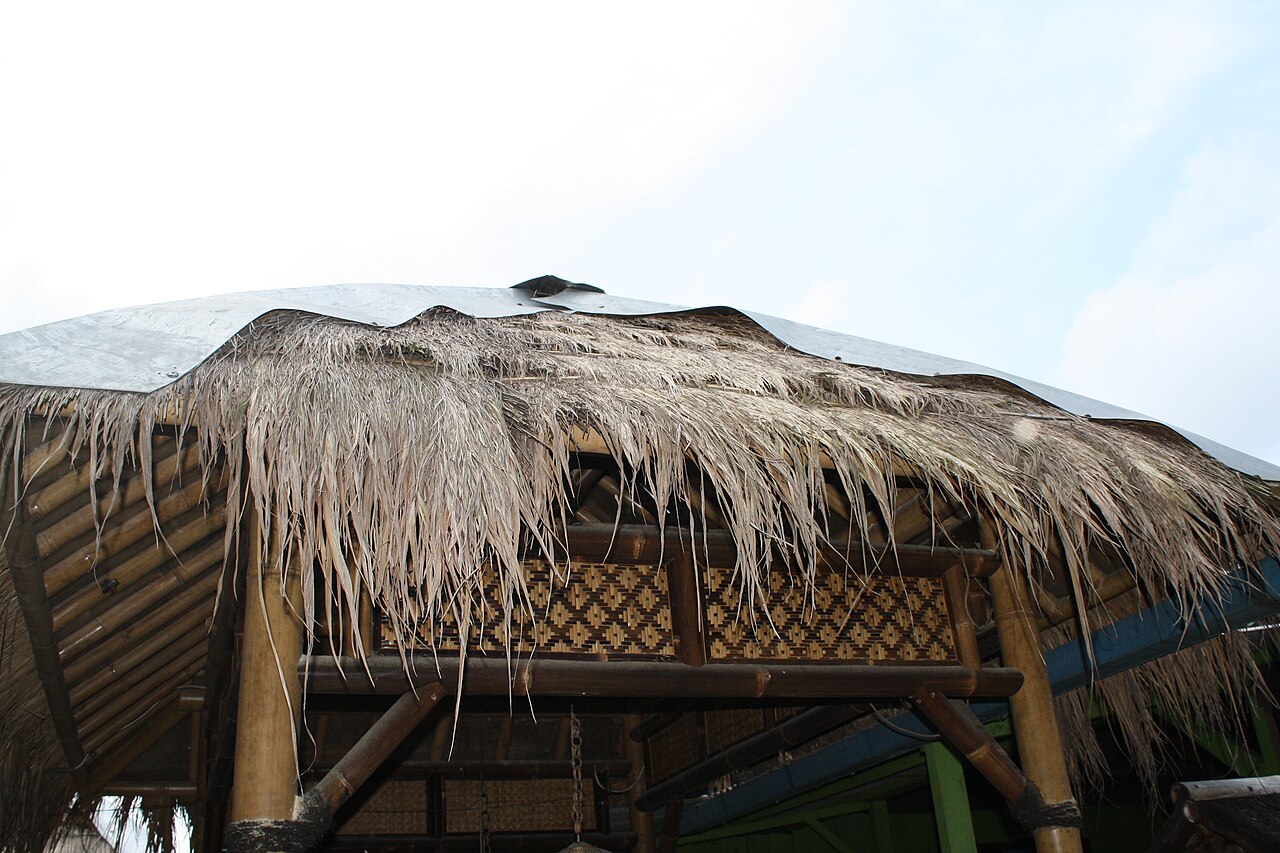
The cultivar Rubra is grown in containers of 5 gallons (19 L) or larger and in edged beds at 12-18 inch (30-45 cm) spacing in USDA zones 5-9, where low sun passes through the red blades. In its native range the species is cut for thatch, paper pulp, and rough forage on young growth, and the rhizomes are used in traditional medicine in China and Japan. Sale and movement are prohibited in Florida, Alabama, Mississippi, and other southeastern states under state and federal noxious weed law.How to Identify
Appearance
Size & Dimensions
Height1' - 4'
Width/Spread1' - 3'
Bloom Information
Flowering runs March to May in the southeastern United States, and follows disturbance or burning at other times of year in the tropics. Panicles are 2-8 inches (5-20 cm) long, silvery white, and silky. Pollination is by wind, and a single panicle releases up to 3,000 plumed seeds that carry several hundred yards. The cultivar Rubra flowers rarely in cultivation, so spread from garden plantings runs through rhizomes rather than seed.
Detailed Descriptions
Foliage Description
Green in the species; blood-red from the tips downward on the cultivar RubraGrowing Conditions
Sun Requirements
Requires 4-12 hours of direct sunlight daily
• Full Sun: 6+ hours of direct sunlight
• Partial Shade: 3-6 hours of direct sunlight
• Full Shade: Less than 3 hours of direct sunlight
Care & Maintenance
Care Guide
Growth continues from full sun through light shade on soils from coarse sand to clay at pH 4.0-7.5, including infertile and acidic ground where most grasses grow poorly. Established stands hold through 6-8 weeks of dry weather and regrow from rhizomes after fire or mowing. Garden plantings of the cultivar Rubra take 1 inch (25 mm) of water per week in the first season and colour most strongly at 6 or more hours of direct sun. Fertilizer is not required and raises the rate of rhizome spread. Rhizomes cross barriers shallower than 12 inches (30 cm), so plantings are commonly held in containers or in beds edged to that depth. Shoots that revert to green grow taller and faster than the red form and are taken out at the rhizome to hold the colour of the cultivar.Pruning
Foliage is cut to 2-4 inches (5-10 cm) in late winter, before new growth extends, which clears the previous season's dead blades. Green reversions on the cultivar Rubra are traced back to the rhizome and lifted with it, since cutting at ground level leaves the rhizome to resprout. Cut material carries viable rhizome pieces and seed, so it is bagged rather than composted. Clumps lifted and divided every 3-4 years hold their density in containers.Pruning Schedule
Prune: February–March
early spring
Container Growing
Suitable for container growing
Minimum container size: 5 gallons