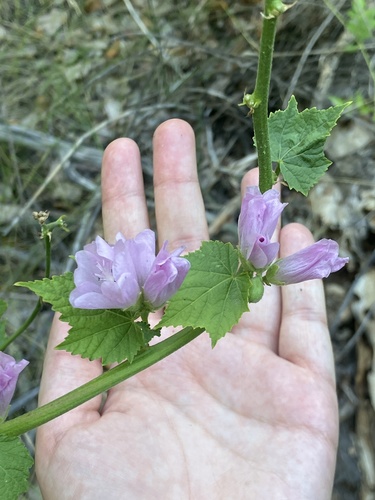
Iliamna, Genus, rivularis, Species,
- Genus & species
streambank globemallow
Western North America (Rocky Mountains and Pacific Northwest)
Overview
Iliamna rivularis is an upright herbaceous perennial in the mallow family, reaching 3-6 feet (90-180 cm) tall and 2-4 feet (60-120 cm) wide on a single or few-stemmed crown. Leaves alternate, maple-like with 5-7 toothed lobes, 3-6 inches (7.5-15 cm) across, medium green and softly hairy on both surfaces. Flowers pink to pale rose-purple, hibiscus-like, 1.5-2 inches (4-5 cm) across, borne in spike-like racemes from leaf axils along the upper stems from June through August. Each flower lasts 1-2 days; sequential opening sustains the inflorescence for 5-7 weeks. Stems die back to the crown after frost and resprout from a woody rootstock in spring. Seeds remain viable in soil for 30 or more years and germinate after fire or soil disturbance, producing dense post-disturbance stands. Reseeds aggressively in disturbed garden soil. Lower leaves yellow and drop by late summer in dry sites.
Native Range
Native to streambanks, moist mountain meadows, and disturbed open slopes throughout the western United States and southwestern Canada, from British Columbia and Alberta south through the Rocky Mountains to New Mexico, and west to the Cascades and Sierra Nevada at 3,000-9,000 feet (900-2,750 m) elevation.Suggested Uses
Planted in restoration sites following fire or other soil disturbance and in moist-soil portions of native plant gardens at 3-4 foot (90-120 cm) spacing. Used along stream and pond margins where its tolerance of seasonal flooding suits riparian conditions. Containers are atypical due to taproot depth; pots smaller than 5 gallons (19 L) restrict the rootstock and reduce flowering.How to Identify
Appearance
Size & Dimensions
Height3' - 6'
Width/Spread2' - 4'
Bloom Information
June through August across most of its range. Bloom begins in late May at lower elevations and ends in early September at upper-elevation sites. Individual flowers last only 1-2 days but sequential opening of buds along the inflorescence sustains color for 5-7 weeks. Bloom is shortened by 1-2 weeks during prolonged drought.
Detailed Descriptions
Flower Description
Pink to pale rose-purpleFoliage Description
Medium green, softly hairyGrowing Conditions
Sun Requirements
Requires 4-8 hours of direct sunlight daily
• Full Sun: 6+ hours of direct sunlight
• Partial Shade: 3-6 hours of direct sunlight
• Full Shade: Less than 3 hours of direct sunlight
Care & Maintenance
Care Guide
Establishes from seed within 1-2 years; transplants from container stock establish in one season with weekly water through the first summer. Mature plants tolerate periodic drought once roots reach 12-18 inches (30-45 cm) deep but bloom is reduced and lower foliage drops earlier in dry conditions. Reseeds aggressively in cultivated garden soil; volunteer seedlings appear at 5-30 per parent plant per year and develop deep taproots that resist hand pulling after the first season. Crown rot occurs in heavy soils that stay saturated through winter. Mallow rust may produce orange pustules on lower leaves in cool wet weather; affected leaves are removed and discarded.Pruning
Cut stems back to 4-6 inches (10-15 cm) above the crown after first hard frost, or leave standing through winter for cover. Remove spent flower spikes before seed matures to limit reseeding. Plants respond poorly to mid-season pruning of the main stems and rarely re-bloom from cut growth.Pruning Schedule
Prune: March & November
fallearly spring
Container Growing
Minimum container size: 5 gallons