Hyptis, Genus, spp., Multiple species,
- Genus
- Multiple species
Tropical and subtropical Americas (centred on Brazil and Mexico)
Overview
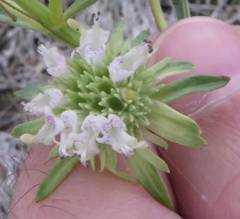
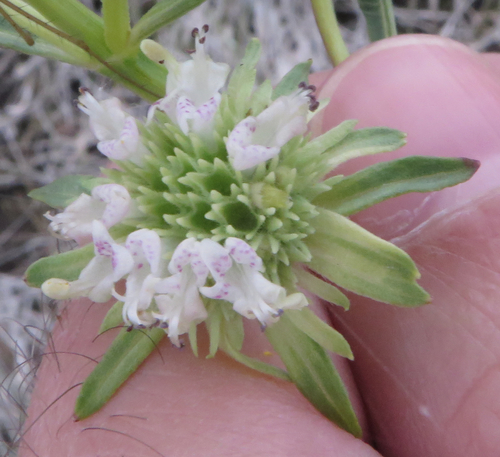
Hyptis is a large genus of aromatic herbs and shrubs in the mint family, Lamiaceae, native to the tropical and subtropical Americas. Traditionally the genus held close to 300 species, though many have been reclassified into related genera such as Cantinoa and Mesosphaerum. Plants share the family traits of square stems and paired, opposite leaves, and the foliage is usually aromatic when crushed. Habit ranges across the genus from low annual herbs to woody shrubs roughly 1 to 10 feet (0.3 to 3 m) tall. The small flowers are white, pink, blue, or purple and are grouped into dense rounded heads or clustered whorls along the stems, with a hinged lower lip that springs forward to dust visiting insects with pollen. Flowering is followed by small nutlets, four per flower, as is typical of the mint family. The genus is most diverse in Brazil and Mexico and extends through Central America, the Caribbean, and into the southern United States. Several species, such as H. suaveolens, have spread as weeds across the tropics worldwide and can colonise disturbed and cultivated ground aggressively. Many species are short-lived or weedy, and the small flowers are individually inconspicuous next to showier garden mints.
Native Range
Hyptis is native to the tropical and subtropical Americas, with its greatest diversity in Brazil and Mexico. The genus extends through Central America, the Caribbean, and into the southern United States, and several species have naturalised across tropical Africa, Asia, and Australia.Suggested Uses
Hyptis is used in tropical and warm-climate gardens, pollinator and herb plantings, and naturalistic borders. Aromatic species are grown for their scented foliage and as informal cut material. Some species, including H. suaveolens, carry a long history of medicinal and culinary use in their native range.How to Identify
Appearance
Size & Dimensions
Height1' - 10'
Width/Spread1' - 6'
Bloom Information
Flowering in most species occurs in the warm, rainy season, often summer into autumn, and tropical species can flower over an extended period or nearly year-round in frost-free climates. The flowers are small and clustered in shades of white, pink, blue, or purple. Bees and other insects trigger the hinged lower lip to release pollen as they probe for nectar.
Detailed Descriptions
Flower Description
white, pink, blue, or purpleFoliage Description
greenGrowing Conditions
Sun Requirements
Requires 6-10 hours of direct sunlight daily
• Full Sun: 6+ hours of direct sunlight
• Partial Shade: 3-6 hours of direct sunlight
• Full Shade: Less than 3 hours of direct sunlight
Care & Maintenance
Care Guide
Most Hyptis grow in full sun in well-drained soils and tolerate poor, dry, or sandy ground once established. The genus is adapted to warm climates and is frost-tender, suited to roughly USDA zones 9 to 11, while several species are grown as warm-season annuals in cooler areas. Plants are drought-tolerant when established and generally need little supplementary water. Aromatic oils in the foliage make many species unpalatable to browsing animals. Propagation is by seed, which germinates readily in warm soil, and shrubby species can also be grown from softwood cuttings.Pruning
Shrubby species can be cut back in late winter or early spring to keep a compact shape and encourage fresh growth. Annual and short-lived species need little pruning beyond removing spent flowering stems. Cutting back after flowering can limit self-seeding in species prone to spreading.Container Growing
Suitable for container growing
Minimum container size: 3 gallons