Hypolepis, Genus, spp., Multiple species,
- Genus
- Multiple species
Pantropical and Southern Hemisphere (Australasia, Pacific, Asia, Africa, the Americas)
Overview
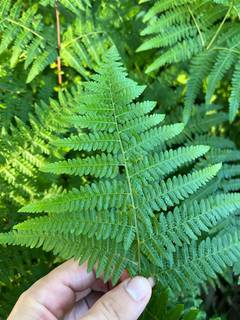
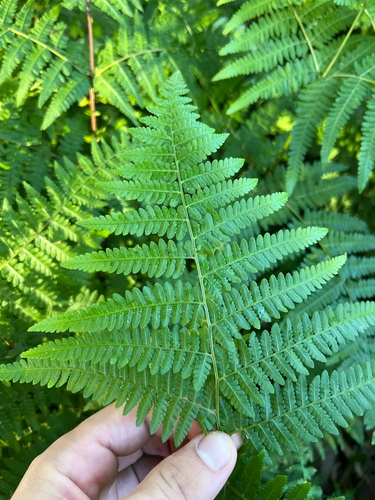
Hypolepis is a genus of roughly fifty to eighty species of terrestrial ferns in the family Dennstaedtiaceae, known collectively as ground ferns. The plants spread by long, hairy, creeping rhizomes that travel through the soil and send up fronds at intervals, often forming dense colonies or thickets. Fronds are large and finely divided, typically two to four times pinnate, ranging across the genus from about 18 inches to 6 feet (45 cm to 1.8 m) long, with some scrambling species reaching greater lengths by leaning on surrounding vegetation. Stipes (frond stalks) and the main axis are frequently covered in hairs or small prickles, and the segments are soft-textured and mid-green. As ferns, Hypolepis reproduce by spores rather than flowers; the spores form in small marginal sori on the undersides of fertile segments, often partly protected by the reflexed segment edge. The genus is widely distributed, with the greatest diversity in the Southern Hemisphere, including Australia, New Zealand, the Pacific Islands, tropical Asia, Africa, and the Americas. Many species colonise disturbed ground, forest clearings, stream banks, and damp pasture. The vigorous rhizomes that let Hypolepis establish quickly can also carry it beyond its intended area, and the soft fronds are damaged by frost in colder climates.
Native Range
Hypolepis has a wide global distribution concentrated in the Southern Hemisphere. Species occur in Australia, New Zealand, the Pacific Islands, Southeast Asia, Africa, and Central and South America. A few species reach temperate regions, while the genus is most diverse in warm, moist climates.Suggested Uses
Hypolepis is used in shaded native and woodland gardens, along stream and pond margins, and in revegetation of moist disturbed ground. The spreading habit suits larger informal areas and erosion control on damp banks rather than small enclosed beds. The genus also grows as a foliage plant in frost-free climates.How to Identify
Growing Conditions
Sun Requirements
Requires 2-6 hours of direct sunlight daily
• Full Sun: 6+ hours of direct sunlight
• Partial Shade: 3-6 hours of direct sunlight
• Full Shade: Less than 3 hours of direct sunlight
Care & Maintenance
Care Guide
Hypolepis grows in partial shade to full sun in moist, humus-rich soils, and most species need consistent moisture at the roots. The ferns spread readily by rhizome in warm, frost-free or nearly frost-free climates, roughly USDA zones 9 to 11 for tender species, while a few temperate species tolerate light frost. Soft fronds are cut back or killed by hard frost, regrowing from the rhizome when warmth returns where the rhizome survives. In gardens the running rhizomes can spread into adjacent beds, so the genus is often grown where its spread is contained or in larger naturalistic settings. Propagation is by spores sown on a sterile moist medium or by division of rhizome sections that carry at least one frond bud.Pruning
Dead or frost-damaged fronds can be removed at the base in late winter or early spring before new fronds unfurl. Cutting old fronds keeps colonies open and reduces accumulated litter. Rhizomes that spread past the wanted area can be cut back or dug out to limit colony size.Container Growing
Suitable for container growing
Minimum container size: 3 gallons