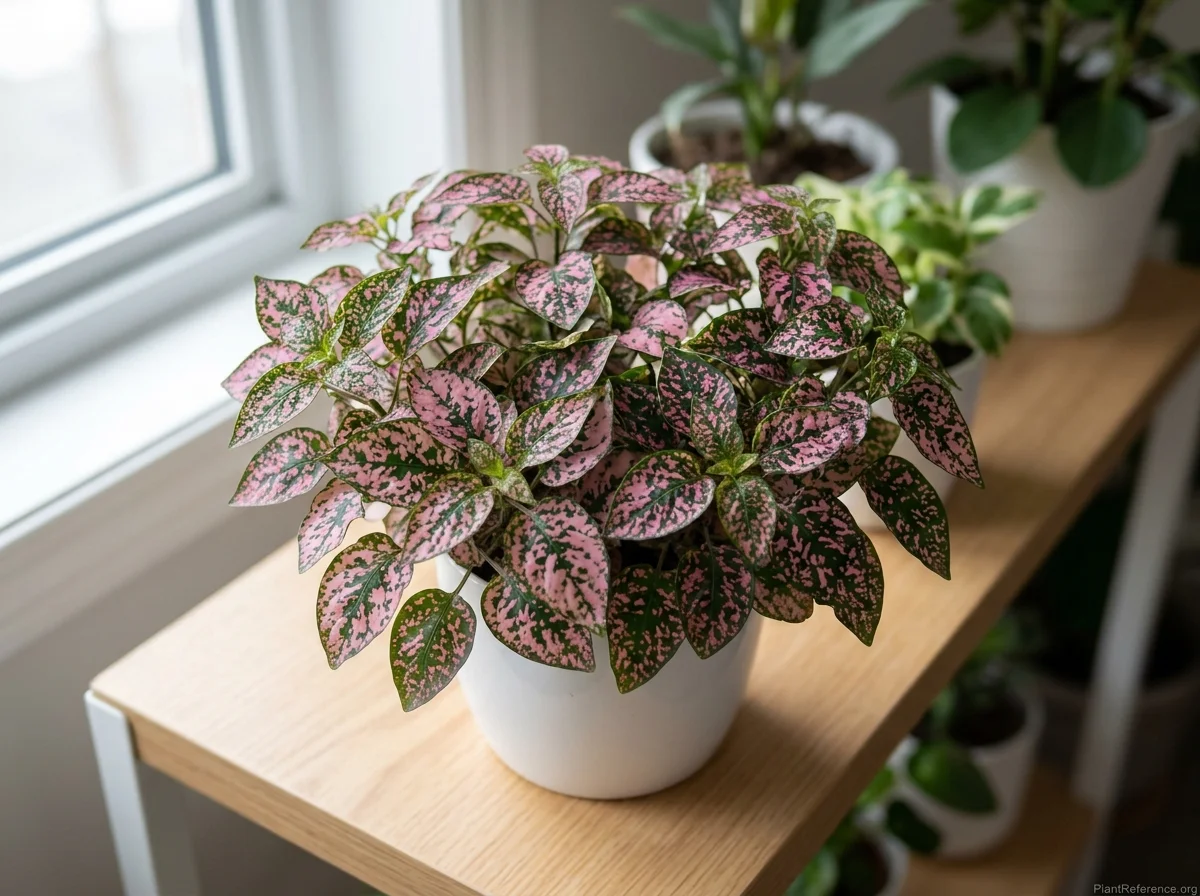
Image 1 of 7
Plant Reference
1 / 7
Hypoestes, Genus, phyllostachya, Species,
- Genus & species
polka dot plant
Overview
Hypoestes phyllostachya is the polka dot plant, growing 8–18 inches (20–45 cm) tall. Green leaves 1–2 inches (2.5–5 cm) long are heavily splashed or spotted with pink, white, or red — the coloring covers 50–80% of the leaf surface in well-grown plants. Available in pink splash, white splash, and red splash selections. Bright indirect light (200–400 foot-candles) maintains color intensity; low light shifts leaves toward predominantly green. Pinching stem tips regularly maintains a compact, bushy form — without pinching, stems elongate rapidly with wider internodes and sparse foliage. Flowers should be removed when they appear: flowering signals a shift from vegetative to reproductive growth, after which the plant declines in vigor. The typical lifespan indoors is 1–2 years, after which the plant becomes woody and sparse regardless of care. Easily propagated from stem tip cuttings in water or moist soil. Non-toxic to cats and dogs. Native to Madagascar. In the family Acanthaceae. Used as a seasonal bedding annual outdoors in zones below 10. Susceptible to powdery mildew in humid, stagnant air conditions.
Native Range
Hypoestes phyllostachya is native to Madagascar.Suggested Uses
Grown in containers of 0.5–1 gallon (2–4 liters) on desks, windowsills, and in terrariums. Used as a seasonal bedding annual outdoors. The 1–2 year indoor lifespan means it functions as a temporary color accent. Non-toxic — safe for households with pets.How to Identify
Appearance
Size & Dimensions
Height8" - 1'6"
Width/Spread8" - 1'
Bloom Information
Small lavender flowers on spikes — remove immediately. Flowering signals a shift to reproductive mode and accelerates overall plant decline.
Detailed Descriptions
Flower Description
Lavender, small, insignificant (remove to maintain foliage quality)Foliage Description
Green heavily SPLASHED or SPOTTED with vivid PINK, white, or red — the polka-dot pattern; available in multiple color formsGrowing Conditions
Sun Requirements
Requires 4-6 hours of direct sunlight daily
• Full Sun: 6+ hours of direct sunlight
• Partial Shade: 3-6 hours of direct sunlight
• Full Shade: Less than 3 hours of direct sunlight
Care & Maintenance
Care Guide
Bright indirect light for color intensity. Keep soil evenly moist. Pinch stem tips every 2–3 weeks for compact form. Remove flowers immediately to extend vigor. Typical lifespan is 1–2 years indoors. Non-toxic to pets. Propagate from stem cuttings to replace aging plants.Pruning
Pinch stem tips every 2–3 weeks during active growth to maintain bushy form. Remove flower spikes immediately when they appear. Take stem cuttings to propagate replacements before the parent plant declines.Container Growing
Suitable for container growing
Minimum container size: 1 gallons