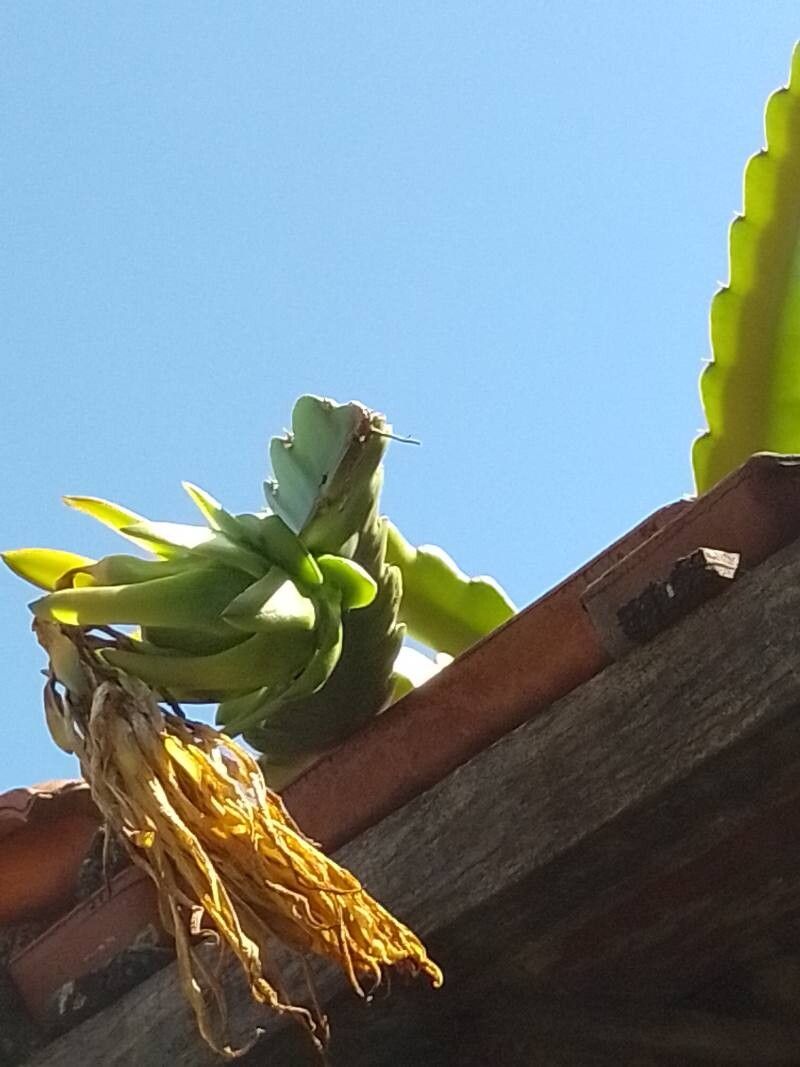
Hylocereus undatus
dragon fruit
Overview
Hylocereus undatus is dragon fruit (pitahaya), a climbing cactus reaching 120–240 inches (300–600 cm) on a support structure. Green three-ribbed photosynthetic stems (no true leaves) with aerial roots that cling to supports — the stems are the photosynthetic organs. White nocturnal flowers 10–14 inches (25–35 cm) across open for a single night and close by morning — pollination must occur during this window. Hand-pollination during the night or early morning improves fruit set, as natural pollinators (moths and bats) may be absent in cultivation. Fruit 3–5 inches (7–13 cm) with pink to red scales on the exterior and white flesh with small black seeds (the standard H. undatus type; red-fleshed types exist in other species and hybrids). The flesh is mildly sweet with a texture similar to kiwifruit. Vietnam produces the largest volume of dragon fruit commercially. Self-fertile for the white-fleshed type, though cross-pollination with a different clone improves fruit size and set. Requires a sturdy support — a thick wooden post, concrete pillar, or trellis (the heavy stems need support capable of bearing weight). Frost-tender: stems damaged below 32°F (0°C). Full sun. Well-draining soil. Non-toxic — fruit is edible. Zones 10–11 outdoors. Container culture at 10–15 gallons (40–60 liters) with winter protection in cold zones. Growth rate is fast.
Native Range
Native to Central America and Mexico. Widely cultivated throughout tropical Asia, particularly Vietnam, which is the largest commercial producer.Suggested Uses
Grown on sturdy posts or trellises in zones 10–11, or in containers of 10–15 gallons (40–60 liters) with winter protection. Full sun. Hand-pollinate nocturnal flowers for fruit. Non-toxic edible fruit.How to Identify
Appearance
Size & Dimensions
Height10' - 20'
Width/Spread4' - 10'
Reaches mature size in approximately 3 years
Bloom Information
Detailed Descriptions
Flower Description
White, very large, nocturnalFoliage Description
Leafless — green three-ribbed photosynthetic stemsGrowing Conditions
Sun Requirements
Requires 6-10 hours of direct sunlight daily
• Full Sun: 6+ hours of direct sunlight
• Partial Shade: 3-6 hours of direct sunlight
• Full Shade: Less than 3 hours of direct sunlight
Care & Maintenance
Care Guide
Full sun. Sturdy support structure required (the stems are heavy). Well-draining soil. Frost-tender below 32°F (0°C). Hand-pollinate nocturnal flowers for fruit set. Self-fertile (white-fleshed type); cross-pollination improves yield. Non-toxic edible fruit. Fast-growing. Zones 10–11.Pruning
Trim stems to manage size and shape. Remove dead or damaged stem sections. Train main stems vertically on the support, allowing secondary stems to drape or cascade for fruit production.Pruning Schedule
J
F
M
A
M
J
J
A
S
O
N
D
spring
Container Growing
✓ Suitable for container growing
Minimum container size: 10 gallons