Image 1 of 2
1 / 2
© Donald Hobern from Canberra, Australia, some rights reserved (CC-BY) · Wikimedia Commons
Hovea, Genus, spp., Multiple species,
- Genus
- Multiple species
Overview
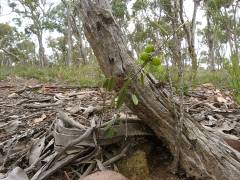
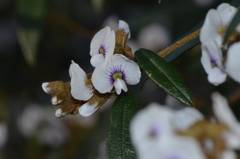
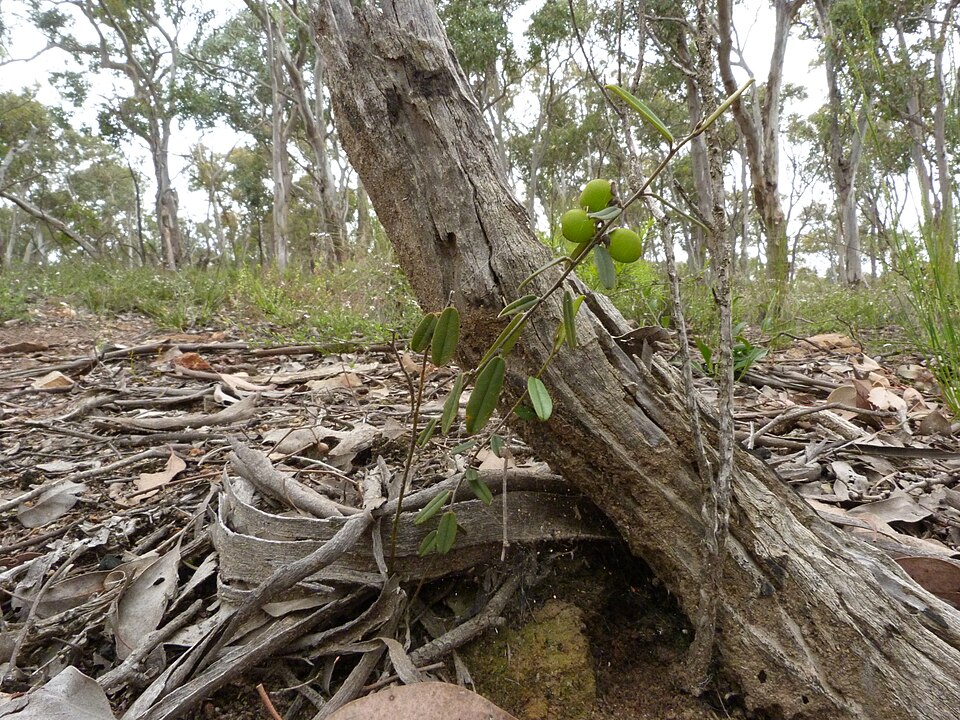
Hovea is a genus of about forty shrubs in the pea family, Fabaceae, endemic to Australia, where they grow in open forest, woodland, and heath across most states. Most species are slender, upright to spreading shrubs 1.5-8 feet (0.5-2.5 m) tall, with simple alternate leaves that range from narrow and linear to broad and oval depending on species. Through late winter and spring the stems carry clusters of pea-shaped flowers in purple, violet, and blue, occasionally with a white or yellow centre, set close along the branches in the leaf axils. The flowers are followed by short, inflated, hairy pods holding one or two hard-coated seeds. As legumes, Hovea species fix nitrogen through root nodules and often grow on poor, sandy soils. Many depend on fire or heat to break seed dormancy, and plants can be short-lived, regenerating from seed after disturbance. The genus is sensitive to wet, heavy soils and humidity, and most species are tender to hard frost. Several are grown for the dense purple spring flowering.
Native Range
Endemic to Australia, in open forest, woodland, and heath across the south-west, eastern states, and northern regions.Suggested Uses
Grown in native, low-water, and wildlife gardens in Australia and similar climates, and on sandy banks for quick spring colour. The purple flowering suits informal shrub borders and heath plantings. Some species are used to revegetate disturbed sandy ground.How to Identify
Appearance
Size & Dimensions
Height1'6" - 8'
Width/Spread2' - 6'
Colors
Bloom Information
Most Hovea species flower in late winter and spring, roughly July to October in Australia. Purple to blue pea flowers cluster along the stems for several weeks. Flowering is followed by short inflated pods that ripen in late spring and early summer.
Detailed Descriptions
Flower Description
Purple, violet, blueFoliage Description
Green to grey-greenGrowing Conditions
Sun Requirements
Requires 5-9 hours of direct sunlight daily
• Full Sun: 6+ hours of direct sunlight
• Partial Shade: 3-6 hours of direct sunlight
• Full Shade: Less than 3 hours of direct sunlight
Care & Maintenance
Care Guide
Most Hovea species grow in full sun to light shade on free-draining sandy or gravelly soils low in phosphorus. Sharp drainage is needed, as the genus is prone to root rot in heavy or wet ground. Plants tolerate dry spells once established and suit warm-temperate to subtropical climates, with limited hardiness to frost. Low-phosphorus native fertiliser is used, since high phosphorus harms many Australian legumes. Watering is moderate while young and sparing once established. Seed germinates after heat or smoke treatment that mimics fire.Pruning
A light trim after flowering keeps plants bushy and removes spent pods. Hard pruning into old bare wood is poorly tolerated and can kill the plant. Only the current and previous season growth should be cut back.Container Growing
Suitable for container growing
Minimum container size: 5 gallons