Image 1 of 24
1 / 24
Plant Reference
Holodiscus, Genus, discolor, Species,
- Genus & species
ocean spray
Western North America from British Columbia south through Washington, Oregon, and California and east to Montana and Colorado; dry open forests, rocky slopes, and disturbed areas
Overview
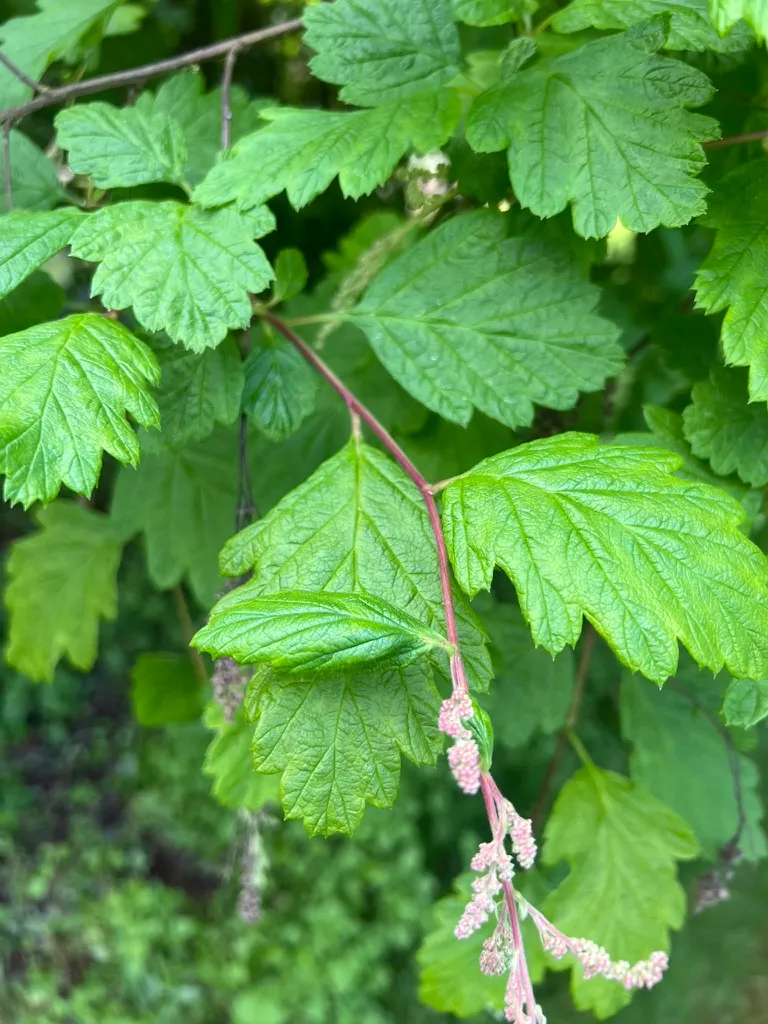
Holodiscus discolor is a spreading deciduous shrub in the family Rosaceae reaching 6–15 feet (1.8–4.5 m) tall and 6–12 feet (1.8–3.6 m) wide with arching branches from a multi-stemmed base. The species is common throughout western North American forests and rocky slopes from coastal British Columbia south to California and east to the northern Rockies, and it occurs as a widely distributed understory and edge shrub across most habitats in the Pacific Northwest. Mature size is highly variable: plants in dry exposed sites reach 6 feet (1.8 m), while plants in moist shaded forest grow to 15 feet (4.5 m). Leaves are ovate, shallowly lobed and toothed, 1–3 inches (2.5–7 cm) long, and gray-green, turning bronze and brown in fall. Tiny cream to white flowers 0.15 inch (4 mm) across open in large drooping terminal panicles 4–12 inches (10–30 cm) long at the tips of the arching branches in June and July across a 3-week bloom period, and the panicles have the appearance that gives the species its common name ocean spray. The flowers carry a light sweet scent and draw bees, butterflies, and numerous small native pollinators. Limitation: the dried tan panicles persist on the stems through fall and winter after the flowers fade and can appear weathered or untidy in formal garden positions, the species resents wet or poorly drained soils and declines in heavy clay with sustained winter moisture, and the fall color is a dull bronze-brown rather than the strong reds and yellows of other western deciduous shrubs.
Native Range
Native to western North America from British Columbia south through Washington, Oregon, and California and east to Montana, Wyoming, and Colorado, with outlying populations in northern Arizona and New Mexico. Grows in dry open forests, rocky slopes, clear-cuts, and other disturbed edge habitats from sea level to alpine meadows below 6,500 feet (2,000 m) elevation.Suggested Uses
Used in native plant gardens, restoration plantings, dry slopes, informal hedgerows, and woodland edge plantings across the Pacific Northwest and mountain west at 6–12 foot (1.8–3.6 m) spacing. The large drooping summer panicles supply a light texture and a native nectar source for regional pollinators, and the dried panicles carry winter structure for gardeners who value the persistent seed heads. Wet sites and formal positions where the weathered dried panicles would clash with the design are unsuitable.How to Identify
Appearance
Size & Dimensions
Height6' - 15'
Width/Spread6' - 12'
Bloom Information
Tiny cream to white flowers 0.15 inch (4 mm) across open in large drooping terminal panicles 4–12 inches (10–30 cm) long at the tips of the arching branches from June through July, lasting about 3 weeks. The flowers carry a light sweet scent and draw bees, butterflies, and numerous small native pollinators. Dried tan panicles persist on the stems through fall and winter after the flowers drop.
Detailed Descriptions
Flower Description
cream to white; tiny (0.15 inch / 4 mm) flowers in large drooping panicles 4-12 inches (10-30 cm) long at the tips of arching branchesFoliage Description
gray-green; ovate, shallowly lobed and toothed, 1-3 inches (2.5-7 cm) long; turns bronze to brown in fallGrowing Conditions
Sun Requirements
Requires 4-10 hours of direct sunlight daily
• Full Sun: 6+ hours of direct sunlight
• Partial Shade: 3-6 hours of direct sunlight
• Full Shade: Less than 3 hours of direct sunlight
Care & Maintenance
Care Guide
Site in full sun to partial shade with 4–10 hours of direct sun per day in well-drained dry to average soil with a pH of 5.5–7.5. The species tolerates sandy and rocky soils and is drought-tolerant once established. Wet or poorly drained soils cause root rot and decline. Bloom occurs on previous-season wood, so shaping pruning is done after flowering in August and September rather than in late winter, which would remove the following year's flower buds. Hardy in USDA zones 4–9. Routine fertilization is not required in native soils.Pruning
Pruning is done after flowering in August and September because the shrub blooms on previous-season wood. Renewal pruning removes the oldest stems at the base every 2–3 years to rebuild a younger framework and stimulate new flowering wood. The species tolerates hard renovation cuts to 12–18 inches (30–45 cm) above ground and regrows from the base within a single growing season. The natural arching form requires no training.Pruning Schedule
Prune: August–September
summer