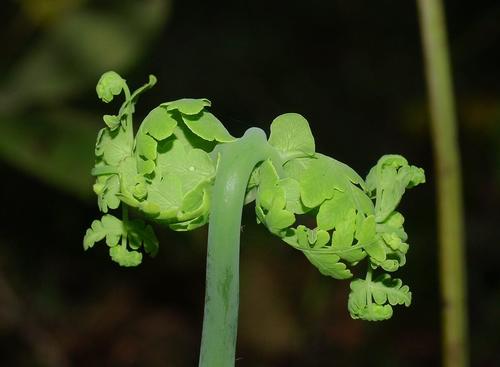
Histiopteris, Genus, spp., Multiple species,
- Genus
- Multiple species
SunPart Shade – Full Shade
WaterHigh
Overview
Histiopteris is a genus of about seven terrestrial ferns in the bracken family, Dennstaedtiaceae, distributed across the tropics and the southern hemisphere, including Australia, New Zealand, southern Africa, and South America. Plants grow from long-creeping, branching underground rhizomes, and colonies can spread across several square metres. Fronds rise singly along the rhizome and reach 3-10 feet (1-3 m) in moist sites, with the blade bipinnate to tripinnate and held close to horizontal. Foliage is often blue-green and waxy beneath, with a pair of small clasping leaflets at the base of each frond division. The most frequently recorded species, H. incisa, ranges from New Zealand and Australia through Malesia to Africa and is among the early ferns to colonise burned or cleared ground. Reproduction is by spores: the sori form continuous lines along the leaf margins and are covered by the rolled-under edge of the pinnule, so there are no flowers, fruit, or cones. Most species form open, spreading stands at forest margins, on stream banks, and in disturbed clearings. The creeping rhizomes that drive this colonising habit can make established plants hard to contain in a garden, and the fronds of the more tropical species are killed by frost.
Native Range
Native across the southern hemisphere and tropics, including Australia, New Zealand, New Guinea, southern and eastern Africa, Madagascar, and parts of South America and the Pacific islands.Suggested Uses
Grown in shaded, moist borders, fern gardens, and along pond or stream margins where the spreading habit fills ground. In frost-free regions it is used to revegetate disturbed or cleared land. Container culture restricts its spread in smaller gardens.How to Identify
Appearance
Size & Dimensions
Height3' - 10'
Colors
Foliage Colors
Fall Foliage Colors
Bloom Information
Histiopteris ferns reproduce by spores and do not flower. Spores mature in marginal sori, generally ripening through the warmer months of summer and autumn in temperate populations.
Detailed Descriptions
Foliage Description
Blue-greenGrowing Conditions
Sun Requirements
Requires 2-5 hours of direct sunlight daily
• Full Sun: 6+ hours of direct sunlight
• Partial Shade: 3-6 hours of direct sunlight
• Full Shade: Less than 3 hours of direct sunlight
Water & Climate
Water Needs
Care & Maintenance
Care Guide
Most Histiopteris species grow in moist, humus-rich soil in partial shade, though they tolerate full sun where moisture is constant. They grow in slightly acidic to neutral soils that stay damp but drain freely after rain. Consistent moisture is the main requirement, and fronds wilt and brown if the root zone dries out. The tropical species need frost-free conditions, while H. incisa withstands light frost once the rhizome is established. Spreading rhizomes can be contained with a root barrier or by growing the plant in a large container. A loose organic mulch keeps the shallow roots cool and damp.Pruning
Pruning is limited to removing old or frost-damaged fronds at the base in late winter or early spring before new croziers unfurl. Cutting back rhizomes at the colony edge restricts lateral spread. No other routine pruning is required.Container Growing
Suitable for container growing
Minimum container size: 5 gallons