Hexasepalum, Genus, spp., Multiple species,
- Genus
- Multiple species
Poorjoe
The Americas, from the southeastern United States through tropical America
Overview
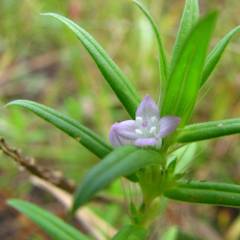
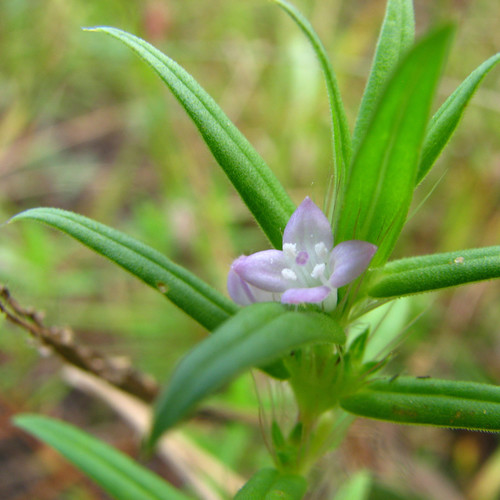
Hexasepalum is a genus of about ten low herbs and subshrubs in the madder family, Rubiaceae, native to the warmer parts of the Americas. Many species, including H. teres, were formerly placed in Diodia or Borreria. Plants are wiry and much-branched, spreading or ascending to 4-24 inches (10-60 cm), with small, narrow, opposite leaves joined by a fringed membrane at each node. Tiny funnel-shaped flowers, white to pale pink, sit singly or in small clusters in the leaf axils through summer and autumn. The fruit is a small dry capsule that splits into one-seeded segments. H. teres, called poorjoe or rough buttonweed, is a common plant of dry, sandy fields and roadsides in the southeastern United States. Plants persist on poor, sandy ground where little else competes. The rough foliage and sprawling habit make it weedy in cultivated soil.
Native Range
Native to the Americas, ranging from the southeastern United States through Mexico, Central America, the Caribbean, and South America. Plants grow on dry, sandy soils, open fields, pinelands, roadsides, and other disturbed ground.Suggested Uses
Rarely planted by design, the genus turns up in sandy habitat plantings and restored pinelands where it covers open ground. The small flowers draw tiny native bees, and the seeds are taken by quail and other ground-feeding birds. In tidy gardens it is treated as a weed.How to Identify
Appearance
Size & Dimensions
Height4" - 2'
Width/Spread6" - 1'6"
Bloom Information
Detailed Descriptions
Flower Description
white to pale pinkFoliage Description
greenGrowing Conditions
Sun Requirements
Requires 6-12 hours of direct sunlight daily
• Full Sun: 6+ hours of direct sunlight
• Partial Shade: 3-6 hours of direct sunlight
• Full Shade: Less than 3 hours of direct sunlight
Water & Climate
Water Needs
Care & Maintenance
Care Guide
These are plants of warm, dry, sandy ground, growing in full sun with low water needs. They tolerate poor, acidic soils and drought, and need no irrigation in their range. Seed germinates on bare, open soil, and the annual kinds complete growth in one season. Rich or shaded ground gives soft, weak growth and fewer flowers. Plants self-sow freely where the soil stays open. In gardens they are usually managed as weeds of sandy beds.Pruning
No pruning is needed for these low, short-lived plants. Cutting or pulling before seed ripens limits spread on cultivated ground. Dead growth is cleared at the end of the season.Toxicity: Not assessed
UnknownPlanting Guide
Planting Methods & Timing
Planting Method
direct sow
Direct Sow Timing
spring after the soil warms