×, Hybrid, Heucherella, Genus, 'Sweet Tea', Cultivar,
- Hybrid
- Genus
- Cultivar
sweet tea foamy bells
Intergeneric garden hybrid between Heuchera (alumroot) and Tiarella (foamflower); both parent genera are native to North America; cultivar bred by Terra Nova Nurseries in Canby, Oregon; commercially grown across temperate North America and Europe
Overview
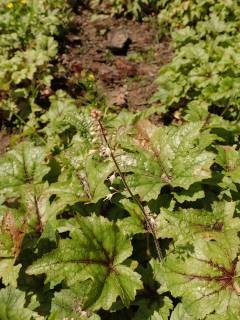
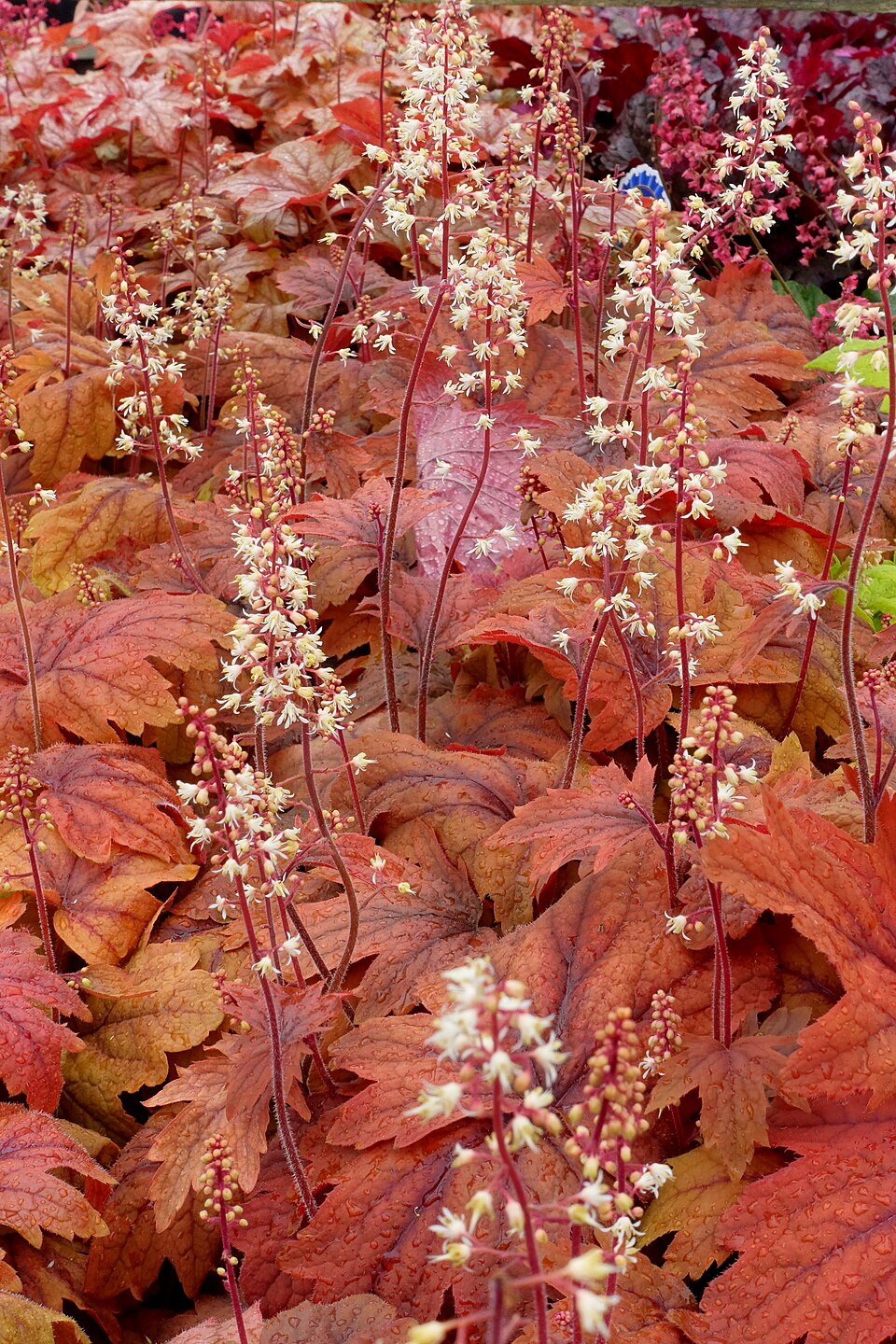
× Heucherella 'Sweet Tea' is an intergeneric hybrid in the Saxifragaceae family between Heuchera and Tiarella (foamflower), combining traits of both parents. Plants reach 10–20 inches (25–50 cm) tall and 18–24 inches (45–60 cm) wide — larger than many heucherellas. The large deeply lobed leaves run cinnamon-orange to amber with a dark burgundy central vein pattern radiating outward like a star — the two-toned warm color with dark veining sets the cultivar apart from the cooler color range of most shade-garden plants where green, blue-green, silver, and burgundy-purple dominate. The cinnamon color runs most vivid in spring and fall cool weather; in midsummer, the tone may shift toward golden-green with the dark veining remaining visible. New leaves emerge with the most intense cinnamon-orange tone before settling into the seasonal color shift. The cultivar name 'Sweet Tea' references the color of sweet iced tea — the warm amber-brown range. From Tiarella, 'Sweet Tea' inherits the deeply lobed maple-like leaf shape and the spreading stoloniferous habit that Heuchera alone does not have. From Heuchera, the cultivar inherits the larger leaf size and broader color range. The stoloniferous spread runs moderate — the plant gradually extends its footprint without aggressive colonizing. Tiny white to pale pink flowers on airy sprays in May and June run secondary to the foliage display. Bred by Terra Nova Nurseries in Oregon. Deer avoid the foliage. Not known to be toxic to pets or humans.
Native Range
× Heucherella 'Sweet Tea' is an intergeneric garden hybrid between Heuchera (alumroot) and Tiarella (foamflower); both parent genera are native to North America. The cultivar was bred by Terra Nova Nurseries in Canby, Oregon and is grown commercially across temperate North America and Europe.Suggested Uses
Used in shade gardens where the warm cinnamon-orange amber foliage adds a color range outside the green-blue-purple-silver palette typical of most shade plants. Container culture works in pots of 3 gallons (11 liters) or more. Pairs with blue, purple, and dark green companions (Hosta blue cultivars, Brunnera macrophylla, dark-leaved heucheras) for foliage contrast. The large size and stoloniferous spread suit use as a ground cover in moderate shade where the cultivar gradually fills in to create an amber-toned carpet. Suits use as a specimen in mixed shade compositions where the warm color anchors a cooler palette.How to Identify
Appearance
Size & Dimensions
Height10" - 1'8"
Width/Spread1'6" - 2'
Bloom Information
Flowering in May and June across approximately 4 weeks. White to pale pink flowers in airy sprays above the foliage; the inflorescence runs secondary to the foliage display. Plants attract small native bees and hoverflies during the bloom window. Removing spent flower sprays after bloom directs plant resources toward continued foliage development.
Detailed Descriptions
Flower Description
Tiny white to pale pink; airy sprays above the foliageFoliage Description
Cinnamon-orange to amber with dark burgundy central vein pattern radiating outward like a star; deeply lobed maple-like leaf shape inherited from Tiarella parentGrowing Conditions
Sun Requirements
Requires 2-5 hours of direct sunlight daily
• Full Sun: 6+ hours of direct sunlight
• Partial Shade: 3-6 hours of direct sunlight
• Full Shade: Less than 3 hours of direct sunlight
Care & Maintenance
Care Guide
Plant in partial to full shade with 2–5 hours of filtered light. Moist well-drained humus-rich soil suits the cultivar. The cultivar runs more tolerant of heat and humidity than many heucherellas due to large leaf size and overall vigor. Water during establishment in the first growing season; established plants tolerate moderate dry periods. Remove spent flower sprays after bloom. Clean up tattered foliage in early spring before new growth emerges. The stoloniferous habit gradually expands the clump 2–4 inches per year — manageable spread that fills in over time without aggressive colonizing.Pruning
Remove spent flower sprays after bloom. Clean up tattered leaves in early spring before new growth emerges. Push any frost-heaved crowns back into the soil in spring. No other maintenance is needed.Pruning Schedule
Prune: March & June
springsummer
Container Growing
Suitable for container growing
Minimum container size: 3 gallons