Heteromeles, Genus, spp., Multiple species,
- Genus
- Multiple species
toyon
Overview
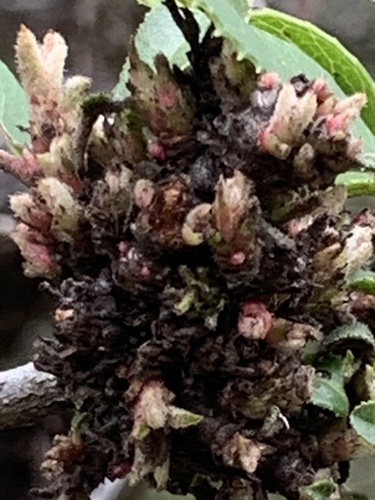
Heteromeles is a genus in the rose family, Rosaceae, with a single species, H. arbutifolia, the toyon or Christmas berry of California and Baja California. It grows as a dense evergreen shrub or small tree 6-30 feet (1.8-9 m) tall, with leathery, glossy, sharply toothed leaves 2-4 inches (5-10 cm) long. In early summer flat-topped clusters of small white five-petalled flowers open at the branch tips and draw many insects. By late autumn these ripen into clusters of small red pome fruits, about 0.25 inch (6 mm) wide, that persist into winter and are eaten by birds. Toyon is a defining shrub of chaparral and oak woodland, tolerant of heat, drought, and a range of soils. The leaves and seeds contain cyanogenic compounds, and the raw fruit is processed by cooking before people eat it.
Native Range
Native to California and Baja California, with scattered occurrences in the Sierra Nevada foothills and coastal ranges. Plants grow in chaparral, coastal sage scrub, oak woodland, and along canyon slopes.Suggested Uses
Used as a screen, informal hedge, or specimen in native and low-water gardens, spaced 8-15 feet (2.4-4.6 m) apart. The winter berries feed mockingbirds, robins, and other birds, while the summer flowers support pollinators. Plants also serve in wildlife and habitat plantings and on dry slopes.How to Identify
Appearance
Size & Dimensions
Height6' - 30'
Width/Spread6' - 15'
Bloom Information
White flowers open in early summer, generally June to July, in broad flat clusters. Pollinated flowers develop into red pomes that color up from late autumn and hold through winter. The berry display is the main seasonal feature, lasting far longer than the bloom.
Detailed Descriptions
Foliage Description
dark glossy greenGrowing Conditions
Sun Requirements
Requires 4-12 hours of direct sunlight daily
• Full Sun: 6+ hours of direct sunlight
• Partial Shade: 3-6 hours of direct sunlight
• Full Shade: Less than 3 hours of direct sunlight
