Hesperaloe, Genus, spp., Multiple species,
- Genus
- Multiple species
false yuccas
Texas and northern Mexico (Chihuahuan Desert region)
Overview
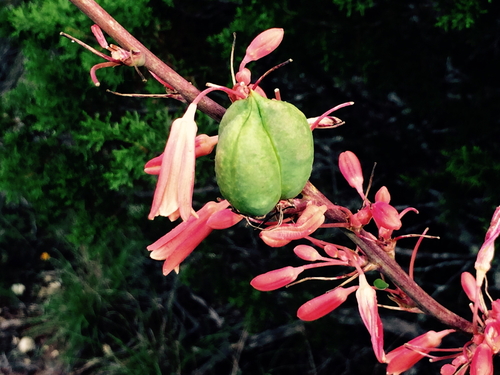
Hesperaloe is a small genus of about five to eight evergreen perennials in the asparagus family (Asparagaceae), native to Texas and northern Mexico in and around the Chihuahuan Desert. The plants form dense clumps of long, narrow, arching leaves, 0.6-1.2 m (2-4 ft) long, that are tough and leathery with slender white fibres curling from the margins. Despite common names such as red yucca, they are neither true yuccas nor aloes but relatives of the agaves. From late spring into autumn slender, sparsely branched flower spikes rise well above the foliage, often 1.5-2.5 m (5-8 ft) tall, carrying tubular bell-shaped flowers in red, coral, pink, salmon, or yellow. The flowers are rich in nectar and are visited by hummingbirds. The genus is highly tolerant of heat, drought, and poor soil, and the red yucca (H. parviflora) is hardy well into cold-winter regions. Plants are slow to clump up and are intolerant of wet, heavy soils, which cause crown and root rot. Once established they need almost no care.
Native Range
Hesperaloe is native to the south-western United States and northern and central Mexico, chiefly in Texas and the Chihuahuan Desert region. Species grow on dry, rocky slopes, grassland, and desert scrub.Suggested Uses
Hesperaloe species are planted in xeriscape, desert, and gravel gardens, in median strips and parking-lot islands, and as low-water accents in hot, sunny borders. The evergreen clumps and tall flower wands give vertical form in dry plantings, and the nectar-rich flowers draw hummingbirds. Plants suit large containers and rock gardens.How to Identify
Appearance
Size & Dimensions
Height2' - 8'
Width/Spread2' - 4'
Bloom Information
Detailed Descriptions
Flower Description
red, coral, pink, salmon, or yellowFoliage Description
blue-green to grey-greenGrowing Conditions
Sun Requirements
Requires 6-12 hours of direct sunlight daily
• Full Sun: 6+ hours of direct sunlight
• Partial Shade: 3-6 hours of direct sunlight
• Full Shade: Less than 3 hours of direct sunlight
Care & Maintenance
Care Guide
Plants grow in full sun on sharply drained sandy, gravelly, or rocky soil at a pH of 6.0-8.0. Once established they tolerate intense heat, reflected light, wind, and prolonged drought, and need watering only during extended dry weather. Wet, heavy, or poorly drained soil causes crown and root rot, especially in winter. The red yucca is hardy to about USDA zone 5, while some species are more frost-tender. Plants are slow-growing and need little feeding.Pruning
Spent flower spikes are cut to the base after bloom, or left standing for winter form. Tattered outer leaves are trimmed away to tidy the clump. No other pruning is needed, and the clumps are left undisturbed once established.Container Growing
Suitable for container growing
Minimum container size: 3 gallons