Heptacodium, Genus, miconioides, Species,
- Genus & species
seven son flower
Central China (Zhejiang, Hubei, Anhui); rocky limestone cliffs and scrub at 2,000–4,000 ft (600–1,200 m); introduced to Western cultivation 1980
Overview
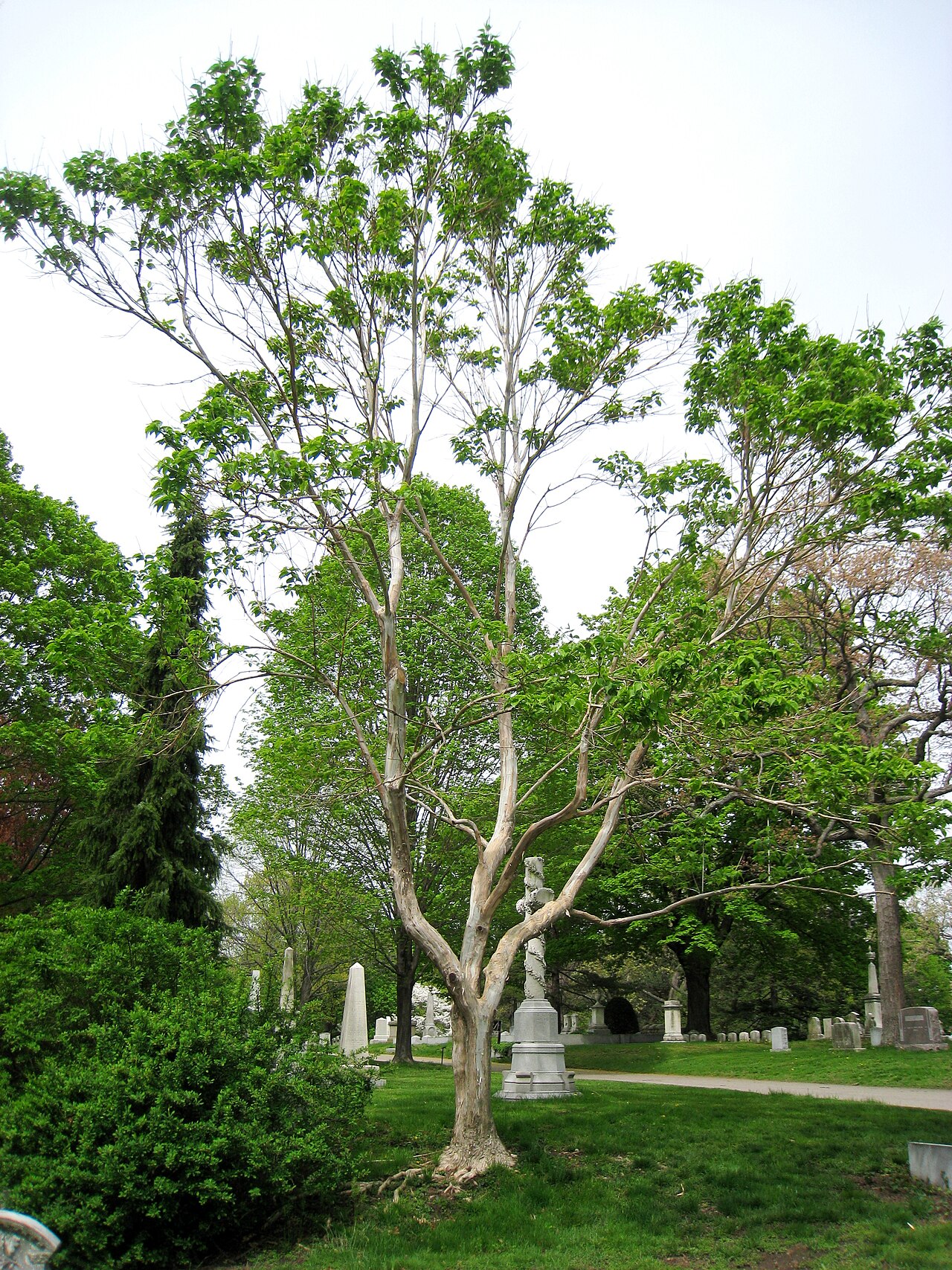
Heptacodium miconioides is a large deciduous shrub or small multi-stemmed tree with an upright to vase-shaped habit, reaching 15–20 feet (4.5–6 m) tall and 10–15 feet (3–4.5 m) wide. Fragrant creamy-white flowers open in whorled panicles of seven (the genus name means 'seven cups') from August through September, a bloom window when few other woody plants in temperate gardens are flowering. After petal drop, the persistent calyces enlarge and turn bright rose-pink to reddish-purple from September into October, producing a second display phase that lasts 4–6 weeks after the flowers fade. The opposite, glossy dark green leaves are 3–5 inches (8–13 cm) long with three prominent longitudinal veins. Bark on mature stems exfoliates to reveal pale tan to cream inner bark. Growth rate is fast, reaching near-mature size in 5–8 years. Hardy in USDA zones 5–9. The large mature size, irregular branching habit that can require training, and cold sensitivity of young wood in zone 5 are trade-offs.
Native Range
Heptacodium miconioides is native to central China (Zhejiang, Hubei, and Anhui provinces), on rocky limestone cliffs and in scrub at 2,000–4,000 feet (600–1,200 m). The species was introduced to Western cultivation by the 1980 Sino-American Botanical Expedition and is considered endangered in the wild.Suggested Uses
Planted as a specimen, patio tree, or screen at 10–15 foot (3–4.5 m) spacing. The August–October bloom window fills a seasonal gap when few other woody plants in temperate gardens are flowering. The sequence of fragrant white flowers, then bright rose-pink persistent calyces, then exfoliating bark supplies three seasons of visual interest. Fast growth reaches near-mature size in 5–8 years, giving quick screening. The mature size of 15–20 feet (4.5–6 m) tall and 10–15 feet (3–4.5 m) wide is not suited to small gardens or narrow planting beds.How to Identify
Appearance
Size & Dimensions
Height15' - 20'
Width/Spread10' - 15'
Bloom Information
Produces creamy-white fragrant tubular flowers in terminal panicles of whorled seven-flowered clusters from August through September. Individual flowers are 0.4–0.5 inch (10–12 mm) long. After the petals fall in late September, the persistent calyces enlarge and turn bright rose-pink to reddish-purple through October, extending the two-phase display to 8–10 weeks total. Fragrance is sweet and carries several feet in warm air.
Detailed Descriptions
Flower Description
Creamy-white fragrant tubular flowers in whorled panicles of seven; followed by bright rose-pink to reddish-purple persistent enlarged calycesFoliage Description
Glossy dark green, opposite; 3–5 inches (8–13 cm) long; three prominent longitudinal veinsGrowing Conditions
Sun Requirements
Requires 4-10 hours of direct sunlight daily
• Full Sun: 6+ hours of direct sunlight
• Partial Shade: 3-6 hours of direct sunlight
• Full Shade: Less than 3 hours of direct sunlight
Care & Maintenance
Care Guide
Plant in full sun to partial shade in average to moist, well-drained loam, clay, or sandy soil at pH 5.5–7.5. Hardy in USDA zones 5–9, with occasional young-wood tip dieback in cold zone 5 winters. A wide range of soil conditions including alkaline and clay soils is tolerated. Growth is fast, and young plants often develop an irregular branching habit that can be trained by selective pruning. Once established the species tolerates short dry periods, though prolonged drought reduces flower production. No serious pest or disease problems are known.Pruning
Prune in late winter to shape. Training as a single-trunk small tree is done by removing lower branches and selecting a central leader over the first 3–5 years; training as a multi-stemmed large shrub leaves 3–5 main stems from the base. Suckers are removed at the base when a single-trunk form is wanted. Hard renovation pruning is tolerated from well-established plants.Pruning Schedule
Prune: February–March
late spring