Overview
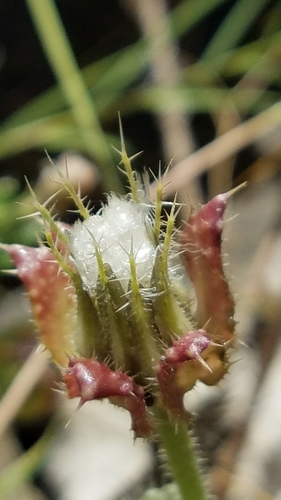
Helminthotheca echioides is a coarse, bristly annual or biennial in the aster family, growing 1-3 feet (30-90 cm) tall, occasionally taller, on stiff, branching stems. The whole plant is covered with hooked, blister-based bristles that make it rough and prickly to handle. The lower leaves are oblong, 4-8 inches (10-20 cm) long, with wavy edges and pale raised swellings, while the upper leaves clasp the stem. From summer into autumn the branched stems bear yellow, dandelion-like flower heads about 0.75-1.25 inches (2-3 cm) across, each set in a ring of three to five broad, heart-shaped outer bracts that frame the head. The flowers are followed by curved seeds carried on a feathery pappus and spread by wind. Plants grow on disturbed ground, roadsides, field edges, and waste places, often on heavy or chalky soils. The species self-seeds heavily and can form dense stands in fallow ground. It has naturalized widely outside its Mediterranean home. The bristly foliage is generally left untouched by grazing animals. A deep taproot anchors mature plants.
Native Range
Helminthotheca echioides is native to the Mediterranean region and western Europe. It has naturalized across temperate areas of North and South America, Australia, and beyond. It grows on disturbed ground, roadsides, field margins, and waste places, often on clay or chalky soils.Suggested Uses
Rarely grown on purpose, bristly oxtongue is mostly seen as a weed of waste ground and field edges. The young leaves are eaten as a cooked green in parts of the Mediterranean. Bees and hoverflies visit the flowers for nectar and pollen.How to Identify
Appearance
Size & Dimensions
Height1' - 3'
Width/Spread1' - 2'
Bloom Information
Detailed Descriptions
Foliage Description
greenGrowing Conditions
Sun Requirements
Requires 6-12 hours of direct sunlight daily
• Full Sun: 6+ hours of direct sunlight
• Partial Shade: 3-6 hours of direct sunlight
• Full Shade: Less than 3 hours of direct sunlight
Water & Climate
Water Needs
Drought Tolerance
Drought tolerant when established
Care & Maintenance
Care Guide
Plants grow in full sun on a wide range of soils, including heavy clay and chalk, and tolerate drought and poor ground. They need no care and appear on their own as a weed of disturbed and fallow land. Germination occurs in autumn or spring, and plants flower in their first or second year before dying. Cutting or pulling plants before seed set is the usual way to limit spread. The species self-seeds heavily from abundant wind-borne seed. A deep taproot makes older plants harder to pull.Pruning
No pruning is needed for this weedy plant. Cutting or mowing before the seed heads ripen reduces self-seeding. Spent plants are cleared after they set seed and die.Toxicity
Non-toxicPlanting Guide
Planting Methods & Timing
Planting Method
direct sow