Heliomeris, Genus, multiflora, Species,
- Genus & species
showy goldeneye
Western United States (Rocky Mountains and Great Basin)
Overview
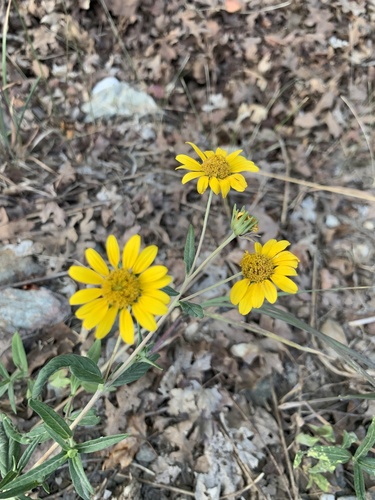
Heliomeris multiflora is a slender, many-branched perennial in the daisy family, growing 1-4 feet (30-120 cm) tall on thin, wiry stems that form an open, airy clump. The narrow, paired leaves are rough-textured and 1-3 inches (2.5-7.5 cm) long, sparse along the upper stems. From summer into fall the branch tips carry numerous small sunflower-like heads about 1-1.5 inches (2.5-4 cm) wide, each with 8-14 yellow ray florets around a yellow to brownish center. An established plant can carry dozens of heads at once over a long season. It grows in mountain meadows, open conifer woodland, sagebrush flats, and roadsides across the western United States, from moderate to high elevations. The flowers draw bees and butterflies, and the seeds feed small birds. The thin stems can lean or sprawl in rich soil or shade, and the plant is short-lived in some sites, persisting through self-seeding. It tolerates drought, cold, and poor soils once established. It grows in full sun on well-drained ground and is hardy in USDA zones 4 to 8. Plants reseed and may also be grown as a fast-blooming annual.
Native Range
Native to the western United States, through the Rocky Mountains, Great Basin, and Southwest, growing in mountain meadows, open pine and aspen woodland, sagebrush flats, and roadsides from moderate to high elevations.Suggested Uses
Used in native, meadow, and pollinator plantings, wildflower mixes, and dry borders, spaced 18-24 inches (45-60 cm) apart. Its long bloom and many small flowers suit naturalistic and bee-friendly designs. It mixes with grasses and other drought-tolerant perennials.How to Identify
Appearance
Size & Dimensions
Height1' - 4'
Width/Spread1' - 2'
Bloom Information
Detailed Descriptions
Foliage Description
greenGrowing Conditions
Sun Requirements
Requires 6-10 hours of direct sunlight daily
• Full Sun: 6+ hours of direct sunlight
• Partial Shade: 3-6 hours of direct sunlight
• Full Shade: Less than 3 hours of direct sunlight
Care & Maintenance
Care Guide
Grow in full sun in well-drained soil of low to average fertility, including sandy, gravelly, or rocky ground. Established plants tolerate drought and need little water, while rich soil and shade make the thin stems flop. It is cold-hardy and suited to high-elevation and continental climates. The species is short-lived in some gardens but maintains itself by self-seeding. Cutting back after the first flush can tidy the plant and prompt more bloom. No serious pests or diseases affect it.Pruning
Cut plants back by a third in early summer to limit flopping and encourage branching. Shear spent flowers to extend bloom and reduce excess self-seeding. Remove dead stems in late winter.Pruning Schedule
Prune: June
summer
Container Growing
Suitable for container growing
Minimum container size: 3 gallons