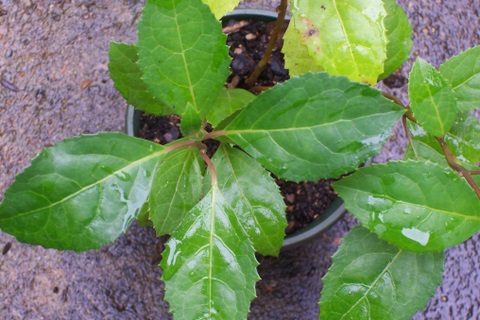
Hedycarya, Genus, angustifolia, Species,
- Genus & species
Australian mulberry
Overview
Hedycarya angustifolia is an evergreen large shrub or small tree reaching 15-40 feet (4.5-12 m) tall, often multi-stemmed and growing along shaded watercourses. Leaves are opposite, narrow and elliptic to oblong, 2-5.5 inches (5-14 cm) long, with toothed margins and a glossy dark green upper surface. The species is dioecious, with separate male and female plants; small cream to greenish flowers about 0.3 inch (8 mm) across appear in spring. Female plants carry clusters of fleshy drupes that ripen from yellow through orange to red in summer and autumn, each about 0.3-0.5 inch (8-12 mm) long. Despite the common name it is not related to true mulberries. Growth is slow to moderate. It needs sheltered, moist, shaded conditions and is damaged by drought, frost, and full exposure.
Native Range
Native to southeastern Australia from Queensland through New South Wales and Victoria to Tasmania. Grows in cool and warm temperate rainforest and wet sclerophyll forest, usually along streams and in shaded gullies on moist, fertile soils.Suggested Uses
Grown in shaded, moist native gardens, rainforest plantings, and along watercourses, spaced 8-15 feet (2.4-4.5 m) apart. Ripe fruit draws native birds. Both male and female plants are needed for fruit, and the species grows poorly in dry, sunny, or frost-prone positions.How to Identify
Appearance
Size & Dimensions
Height15' - 40'
Width/Spread8' - 20'
Bloom Information
Cream to greenish flowers appear in spring, September through November. Male and female flowers are borne on separate plants, so fruit forms only where both are present. Drupes ripen through summer and autumn, December through April.
Detailed Descriptions
Flower Description
cream to greenishFoliage Description
glossy dark greenGrowing Conditions
Sun Requirements
Requires 2-6 hours of direct sunlight daily
• Full Sun: 6+ hours of direct sunlight
• Partial Shade: 3-6 hours of direct sunlight
• Full Shade: Less than 3 hours of direct sunlight
Care & Maintenance
Care Guide
Grows in part to full shade on moist, fertile, free-draining soils with steady water. The root zone needs to stay cool and damp; growth slows and foliage scorches in dry or exposed sites. Frost damages young growth, so sheltered positions reduce dieback. Mulching maintains the cool, moist root conditions of its rainforest habitat. Few pests are recorded, and fruit forms only where male and female plants grow together.Pruning
Tolerates light pruning to shape or to hold a shrub form. Lower stems can be thinned to expose a short trunk. Old or frost-damaged growth can be cut back in spring as new growth begins.Pruning Schedule
Prune: September–October
spring