Hackelia, Genus, spp., Multiple species,
- Genus
- Multiple species
stickseeds
Temperate North America, Eurasia, and Andean South America
Overview
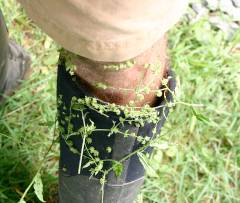
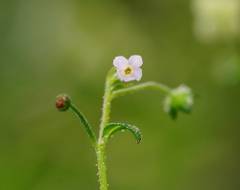
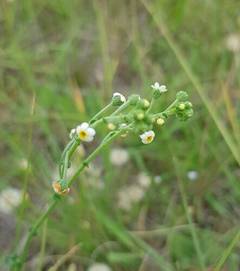
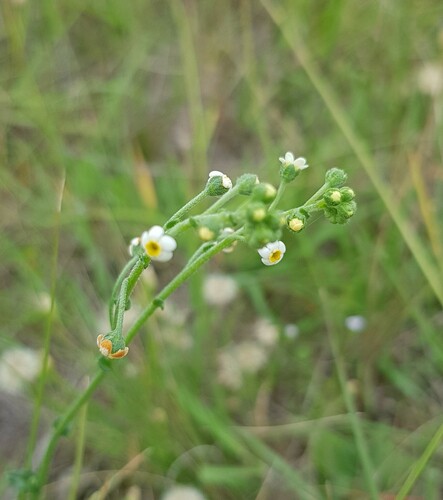
Hackelia is a genus of about 45 species of biennial and perennial herbs in the borage family (Boraginaceae), found in temperate North America, Eurasia, and the mountains of South America. Plants form a basal rosette and erect, leafy flowering stems 20-120 cm (8-47 in) tall, clothed in stiff hairs. The leaves are lance-shaped and hairy, the lower ones stalked and the upper ones stalkless. Small flowers, 2-10 mm across, are carried in branched, often one-sided coiled clusters and resemble those of forget-me-nots; most species are blue with a white or yellow central ring, though some are white. The common name stickseed refers to the nutlets, which are armed with barbed, hooked prickles that cling to fur, feathers, and clothing and disperse the seed. Hackelia grows in open woodland, forest clearings, montane meadows, streambanks, and roadside ground. Several species are weedy and spread readily through their clinging seed, while a few montane species are narrow endemics of conservation concern. Like many in the borage family, the foliage may contain pyrrolizidine alkaloids.
Native Range
Native to temperate North America, Europe, and Asia, with additional species in the Andes of South America. The genus is especially diverse in the mountains of western North America, where many species are restricted to particular ranges or soil types.Suggested Uses
Grown in woodland gardens, native-plant collections, and naturalistic montane or meadow plantings where the blue forget-me-not-like flowers suit informal schemes. The weedier species are generally kept out of tidy borders because the barbed seed spreads widely and clings to clothing and pets.How to Identify
Appearance
Size & Dimensions
Height8" - 3'11"
Width/Spread8" - 2'
Bloom Information
Flowering runs from late spring into summer, roughly May to August, varying with elevation and latitude. Lowland and biennial species tend to flower earlier, while high-montane species bloom through midsummer. The small flowers are visited by bees and other short-tongued insects, after which the barbed nutlets develop.
Detailed Descriptions
Flower Description
blue with a white or yellow eye, or whiteFoliage Description
green to grey-greenGrowing Conditions
Sun Requirements
Requires 4-8 hours of direct sunlight daily
• Full Sun: 6+ hours of direct sunlight
• Partial Shade: 3-6 hours of direct sunlight
• Full Shade: Less than 3 hours of direct sunlight