Leucophyllum, Genus, frutescens, Species, 'Green Cloud', Cultivar,
- Genus & species
- Cultivar
green cloud Texas sage
Chihuahuan Desert (southern Texas and northern Mexico)
Overview
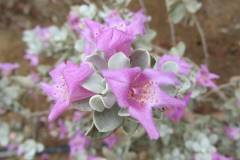
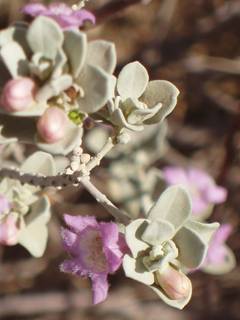
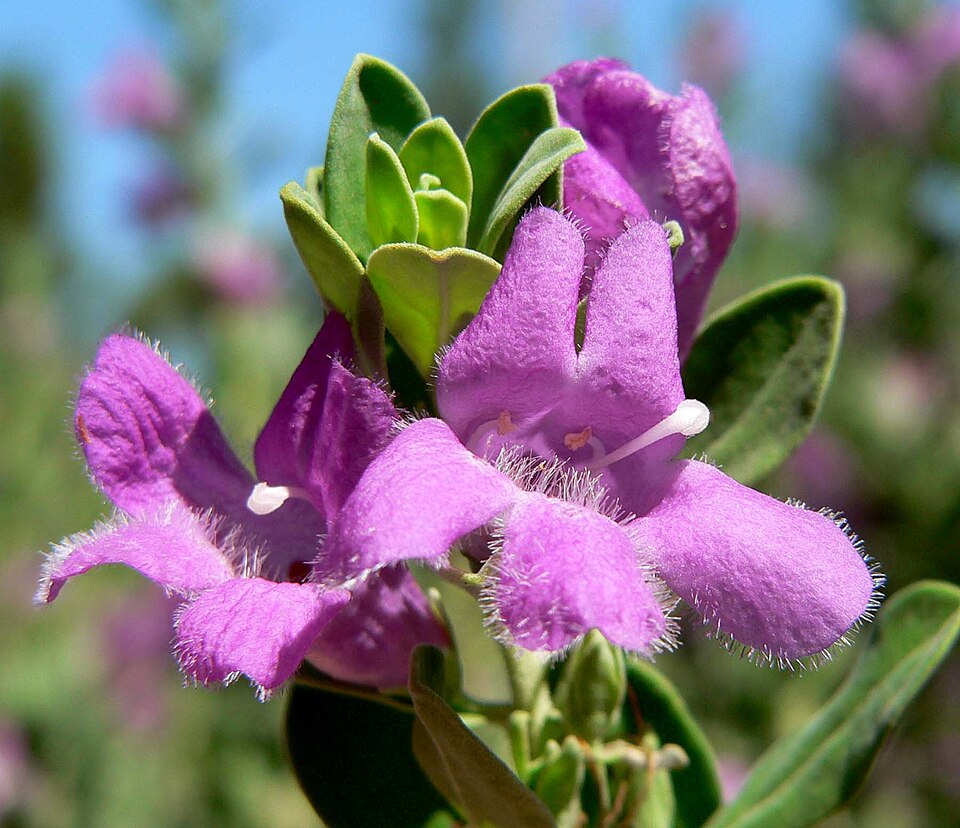
Leucophyllum frutescens 'Green Cloud' is an evergreen shrub reaching 6-8 feet (1.8-2.4 m) tall and 6-8 feet (1.8-2.4 m) wide at maturity. The cultivar carries grey-green foliage compared to the silver-white tomentose leaves of the species type, with individual leaves obovate, 0.75-1 inch (2-2.5 cm) long, covered in dense pubescence on both surfaces. Tubular magenta-pink flowers 0.75-1 inch (2-2.5 cm) long appear singly in leaf axils across the upper third of the canopy. Bloom episodes are triggered by atmospheric humidity following summer thunderstorms, producing 3-7 flushes per year between June and October in zones 8-10. Each flush lasts 5-10 days. Stems become woody with age, with grey-brown bark that exfoliates in thin strips on older specimens. Growth rate is slow to moderate, adding 6-12 inches (15-30 cm) per year once established. Leaves persist year-round in zones 8b and warmer; partial defoliation can occur after temperatures below 15°F (-9°C). Roots are shallow and laterally spreading, intolerant of saturated soils, with root rot developing within 7-14 days when drainage is impaired. Plants live 8-15 years in irrigated landscapes compared to 20-30 years in unirrigated arid sites.
Native Range
Native to the Chihuahuan Desert region of southern Texas and adjacent northern Mexico, including the states of Coahuila, Nuevo León, San Luis Potosí, and Tamaulipas. Found on limestone-derived rocky slopes, gravelly flats, and arroyo margins from 600 to 5,500 feet (180 to 1,675 m) elevation, in arid scrublands receiving 8-16 inches (200-400 mm) of annual rainfall.Suggested Uses
Used as an informal hedge or screening shrub at 4-6 feet (1.2-1.8 m) spacing in zones 8-10 xeriscapes. Planted as a specimen, in mass plantings on slopes with rocky or gravelly soils, and in highway median plantings throughout the southwestern United States. Grows in containers of at least 15 gallons (57 L) with a free-draining cactus mix, with flowering reduced compared to in-ground specimens.How to Identify
Appearance
Size & Dimensions
Height6' - 8'
Width/Spread6' - 8'
Colors
Bloom Information
Flowering occurs in episodic flushes triggered by atmospheric humidity, typically following summer thunderstorms or monsoon rains in late June through October. In zones 8b-10, 3-7 flowering episodes occur per growing season, with each episode lasting 5-10 days. Bloom is reduced or absent in extended dry periods even with supplemental irrigation. In the absence of summer humidity, plants flower sporadically with smaller flush sizes.
Detailed Descriptions
Foliage Description
grey-greenGrowing Conditions
Sun Requirements
Requires 6-12 hours of direct sunlight daily
• Full Sun: 6+ hours of direct sunlight
• Partial Shade: 3-6 hours of direct sunlight
• Full Shade: Less than 3 hours of direct sunlight
Care & Maintenance
Care Guide
Establishment irrigation is deep and infrequent, with soil drying between applications during the first 12-18 months. Once established, plants survive on rainfall in zones 8-10 with annual precipitation above 8 inches (200 mm). Saturated soils cause root rot within 7-14 days, particularly in clay or compacted sites. Cotton root rot caused by Phymatotrichopsis omnivora is the principal disease in alkaline soils of central Texas, killing plants in summer when soil temperatures exceed 82°F (28°C). Nitrogen applications above 0.5 pounds per 100 square feet (2.4 kg per 100 m²) reduce flowering and produce weak, leggy growth. Spider mites develop in hot, dry, windless conditions, with webbing and stippling appearing on lower leaves first.Pruning
Annual late-spring pruning in April or May after frost danger passes maintains the natural rounded form, with the previous season's growth removed by no more than one-third. Heavy shearing into formal hedges reduces flowering by 60-80% by removing flower-bearing lateral wood. Severe rejuvenation cuts to within 12-18 inches (30-45 cm) of the ground are tolerated and produce dense regrowth from the base within one growing season. Plants older than 12-15 years often produce sparse basal regrowth following rejuvenation cuts.Pruning Schedule
Prune: April–May
late spring
Container Growing
Suitable for container growing
Minimum container size: 15 gallons