Goodia, Genus, spp., Multiple species,
- Genus
- Multiple species
golden tip
Overview
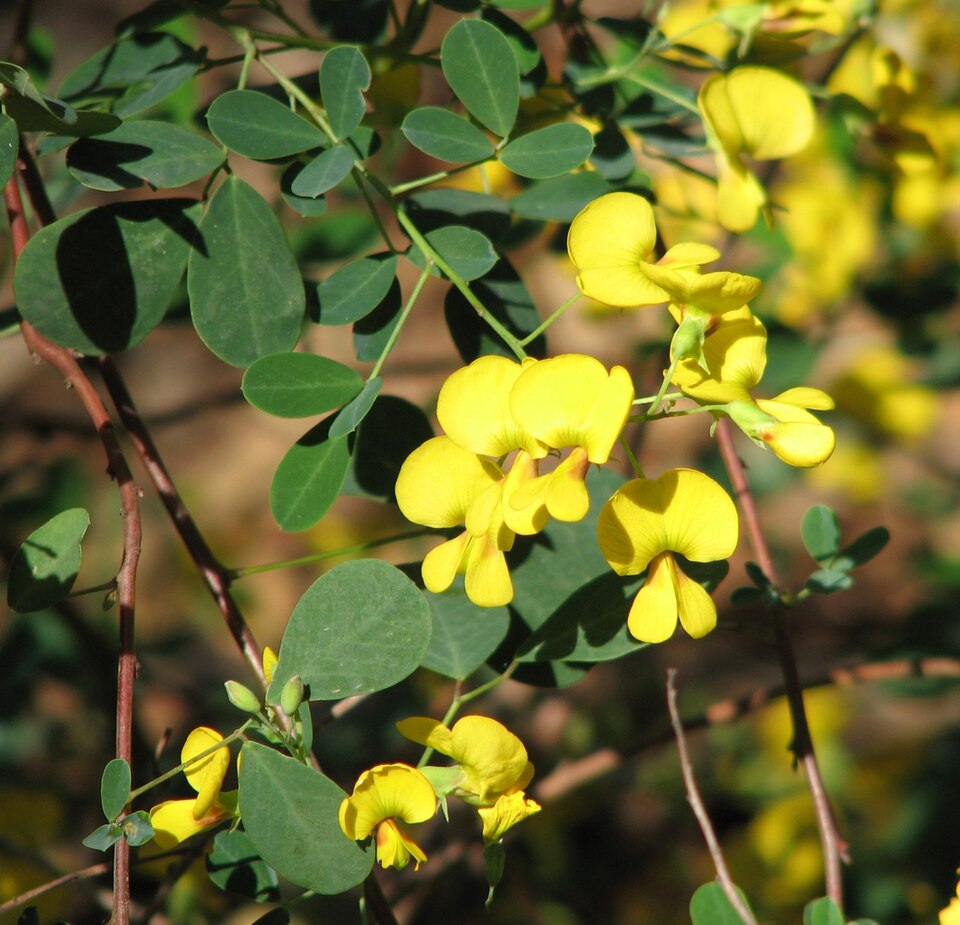
Goodia is a small genus of two or three species of fast-growing evergreen shrubs in the pea family (Fabaceae), endemic to Australia. G. lotifolia is widespread across the south and east of the continent, while G. medicaginea is more localised in drier inland areas. Plants form rounded to upright shrubs 3–10 ft (0.9–3 m) tall and 3–8 ft (0.9–2.4 m) wide, with slender, arching branches and soft, clover-like foliage. The leaves are divided into three oval to wedge-shaped leaflets 0.4–1.2 in (10–30 mm) long, blue-green above and paler beneath. In spring and early summer the branch tips carry loose sprays of small pea flowers about 0.4 in (10 mm) long, yellow with reddish-brown markings at the centre, giving rise to the common name golden tip. Flat pods 0.6–1 in (15–25 mm) long follow, ripening from green to brown and holding several hard seeds. As a legume, the genus fixes nitrogen and colonises quickly after fire or clearing, often appearing as a pioneer in regenerating forest. The foliage contains alkaloids and has been linked to poisoning of grazing livestock. Plants are short-lived, typically persisting 5–10 years.
Native Range
Endemic to Australia, with G. lotifolia occurring across south-eastern and south-western states in forest and woodland understorey, and G. medicaginea more restricted to drier inland areas. Plants often appear after fire or soil disturbance.Suggested Uses
Grown in native gardens, woodland plantings, and revegetation and erosion-control work, where its quick growth gives early cover. The soft foliage and spring flowers suit informal screens and the middle of native shrub borders.How to Identify
Appearance
Size & Dimensions
Height3' - 10'
Width/Spread3' - 8'
Bloom Information
Flowering peaks in spring and early summer, roughly September to December in the native range, when the branch tips are lined with yellow and red-brown pea flowers. Bloom is heaviest on plants in open, sunny positions. Pods ripen through summer and shed seed that can remain dormant in the soil for years.
Detailed Descriptions
Flower Description
Yellow with reddish-brown markingsFoliage Description
Blue-greenGrowing Conditions
Sun Requirements
Requires 6-10 hours of direct sunlight daily
• Full Sun: 6+ hours of direct sunlight
• Partial Shade: 3-6 hours of direct sunlight
• Full Shade: Less than 3 hours of direct sunlight
Care & Maintenance
Care Guide
Plants grow in full sun to light shade and in most free-draining soils, including sandy and gravelly types, tolerating short dry spells once established. Growth is rapid, and light, regular watering through the first season speeds establishment. As nitrogen-fixing legumes they need little or no added fertiliser, and high-phosphorus feeds can harm them. Most plants are short-lived but renew readily from soil-stored seed, especially after fire or cultivation. The alkaloid-bearing foliage is toxic to livestock that graze it. Frost hardiness is moderate, with established plants tolerating light frosts.Pruning
A light tip prune after flowering keeps the soft, arching growth dense and can extend the plant short life. Plants tolerate being cut back into leafy wood but rarely reshoot strongly from bare older stems.Pruning Schedule
late springsummer
Container Growing
Suitable for container growing
Minimum container size: 5 gallons