Goodenia, Genus, blackiana, Species,
- Genus & species
Black's goodenia
Overview
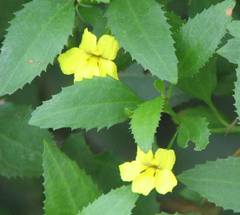
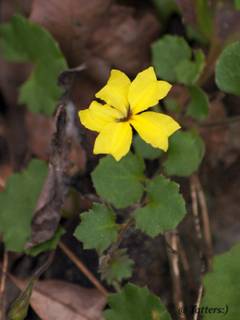
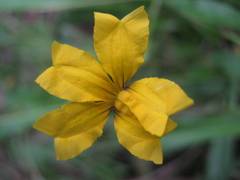
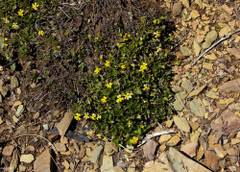
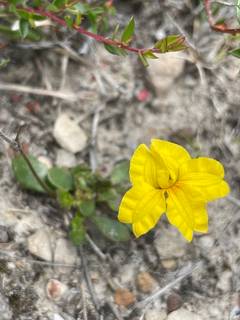
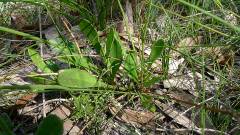
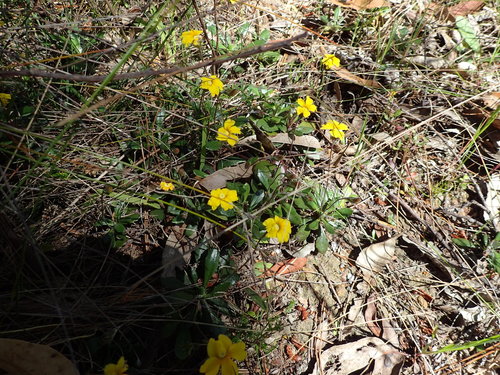
Goodenia blackiana is a low perennial herb that grows from a basal rosette of leaves, sending up flowering stems 6-14 inches (15-35 cm) tall. The basal leaves are oblong to spoon-shaped, 1.5-4 inches (4-10 cm) long, with toothed or wavy margins and a slightly fleshy texture. Yellow five-lobed flowers about 0.4-0.6 inch (10-15 mm) across open along the upper stems through spring and into summer; the lower lobes are winged and arranged in the fan shape typical of the family. Flowers are followed by small capsules holding flattened seeds. The plant spreads slowly to form a clump and may die back to the rootstock in dry summers, reshooting after autumn rain. It grows in open woodland and grassland on well-drained soils and tolerates seasonal dryness once established. Growth is low, and the foliage sits close to the ground outside the flowering period.
Native Range
Native to southeastern Australia, in South Australia and Victoria. Grows in open woodland, grassland, and mallee on well-drained sandy and loamy soils.Suggested Uses
Grown in rockeries, native plant gardens, and open borders on well-drained soil, spaced about 8-12 inches (20-30 cm) apart. Suited to low-water and grassland-style plantings. The low rosette habit keeps it short outside the flowering season.How to Identify
Appearance
Size & Dimensions
Height6" - 1'2"
Width/Spread6" - 1'
Bloom Information
Flowers mainly in spring and early summer, roughly September to December in its native range. Flowering follows good autumn and winter rainfall and may be sparse in dry years. Individual flowers last a few days, with new ones opening in succession on the upper stems.
Detailed Descriptions
Foliage Description
Green to grey-greenGrowing Conditions
Sun Requirements
Requires 5-9 hours of direct sunlight daily
• Full Sun: 6+ hours of direct sunlight
• Partial Shade: 3-6 hours of direct sunlight
• Full Shade: Less than 3 hours of direct sunlight
Care & Maintenance
Care Guide
Grows in full sun to light shade on free-draining sandy or loamy soil at a pH of about 5.5-7.0. Tolerates seasonal dryness once established by dying back to the rootstock, and needs little water beyond rainfall in its native climate. Grows poorly in waterlogged ground, where the rootstock rots. Self-sows from seed in open ground, and the clump widens slowly over several seasons. Snails graze new foliage in wet weather. Larger clumps can be divided in autumn.Pruning
Trim spent flowering stems after seed set to tidy the rosette and limit self-seeding. Remove dead leaves from the rosette in late summer. The plant reshoots from the rootstock after autumn rain.Container Growing
Suitable for container growing
Minimum container size: 2 gallons