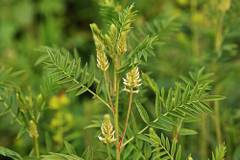
Glycyrrhiza, Genus, spp., Multiple species,
- Genus
- Multiple species
licorice
Europe, Asia, the Americas, and Australia
Overview
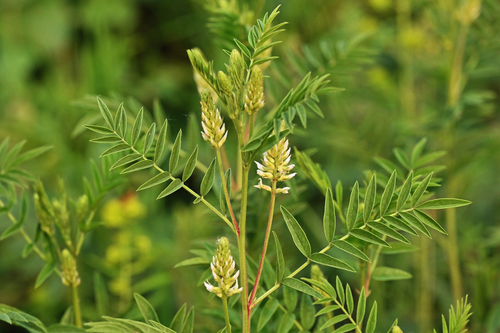
Glycyrrhiza is a genus of about 20 herbaceous perennial legumes in the pea family, Fabaceae, found across temperate and subtropical Europe, Asia, the Americas, and Australia. Plants form upright, branching stems 2-5 feet (0.6-1.5 m) tall with pinnately compound leaves of 9-17 leaflets that are often sticky or glandular. In summer the stems carry short spikes of small pea-type flowers in pale blue, violet, or white, followed by pods that may be smooth, bristly, or hooked depending on the species. Below ground the plants develop deep taproots and long horizontal rhizomes that spread into wide colonies and can be hard to remove once settled. G. glabra, common licorice, is grown for its roots, which contain glycyrrhizin, a compound far sweeter than sugar used to flavor confectionery, drinks, and tobacco; large or sustained intake of glycyrrhizin can raise blood pressure and lower potassium. G. uralensis is used in Chinese herbal medicine, and G. lepidota is native to North America. As legumes the plants fix nitrogen through root nodules. The spreading habit limits them to larger plantings.
Native Range
Glycyrrhiza is native across temperate and warm regions of Europe, Asia, the Americas, and Australia. G. glabra originates in the Mediterranean and western Asia, G. uralensis in central and eastern Asia, and G. lepidota across much of North America, where the plants grow in open grassland, riverbanks, and disturbed ground.Suggested Uses
Grown as a herb and root crop for flavoring and traditional medicine, and in larger borders and herb gardens where its spread is acceptable. G. lepidota is used in North American native and prairie plantings. The deep roots help bind soil on banks and disturbed ground.How to Identify
Appearance
Size & Dimensions
Height2' - 5'
Width/Spread2' - 4'
Bloom Information
Flowering occurs in summer, generally June to August, in short upright spikes of small pea flowers held among the upper leaves. The flowers are pale blue, violet, or white depending on species. Pods develop through late summer and autumn.
Detailed Descriptions
Flower Description
pale blue, violet, whiteFoliage Description
greenGrowing Conditions
Sun Requirements
Requires 6-10 hours of direct sunlight daily
• Full Sun: 6+ hours of direct sunlight
• Partial Shade: 3-6 hours of direct sunlight
• Full Shade: Less than 3 hours of direct sunlight