Gillenia, Genus, trifoliata, Species,
- Genus & species
Bowman's root
Eastern North America (Ontario and Michigan south to Georgia and Alabama; open woodlands, woodland edges, and mountain meadows)
Overview
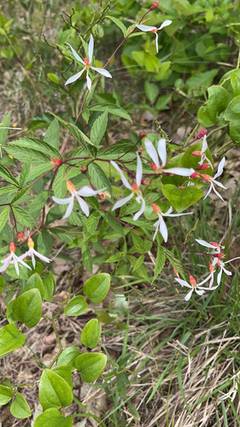
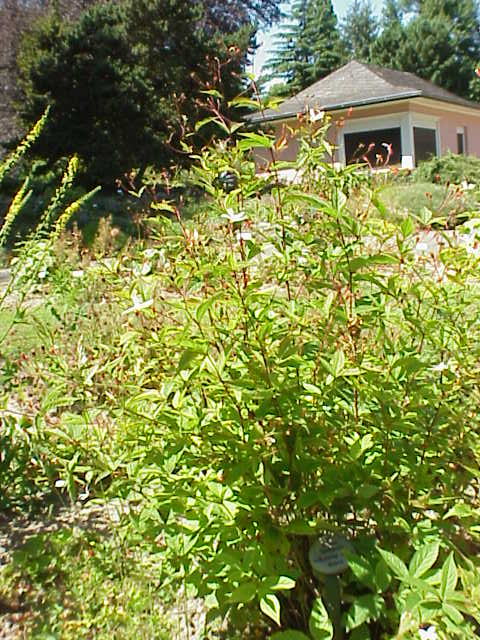
Gillenia trifoliata (also known by the synonym Porteranthus trifoliatus) is an upright clumping deciduous perennial in the rose family (Rosaceae) reaching 24–36 inches (60–90 cm) tall with a spread of 18–24 inches (45–60 cm). This eastern North American native produces airy star-shaped 5-petaled flowers 1 inch (2.5 cm) across in white to pale pink tones, carried in loose open panicles on wiry reddish-brown stems from May through July. After the petals drop, persistent reddish calyces extend the color display for 2–4 additional weeks beyond the bloom window. Foliage consists of trifoliate leaves with finely serrated lance-shaped leaflets arranged alternately on reddish stems, which builds an airy open-textured habit that runs more delicate than most rose-family perennials in cultivation. Fall foliage turns vivid red-orange before senescence. Growth rate runs slow initially, and the plant forms a long-lived deep-rooted clump over 2–3 growing seasons. Hardy to zone 4.
Native Range
Gillenia trifoliata is native to eastern North America, ranging from Ontario and Michigan south to Georgia and Alabama, where it grows in open woodlands, woodland edges, and mountain meadows.Suggested Uses
Grown in woodland edges, partially shaded borders, and naturalistic plantings at 18–24 inch (45–60 cm) spacing. The airy open flower structure adds a delicate naturalistic quality to the garden that runs counter to the bold solid-leaved perennials typical of most shade and part-shade plantings. The persistent reddish calyces and vivid fall foliage color carry multi-season ornamental interest beyond the bloom window. The plant functions as a cut flower for naturalistic arrangements. Slow establishment means the plant is not a working choice for positions requiring immediate visual impact in year one. Hot dry sites and heavy wet clay soils are not suitable given the cultural preferences.How to Identify
Appearance
Size & Dimensions
Height2' - 3'
Width/Spread1'6" - 2'
Bloom Information
Star-shaped 5-petaled flowers 1 inch (2.5 cm) across, white to pale pink, open in loose airy panicles from May through July across a 6–8-week bloom window. After petal drop, the persistent reddish calyces maintain color for 2–4 additional weeks, which extends the visible flowering display well beyond the petal-drop date. Total ornamental display runs 8–12 weeks between the bloom window and the calyx display that follows.
Detailed Descriptions
Flower Description
White to pale pink; star-shaped 5-petaled; persistent reddish calyces hold color after petal dropFoliage Description
Medium green trifoliate with serrated leaflets on wiry reddish-brown stems; vivid red-orange fall colorGrowing Conditions
Sun Requirements
Requires 3-8 hours of direct sunlight daily
• Full Sun: 6+ hours of direct sunlight
• Partial Shade: 3-6 hours of direct sunlight
• Full Shade: Less than 3 hours of direct sunlight
Care & Maintenance
Care Guide
Grows in partial shade to full sun in moist well-drained slightly acidic to neutral soil at pH 5.5–7.0, tolerating loam and clay. Hardy to zone 4. The species tolerates a range of light conditions but carries the heaviest flower load in brighter positions. The plant runs long-lived once established and takes 2–3 years to reach full mature size. The deep taproot makes transplanting difficult once the plant has established. No serious pest or disease problems.Pruning
The plant is cut to the ground in late fall or early spring after the foliage declines. The persistent calyces and vivid fall color both carry ornamental value, so cleanup should wait until the color has faded rather than running immediately after bloom closure.Pruning Schedule
Prune: March
early spring