Geraea, Genus, spp., Multiple species,
- Genus
- Multiple species
desert sunflower
Deserts of the southwestern United States and northwestern Mexico
Overview
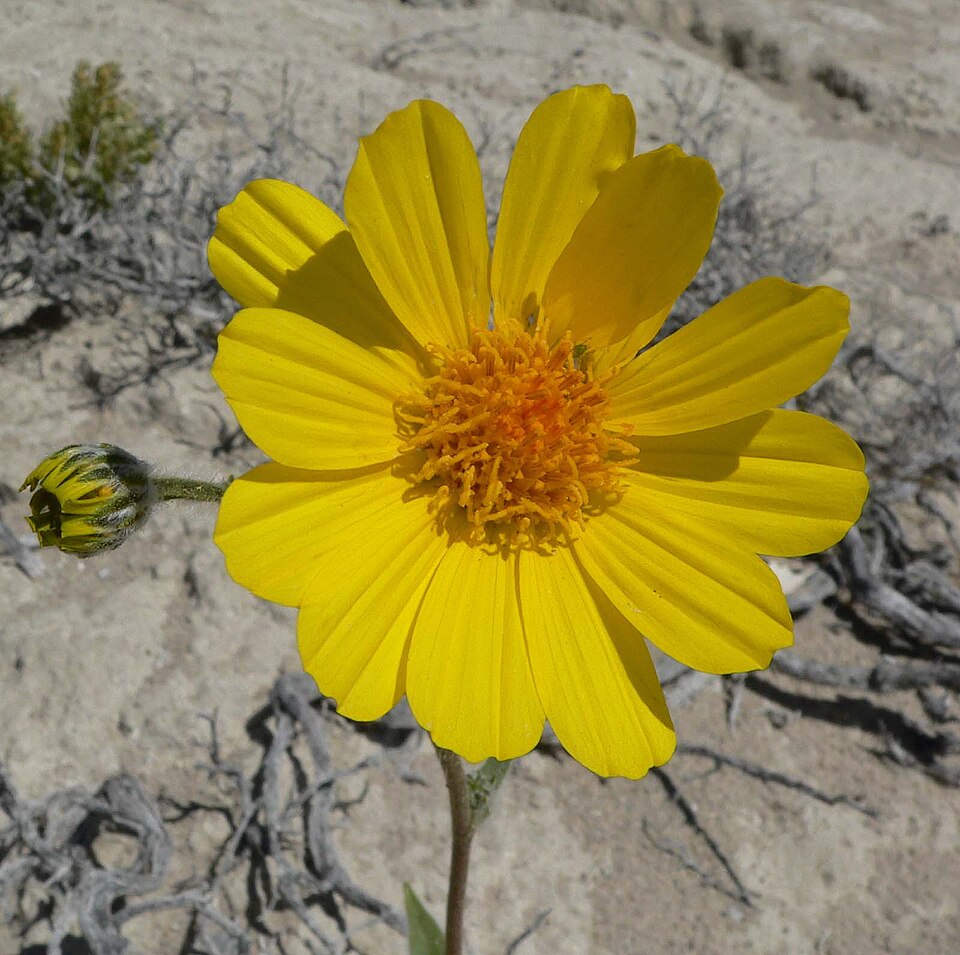
Geraea is a small genus of two flowering species in the daisy family, Asteraceae, native to the deserts of the southwestern United States and northwestern Mexico. G. canescens, the desert sunflower, is a winter-to-spring annual that germinates after autumn and winter rains and branches from the base into stems 1-2.5 feet (30-75 cm) tall covered in grey, rough hairs. G. viscida, the sticky desert sunflower, is a longer-lived woody-based perennial of coastal Baja California and southern California. Both carry yellow flower heads 1-2 inches (2.5-5 cm) across with broad ray florets surrounding a yellow to brownish disc, on slender branching stems. In wet years G. canescens forms broad sheets of bloom across open desert flats, while in dry years few plants appear at all, so flowering is highly variable from season to season. The grey-green leaves are oval to lance-shaped with toothed margins. Seeds carry stiff bristles that aid dispersal. The genus is adapted to heat, intense sun, and sandy or gravelly desert soils, and depends on seasonal rainfall rather than steady moisture.
Native Range
Geraea is native to the Mojave and Sonoran deserts of the southwestern United States, including California, Nevada, Arizona, and Utah, and into northwestern Mexico. G. canescens occupies open desert flats and dunes, while G. viscida grows in coastal scrub and chaparral of Baja California and southern California.Suggested Uses
Grown in desert and dry-climate wildflower plantings, native seed mixes, and gravel gardens for seasonal yellow bloom. G. canescens is sown to naturalize across open sunny ground where summer water is withheld. The flowers draw desert bees and other pollinators.How to Identify
Appearance
Size & Dimensions
Height1' - 2'6"
Width/Spread1' - 2'
Colors
Flower Colors
Foliage Colors
Bloom Information
G. canescens flowers mainly from February to May, with timing and abundance set by winter rainfall; mass blooms follow wet winters and little appears in drought years. G. viscida flowers in spring on its perennial framework. The yellow heads open in full sun and close or fade as plants dry off.
Detailed Descriptions
Foliage Description
grey-greenGrowing Conditions
Sun Requirements
Requires 6-12 hours of direct sunlight daily
• Full Sun: 6+ hours of direct sunlight
• Partial Shade: 3-6 hours of direct sunlight
• Full Shade: Less than 3 hours of direct sunlight
Water & Climate
Water Needs
Drought Tolerance
Drought tolerant when established