Geobalanus, Genus, spp., Multiple species,
- Genus
- Multiple species
gopher apple
Southeastern United States and tropical America
Overview
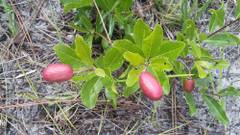
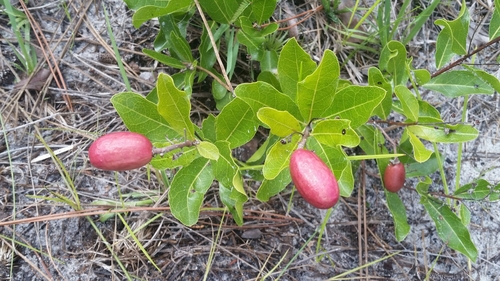
Geobalanus is a small genus of evergreen shrubs in the family Chrysobalanaceae, native to the Americas and recently segregated from Licania. The species most often grown, G. oblongifolius, called gopher apple, occurs in the sandy soils of the southeastern United States. It is a low, spreading subshrub whose woody stems stand only 6-12 inches (15-30 cm) above ground, while extensive horizontal rhizomes spread for several feet below the surface, so a large colony is often a single connected plant. The leathery, oblong leaves are 1-3 inches (2.5-8 cm) long with a pale underside. Small white to cream flowers appear in short clusters in late spring and summer, followed by oblong fruit about 1 inch (2.5 cm) long that ripens cream to pink and is eaten by gopher tortoises, mammals, and birds. The genus is adapted to fire and drought, resprouting from its deep rhizomes after burning. Its spreading, suckering habit makes it slow to contain in small spaces. Plants grow in pine scrub, sandhills, and coastal dunes.
Native Range
Geobalanus is native to the Americas, with G. oblongifolius ranging across the southeastern United States from the Carolinas to Florida and west to Louisiana. It grows in pine flatwoods, sandhills, scrub, and coastal dunes on dry sandy soils.Suggested Uses
Grown as an evergreen groundcover for dry sandy sites, slope stabilization, and coastal and pine-scrub restoration in the southeastern United States. It is planted in low-water and native gardens and supports wildlife with its fruit. The deep rhizomes help bind loose sand on dunes and banks.How to Identify
Appearance
Size & Dimensions
Height6" - 1'
Width/Spread3' - 6'
Bloom Information
Detailed Descriptions
Flower Description
white to creamFoliage Description
green with pale undersideGrowing Conditions
Sun Requirements
Requires 5-10 hours of direct sunlight daily
• Full Sun: 6+ hours of direct sunlight
• Partial Shade: 3-6 hours of direct sunlight
• Full Shade: Less than 3 hours of direct sunlight