Geitonoplesium, Genus, spp., Multiple species,
- Genus
- Multiple species
scrambling lily
Eastern Australia, New Guinea, Southeast Asia, and the western Pacific
Overview
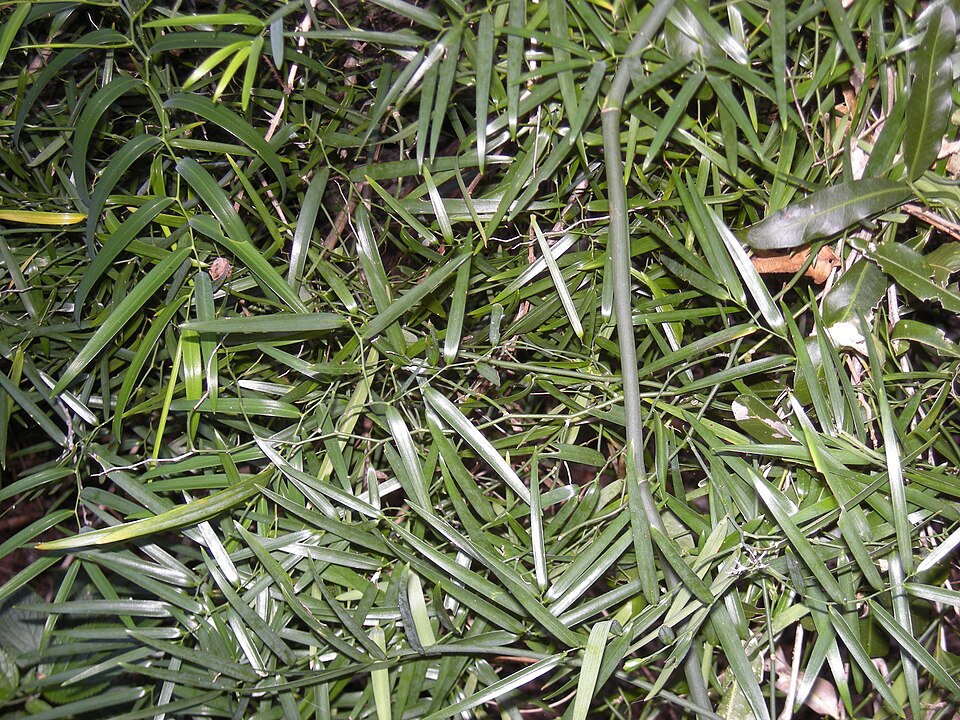
Geitonoplesium is a genus in the family Asphodelaceae containing a single widespread species, Geitonoplesium cymosum, known as scrambling lily. It is an evergreen climber with wiry, much-branched twining stems that scramble over shrubs and into the lower canopy, reaching 6-20 feet (1.8-6 m) where support allows. The glossy, lance-shaped leaves are 1-4 inches (2.5-10 cm) long and arranged alternately along the thin stems. In spring loose branched clusters of small six-parted flowers open in white, green, or purplish tones, each about 0.4 inch (10 mm) across, followed by shiny black berries 0.3-0.5 inch (8-12 mm) wide. Young shoots are tender and have been eaten cooked like asparagus. The plant grows in rainforest margins, wet eucalypt forest, and shaded gullies from eastern Australia through New Guinea to the western Pacific. Its twining habit means it needs a host or trellis, and without support it forms a low tangled mound. The smooth stems separate it from the similar Eustrephus latifolius, which has rough stems.
Native Range
Geitonoplesium is native to eastern Australia, New Guinea, parts of Southeast Asia, and islands of the western Pacific. It grows in rainforest, moist eucalypt forest, and shaded gullies, often along forest edges and clearings.Suggested Uses
Grown on trellises, fences, and pergolas and as a light screen in shaded, frost-free gardens. It is planted in rainforest and bush-regeneration settings as a native climber. The young shoots are used as a cooked vegetable in some regions.How to Identify
Appearance
Size & Dimensions
Height6' - 20'
Width/Spread3' - 6'
Bloom Information
Flowering occurs in spring, generally September to November in the southern hemisphere, in open branched sprays at the stem tips. The small six-parted flowers nod on slender stalks. Shiny black berries develop through summer.
Detailed Descriptions
Flower Description
white, green, purplishFoliage Description
glossy greenGrowing Conditions
Sun Requirements
Requires 2-6 hours of direct sunlight daily
• Full Sun: 6+ hours of direct sunlight
• Partial Shade: 3-6 hours of direct sunlight
• Full Shade: Less than 3 hours of direct sunlight
Care & Maintenance
Care Guide
The plant grows in part shade to full shade in moist, humus-rich, well-drained soil, reflecting its rainforest-margin origins. It needs a trellis, fence, or host shrub to climb, and twines as it ascends. Steady moisture suits it during the growing season, though established plants tolerate short dry spells in shade. Hardiness is limited to frost-free and near-frost-free climates, roughly USDA zones 10 to 11. Propagation is from fresh seed or division of the rhizome. The species has no major pest problems in cultivation.Pruning
Stems are trimmed at any time to control spread and to untangle growth from its support. Cutting back hard rejuvenates the wiry stems, which reshoot from the base and rhizome. Removing older tangled growth keeps the climber open.Container Growing
Suitable for container growing
Minimum container size: 3 gallons