Ficinia, Genus, spp., Multiple species,
- Genus
- Multiple species
star grasses
South Africa, chiefly the Cape, with some species in tropical Africa
Overview
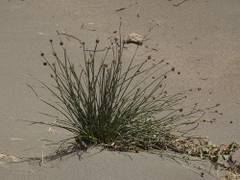
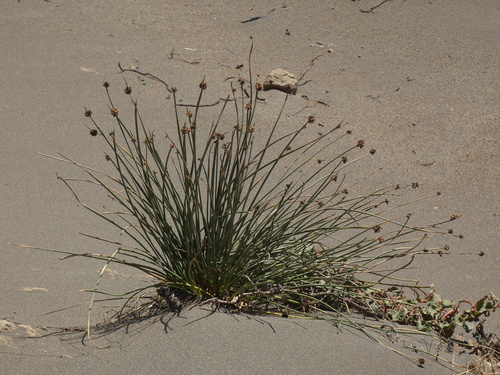
Ficinia is a genus of about 70 species of evergreen, grass-like sedges in the family Cyperaceae, native mostly to South Africa, especially the Cape, with a few species reaching tropical Africa. The plants form dense, tufted clumps of slender, wiry green stems and narrow leaves, 1-3 ft (30-90 cm) tall, that stay green year-round. Small flowers are grouped into rounded, knob-like brown clusters held at or near the stem tips, giving some species the common name star grass or knobby club-rush. F. nodosa, the knotted club-rush, is a tough coastal and dune plant grown widely for its rounded, fountain-like form and its tolerance of sand, salt, wind, and both dry and wet soils. Most species grow in open, sunny, sandy sites and stabilize loose ground with their fibrous roots. The genus tolerates a range of moisture but is frost-tender to lightly frost-hardy and damaged by hard freezes. Clumps are long-lived and need little care once established.
Native Range
Native chiefly to South Africa, with most species in the winter-rainfall Cape region, and a smaller number in tropical and eastern Africa. F. nodosa grows along the coasts of South Africa and is also native to Australia and New Zealand.Suggested Uses
Grown as an evergreen, grass-like accent in coastal, gravel, water-wise, and rain-garden plantings, for dune and slope stabilization, and in containers, spaced 18-30 in (45-75 cm) apart. F. nodosa is also used for erosion control on sandy ground.How to Identify
Appearance
Size & Dimensions
Height1' - 3'
Width/Spread1' - 3'
Bloom Information
The small brown flower clusters appear mainly in spring and summer and hold their knob-like shape for weeks, ageing from green to tan and brown. Wind carries the pollen, and small dry nutlets follow. The evergreen clumps keep their form between flowering periods.
Detailed Descriptions
Foliage Description
greenGrowing Conditions
Sun Requirements
Requires 6-10 hours of direct sunlight daily
• Full Sun: 6+ hours of direct sunlight
• Partial Shade: 3-6 hours of direct sunlight
• Full Shade: Less than 3 hours of direct sunlight
Care & Maintenance
Care Guide
Across the genus, Ficinia grows in full sun in sandy, well-drained soil and tolerates salt, wind, poor fertility, and a pH from about 5.5 to 7.5. Many species, including F. nodosa, take both dry and seasonally wet soils, which suits coastal and rain-garden settings. Plants are frost-tender to lightly frost-hardy and suited to USDA zones 8-11. The fibrous roots bind sand and loose soil, and clumps slowly enlarge without spreading aggressively. Established plants need little water or feeding. An occasional comb-through or trim removes old stems and keeps clumps fresh.Pruning
Little pruning is needed. Old, browned, or untidy stems are combed out by hand or cut back, and the whole clump can be sheared low in late winter to renew growth in colder areas. Plants regrow from the base after cutting.Container Growing
Suitable for container growing
Minimum container size: 3 gallons