Overview
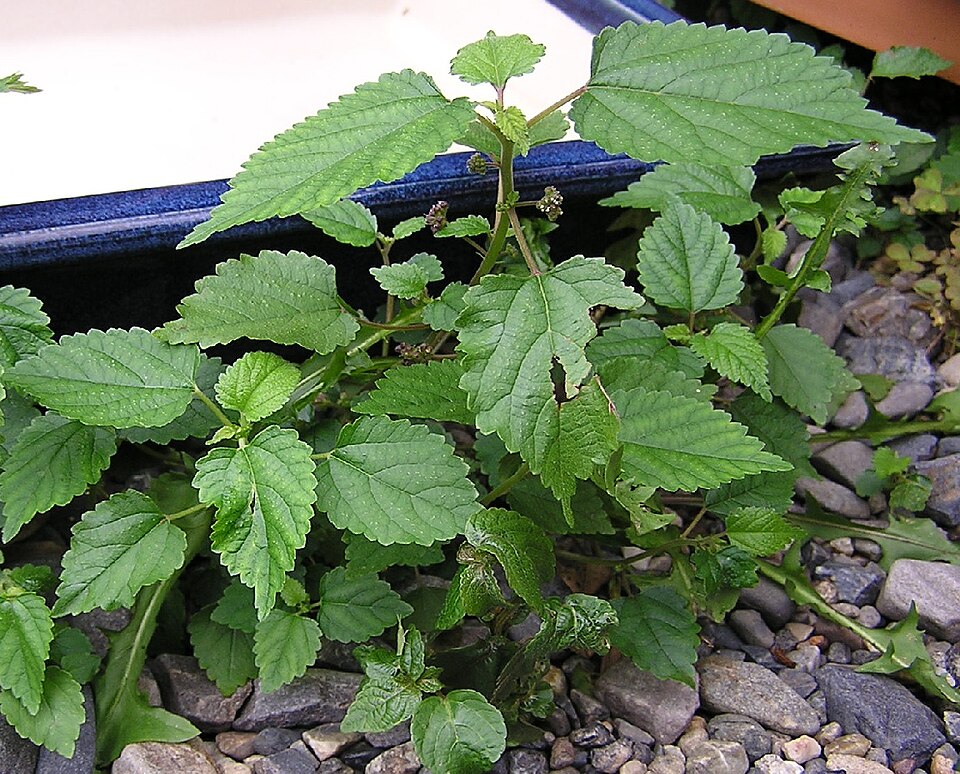
Fatoua is a small genus of herbaceous plants in the mulberry family (Moraceae), comprising roughly three species native to eastern Asia, Australia, and islands of the western Pacific. Plants are annual or short-lived, growing 8-40 inches (20-100 cm) tall on slender, erect, often branched stems. Leaves are alternate, broadly ovate with toothed margins and a tapering tip, 1-4 inches (2.5-10 cm) long, and covered in short rough hairs that give the foliage a sandpapery texture. Unlike the woody trees and shrubs that dominate Moraceae, Fatoua species are soft-stemmed and complete their growth in a single season across much of their range. Tiny flowers are borne in compact axillary clusters; the greenish to purplish heads measure only 0.1-0.2 inch (3-5 mm) across and are wind- and self-pollinated rather than insect-pollinated. The fruit is a small achene that the plant expels mechanically, scattering seed up to several feet. F. villosa, the most widespread species, has naturalized far beyond its native range and appears as a volunteer in container nurseries, greenhouses, and disturbed ground across temperate and subtropical regions. It is rarely grown intentionally and turns up more often as a spontaneous colonizer of cultivated soil. Rapid seed set and tolerance of shade make established colonies persistent once present.
Native Range
Fatoua is native to eastern Asia, Australia, and the western Pacific islands, with its center of diversity in subtropical and warm-temperate East Asia. F. villosa has spread widely as an introduced weed in North America, Europe, and other temperate regions.Suggested Uses
Fatoua is rarely grown deliberately and has no established landscape role. It is most often documented as a volunteer in nursery containers, greenhouses, and disturbed urban soils, where its presence marks recently cultivated ground.How to Identify
Appearance
Size & Dimensions
Height8" - 3'4"
Width/Spread6" - 1'6"
Bloom Information
Flowering occurs from summer into autumn wherever the growing season is long, and nearly year-round in frost-free greenhouses. The minute flowers are clustered in axillary heads and are not insect-pollinated, so they carry no petals or nectar display. Seed ripens quickly after flowering, allowing several overlapping generations in a single warm season.
Detailed Descriptions
Flower Description
greenish to purplishFoliage Description
greenGrowing Conditions
Sun Requirements
Requires 2-8 hours of direct sunlight daily
• Full Sun: 6+ hours of direct sunlight
• Partial Shade: 3-6 hours of direct sunlight
• Full Shade: Less than 3 hours of direct sunlight
Water & Climate
Water Needs
