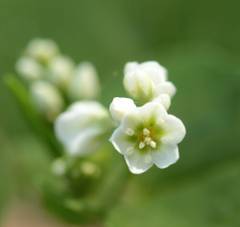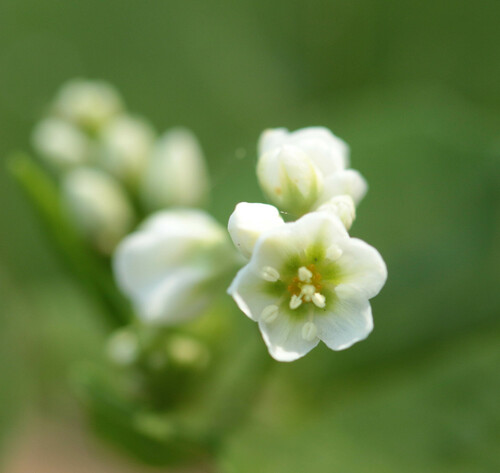
Fagopyrum, Genus, spp., Multiple species,
- Genus
- Multiple species
buckwheat
Temperate and montane Asia (centre of diversity in south-western China)
Overview
Fagopyrum is a genus of about 15 species of annual and perennial herbs in the knotweed family, Polygonaceae, native to temperate and montane Asia, with the centre of diversity in south-western China. The genus includes the cultivated grain crops common buckwheat, F. esculentum, and Tartary buckwheat, F. tataricum, both fast-growing annuals. Plants form erect, often reddish, branching stems 1-4 feet (30-120 cm) tall, with alternate heart- to arrow-shaped leaves. Small five-parted flowers, white to pink, are carried in branched clusters from the leaf axils and stem tips through summer and are visited heavily by bees. Each flower is followed by a single three-angled seed, the buckwheat grain, which is milled into flour and groats despite the plants not being grasses. Buckwheat matures quickly, often setting seed within 10 to 12 weeks of sowing, and is grown as a grain, a cover crop, and a nectar source. Large amounts of the fresh green plant can cause light-sensitivity in pale-skinned grazing animals. The genus grows on a wide range of soils and tolerates poor ground but is cut down by frost. It does not persist where summers are cold and short.
Native Range
Fagopyrum is native to temperate and montane Asia, with the greatest diversity in south-western China; the cultivated buckwheats are now grown across temperate regions worldwide.Suggested Uses
Grown as a grain and pseudocereal crop, as a fast summer cover crop and green manure, and as a bee forage plant. The quick growth fills gaps between main crops and suppresses weeds. Buckwheat flour and groats are used in a range of foods.How to Identify
Appearance
Size & Dimensions
Height1' - 4'
Width/Spread6" - 1'6"
Bloom Information
Flowering begins about four to six weeks after sowing and continues through summer until frost, with successive clusters of white to pink flowers. The flowers open over a long period and are a major nectar source for bees. Seed ripens unevenly over several weeks.
Detailed Descriptions
Flower Description
white to pinkFoliage Description
green, often with red-tinged stemsGrowing Conditions
Sun Requirements
Requires 6-10 hours of direct sunlight daily
• Full Sun: 6+ hours of direct sunlight
• Partial Shade: 3-6 hours of direct sunlight
• Full Shade: Less than 3 hours of direct sunlight
Water & Climate
Water Needs
Drought Tolerance
Drought tolerant when established