Eustrephus, Genus, spp., Multiple species,
- Genus
- Multiple species
wombat berry
Eastern Australia and the south-western Pacific
Overview
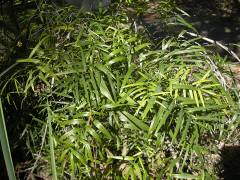
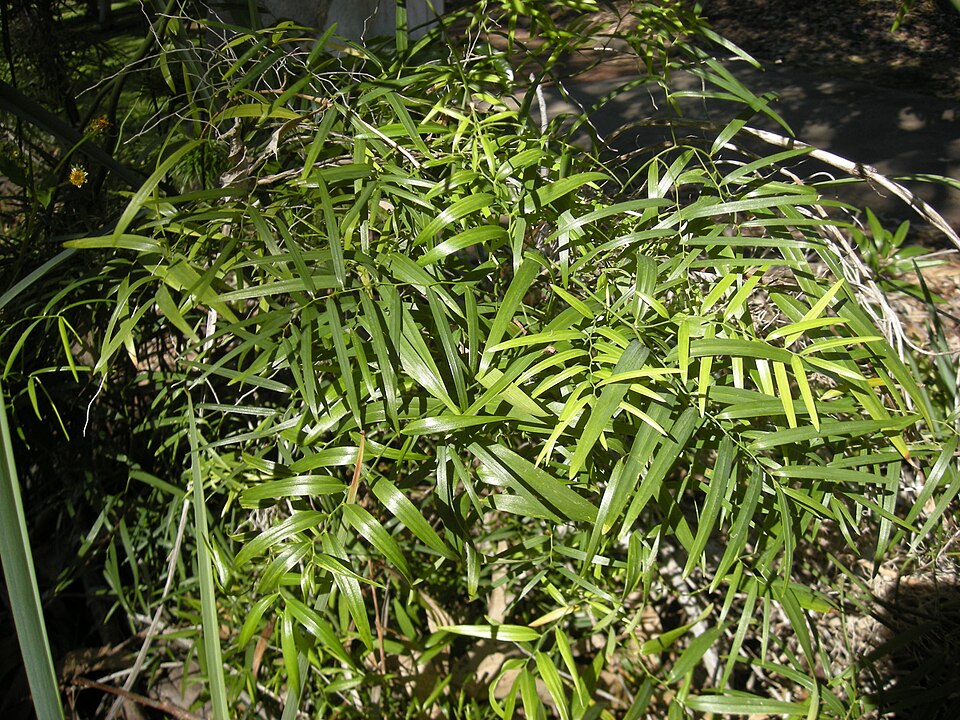
Eustrephus is a monotypic genus in the family Asparagaceae, represented by the single species E. latifolius, a twining evergreen climber native to eastern Australia and the south-western Pacific. The wiry stems twist through surrounding vegetation to 6-15 feet (2-4.5 m), rising from fleshy tuberous roots. The alternate leaves are narrow to broadly lance-shaped, 1-4 inches (2.5-10 cm) long, with parallel veins and a glossy green surface. Small flowers, about 0.3-0.5 inch (8-12 mm) across, open in clusters along the stems from spring into summer; the three inner petals are pink to white and fringed with slender hairs, while the three outer segments are smooth. Round orange berries follow, 0.4-0.6 inch (10-15 mm) wide, splitting open when ripe to expose shiny black seeds against the orange wall. The tuberous roots and ripe fruit are edible and were a food source for Aboriginal peoples. The plant grows in open forest, woodland, and rainforest margins on a range of soils, twining over shrubs and fences. It needs a frost-free or near-frost-free climate and support to climb, sprawling along the ground where no support is available.
Native Range
Eustrephus latifolius is native to eastern Australia, from Victoria to Queensland, and extends through New Guinea, New Caledonia, and other south-western Pacific islands, growing in forest, woodland, and rainforest margins.Suggested Uses
Grown on trellises, fences, and screens in frost-free gardens, and allowed to scramble through shrubs in informal and bush-garden settings. The orange split fruit and tuberous edible roots add interest in bush-food plantings. In containers it is trained on a support or left to trail.How to Identify
Appearance
Size & Dimensions
Height6' - 15'
Width/Spread3' - 6'
Bloom Information
Flowering occurs from spring into summer, mainly September to January in the native range, with small fringed flowers in clusters along the stems. The display is scattered rather than massed. Orange berries follow and persist for some weeks, splitting open to show black seeds.
Detailed Descriptions
Flower Description
pink to whiteFoliage Description
glossy greenGrowing Conditions
Sun Requirements
Requires 4-8 hours of direct sunlight daily
• Full Sun: 6+ hours of direct sunlight
• Partial Shade: 3-6 hours of direct sunlight
• Full Shade: Less than 3 hours of direct sunlight
Care & Maintenance
Care Guide
Grow in part shade to full sun in free-draining soil with added organic matter, providing a trellis, fence, or shrub for the stems to twine through. Soil pH from about 5.5 to 7.0 suits the species across its range. Water through dry spells, especially while establishing, though the tuberous roots give some drought tolerance once mature. The plant is frost-sensitive and grows outdoors year-round only in subtropical and tropical zones 9 to 11. In cooler areas it can be grown under glass or as a container climber. Growth is twining and moderate, not aggressively smothering.Pruning
Prune in late winter or after fruiting to shorten overlong stems and keep the climber within bounds. Tangled or dead growth is thinned out to maintain airflow. The plant resprouts from the tuberous roots if cut back hard.Pruning Schedule
Prune: July–August
winter
Container Growing
Suitable for container growing
Minimum container size: 5 gallons