Euryomyrtus, Genus, spp., Multiple species,
- Genus
- Multiple species
rosy heath-myrtle
Southern Australia (including Tasmania)
Overview
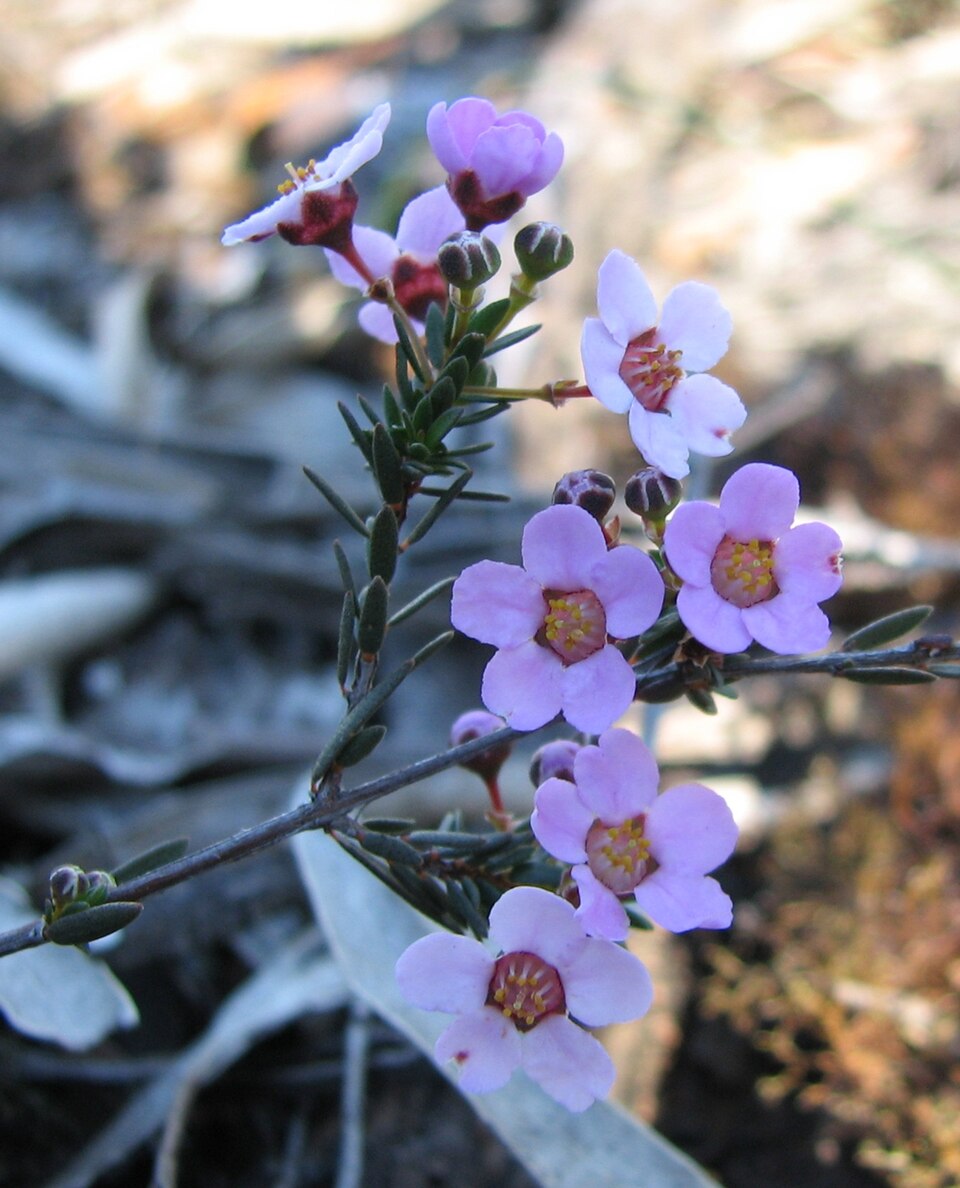
Euryomyrtus is a genus of about four or five species of small evergreen shrubs in the myrtle family, Myrtaceae, native to southern Australia, including Tasmania. The plants were formerly placed in Baeckea and are low, wiry, and much-branched, ranging from prostrate mats to upright shrubs 6 inches to 3 feet (15-90 cm) tall and spreading 1-5 feet (0.3-1.5 m) wide. The tiny leaves are 0.1-0.3 inch (2-8 mm) long, narrow, and crowded along the stems, aromatic when crushed, and dotted with oil glands typical of the family. Small five-petalled flowers, about 0.2-0.4 inch (5-10 mm) across, open white to deep rose-pink along the stems, mainly in spring and summer with scattered bloom at other times. Dry woody capsules follow and shed small seed. E. ramosissima is the species most often grown and forms a spreading, heath-like bush used as a low ornamental. Plants grow on sandy, peaty, and rocky soils in heathland and along watercourses, and they need sharp drainage and an acidic soil, growing poorly where soils are limy or waterlogged for long periods.
Native Range
Euryomyrtus is native to southern Australia, ranging across South Australia, Victoria, New South Wales, Tasmania, and south-western Western Australia, in heathland, rocky sites, and along watercourses.Suggested Uses
Grown in rock gardens, native and coastal plantings, and low borders, and as a container plant in well-drained mixes. The spreading forms are used as low ground cover on sandy banks. Aromatic foliage and pink flowers suit informal and naturalistic settings.How to Identify
Appearance
Size & Dimensions
Height6" - 3'
Width/Spread1' - 5'
Colors
Bloom Information
Flowering is heaviest in spring and summer, roughly September to February in the native range, with scattered flowers appearing at other times of year. The small five-petalled flowers range from white to deep rose-pink and line the wiry stems. Bees and other insects pollinate them.
Detailed Descriptions
Flower Description
white to rose-pinkFoliage Description
green to grey-greenGrowing Conditions
Sun Requirements
Requires 5-10 hours of direct sunlight daily
• Full Sun: 6+ hours of direct sunlight
• Partial Shade: 3-6 hours of direct sunlight
• Full Shade: Less than 3 hours of direct sunlight
Care & Maintenance
Care Guide
Grow in full sun to light shade in sandy, peaty, or gritty soil with sharp drainage. Hold an acidic to neutral soil pH from about 5.0 to 6.5; limy soils cause chlorosis. The genus tolerates short dry spells once established but also grows along seasonal watercourses, so it accepts more moisture than many dryland shrubs provided drainage is free. Light frost is tolerated, but hard freezes damage the more tender species, limiting reliable outdoor culture to zones 8 to 10. A gritty mulch keeps the shallow roots cool. Heavy, waterlogged soils cause root rot.Pruning
Light tip-pruning after the main flush keeps the bush dense and compact. Older straggly stems are cut back into younger growth to renew the plant. Hard cutting into bare old wood is slow to reshoot.Pruning Schedule
Prune: February–March
summer
Container Growing
Suitable for container growing
Minimum container size: 2 gallons
