Euroschinus, Genus, spp., Multiple species,
- Genus
- Multiple species
ribbonwood
Eastern Australia, New Guinea, New Caledonia, south-western Pacific islands
Overview
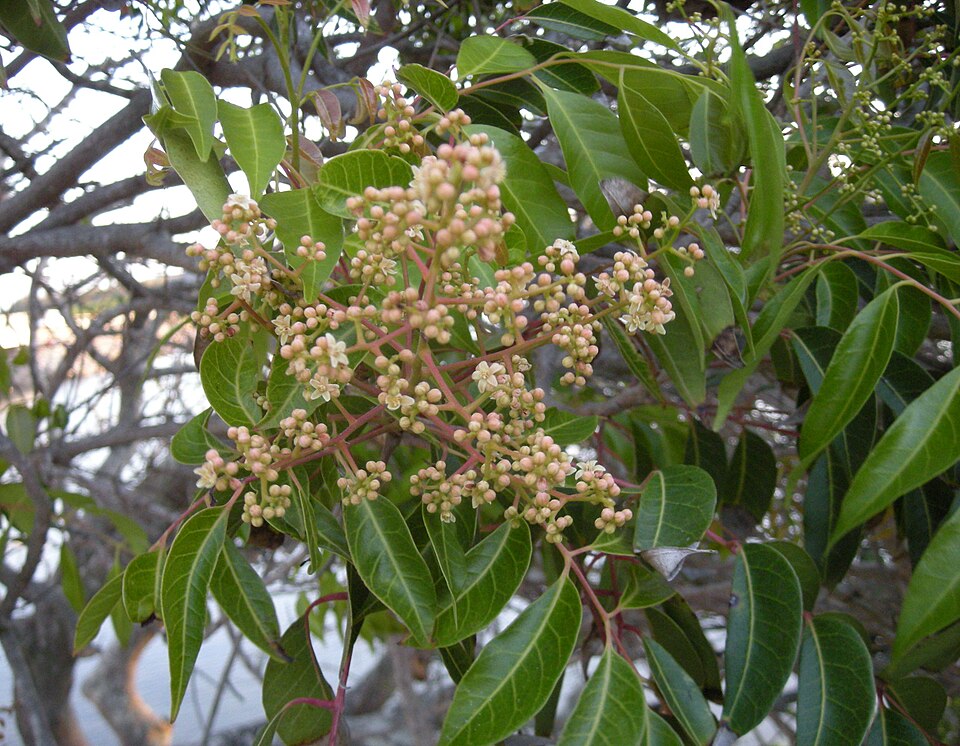
Euroschinus is a genus of about eight to ten species of evergreen trees in the cashew family, Anacardiaceae, native to eastern Australia, New Caledonia, New Guinea, and nearby islands. E. falcatus, a rainforest and forest-margin tree, reaches 30-100 feet (9-30 m) tall with a spreading crown and a straight trunk. Leaves are alternate and pinnately compound, with several pairs of glossy leaflets that are often curved or sickle-shaped, giving some species their common names. Small cream to greenish flowers are borne in branched panicles at the branch tips, the sexes usually on separate trees. Fleshy single-seeded drupes follow, ripening from red to purple-black and eaten by fruit-eating birds. The wood is pale, lightweight, and has been cut for general timber. Plants grow in warm, frost-free climates and need shelter when young, establishing into wind-firm trees with age. The genus does not tolerate hard frost or prolonged drought. Crushed foliage of some species is aromatic, reflecting the resinous chemistry common to the cashew family.
Native Range
Euroschinus is native to eastern Australia, from New South Wales to Queensland, and extends through New Guinea, New Caledonia, and neighbouring islands of the south-western Pacific.Suggested Uses
Grown as a shade and street tree in frost-free parks and large gardens, and used in rainforest restoration within its native range. The timber of E. falcatus is cut for light construction and joinery. Fruit-bearing female trees draw native birds.How to Identify
Appearance
Size & Dimensions
Height30' - 100'
Width/Spread15' - 40'
Bloom Information
Flowering occurs mainly in spring and early summer, from September to December in the native range, with panicles of small flowers at the branch tips. Male and female flowers are usually carried on separate trees, so fruit forms only on female plants near a pollen source. Insects pollinate the flowers.
Detailed Descriptions
Flower Description
cream to greenishFoliage Description
glossy greenGrowing Conditions
Sun Requirements
Requires 5-10 hours of direct sunlight daily
• Full Sun: 6+ hours of direct sunlight
• Partial Shade: 3-6 hours of direct sunlight
• Full Shade: Less than 3 hours of direct sunlight
Care & Maintenance
Care Guide
Grow in full sun to part shade in deep, free-draining soil in a warm, frost-free climate. Shelter young trees from strong wind and water through dry spells until they are established, after which they withstand short dry periods. Soil pH from about 5.5 to 7.0 suits the genus. Hard frost damages or kills young growth, limiting outdoor culture to subtropical and tropical zones 10 to 11. Both male and female trees are needed for fruit set. The species grow steadily and develop a broad crown that needs space at maturity.Pruning
Prune to shape and to remove dead, damaged, or crossing branches in late winter before new growth. Lower limbs of E. falcatus are raised to form a clear trunk where a shade tree is wanted. Sap of the cashew family can irritate skin on contact.Pruning Schedule
Prune: July–August
winter