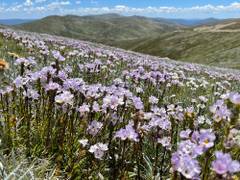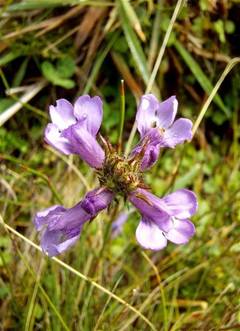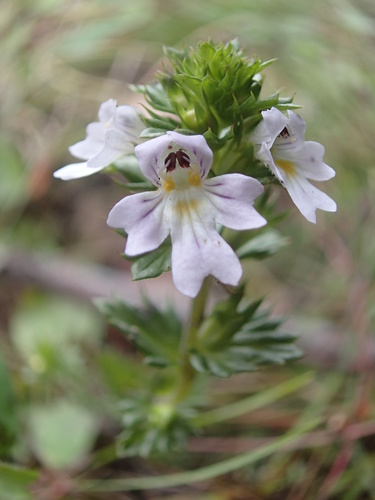
Euphrasia, Genus, nemorosa, Species,
- Genus & species
common eyebright
Overview
Euphrasia nemorosa is a small annual hemiparasite in the broomrape family, growing 5-35 cm (2-14 in) tall on slender, branching, often purplish stems. The small, oval leaves are 5-15 mm (0.2-0.6 in) long with sharp teeth and a stalkless base, set in opposite pairs. From summer it bears two-lipped flowers 5-8 mm (0.2-0.32 in) long, white to pale lilac with purple veins and a yellow spot on the lower lip, clustered toward the stem tips. Like other eyebrights it draws part of its water and nutrients from the roots of nearby grasses through underground connections while still photosynthesising. It grows in short grassland, heath, dunes, and grazed pasture on a range of soils. The species depends on host grasses and open, low-competition turf, so it fails in tall, dense vegetation or cultivated beds. Its tiny flowers and slight frame give little visual weight on their own.
Native Range
Euphrasia nemorosa is native to Europe, from Britain and Scandinavia through central and western regions. It grows in grassland, heath, and coastal turf across its range. It has been recorded as introduced in parts of North America.Suggested Uses
Euphrasia nemorosa occurs in species-rich meadows, conservation grassland, and restored chalk or heath turf, where it forms part of low, grazed plant communities. It is established through seed in suitable grassland rather than planted out. It has a long folk history of use in eye remedies, now largely discontinued.How to Identify
Appearance
Size & Dimensions
Height2" - 1'2"
Width/Spread2" - 6"
Bloom Information
Detailed Descriptions
Flower Description
white to lilac with yellow throatFoliage Description
green, often purple-tingedGrowing Conditions
Sun Requirements
Requires 6-12 hours of direct sunlight daily
• Full Sun: 6+ hours of direct sunlight
• Partial Shade: 3-6 hours of direct sunlight
• Full Shade: Less than 3 hours of direct sunlight
Water & Climate
Water Needs