Escobaria, Genus, spp., Multiple species,
- Genus
- Multiple species
escobaria
North America (southwestern and central United States, northern Mexico, southern Canada)
Overview
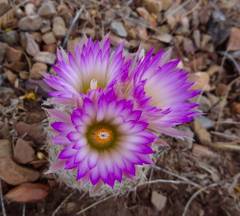
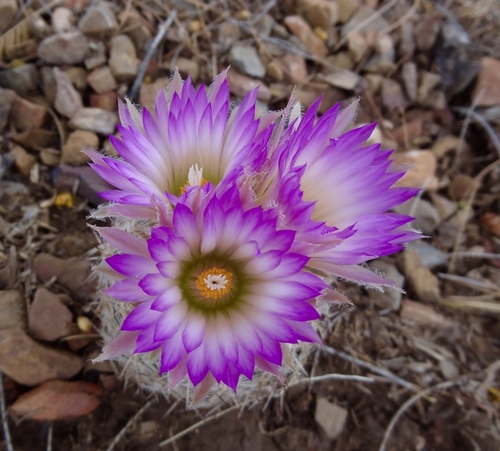
Escobaria is a genus of small cacti in the family Cactaceae, comprising roughly 20 species distributed across North America from northern Mexico through the southwestern and central United States, with E. vivipara extending into southern Canada. Stems are globose to short-cylindric, 1-8 inches (2.5-20 cm) tall and 2-12 inches (5-30 cm) across, growing solitary in some species and forming dense clusters in others. The stem surface is divided into spirally arranged tubercles, each grooved on the upper side, a feature separating Escobaria from the closely related Mammillaria. Radial and central spines arise from areoles at the tubercle tips, ranging from white and comb-like to brown or black. Funnel-shaped flowers, 0.5-2 inches (1-5 cm) wide, open near the stem apex in shades of pink, magenta, yellow, white, and cream, followed by green to red fleshy fruits. Across the genus cold tolerance varies widely: E. vivipara withstands temperatures below 0F (-18C), while species from lower Mexican latitudes are frost-tender. Plants grow slowly and are prone to root rot in poorly drained substrates that hold prolonged moisture. Most species occupy limestone or granitic soils in grassland, desert scrub, and rocky slopes, where summer rainfall is low and drainage is rapid.
Native Range
Escobaria ranges across North America, from the grasslands and deserts of the south-central and southwestern United States south into northern and central Mexico, with E. vivipara reaching the prairies of southern Canada.Suggested Uses
Grown in rock gardens, raised gravel beds, and trough plantings where drainage is rapid, and as container plants in regions with wet winters. Cold-hardy species are used in unheated alpine houses and outdoor crevice gardens. Small stature suits windowsill and greenhouse collections.How to Identify
Appearance
Size & Dimensions
Height1" - 8"
Width/Spread2" - 1'
Colors
Bloom Information
Flowering occurs from late spring into summer, chiefly May to July, with timing shifting later at higher elevations. Individual flowers last one to three days, opening in sunlight and closing at night, while a cluster produces successive blooms over several weeks. Flower colour spans pink, magenta, yellow, white, and cream across the genus.
Detailed Descriptions
Flower Description
pink, magenta, yellow, white, or creamFoliage Description
green to grey-green stemsGrowing Conditions
Sun Requirements
Requires 6-12 hours of direct sunlight daily
• Full Sun: 6+ hours of direct sunlight
• Partial Shade: 3-6 hours of direct sunlight
• Full Shade: Less than 3 hours of direct sunlight
Water & Climate
Water Needs
Drought Tolerance
Drought tolerant when established
Care & Maintenance
Care Guide
Grow in full sun in a gritty, sharply drained mineral soil such as a cactus mix amended with pumice or coarse sand. Water sparingly during the spring-to-autumn growing period, allowing the substrate to dry fully between waterings, and withhold water in winter when plants are dormant. Soil pH from about 6.0 to 8.0 suits the genus, matching the limestone and granitic substrates of its native range. Cold-hardy species such as E. vivipara tolerate hard frost when kept dry, whereas Mexican species need protection below 40F (4C). Root rot follows prolonged wet conditions, so drainage matters more than soil richness. Container culture in unglazed clay pots assists moisture control in humid climates.Pruning
No routine pruning is required. Offsets can be separated from clustering species in spring to limit spread or to propagate, with cut surfaces left to callus for several days before replanting. Dead or shrivelled stems are removed at the base to reduce fungal entry points.Container Growing
Suitable for container growing
Minimum container size: 1 gallons