Eruca, Genus, sativa, Species,
- Genus & species
Arugula
Mediterranean, from Morocco to Turkey
Overview
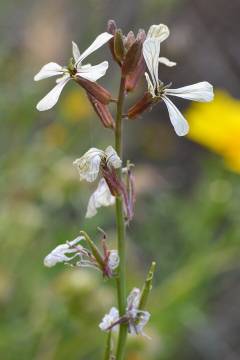
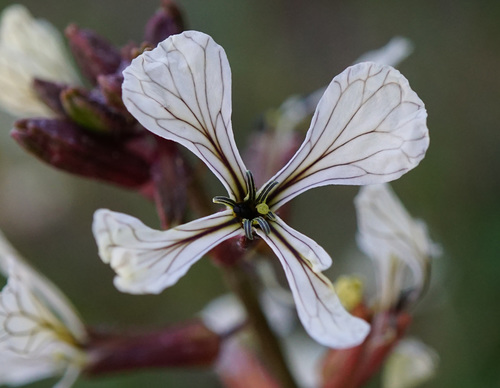
Eruca sativa is a fast-growing, cool-season annual in the mustard family (Brassicaceae) reaching 8–24 inches (20–60 cm) tall with a 6–12 inch (15–30 cm) spread. Leaves are pinnately lobed with a large, rounded terminal lobe, dark green, 3–8 inches (8–20 cm) long, with a peppery, nutty, mustard-like flavor that intensifies with heat stress and maturity. Basal rosette leaves are the mildest; stem leaves become progressively more pungent. Flowers are four-petaled (typical Brassicaceae cruciform), cream to white with conspicuous purple veining, 0.8–1 inch (20–25 mm) across. Fruit is a silique (elongated pod) 0.6–1 inch (15–25 mm) long. Baby leaves are harvest-ready in 21 days; full-size leaves in 35–40 days. Bolts rapidly in heat above 75°F (24°C) and day length above 14 hours. The peppery flavor compounds are glucosinolates (erucin, erysolin), the same class of compounds responsible for the pungency of mustard, horseradish, and wasabi. In the Pacific Northwest, the cool, maritime climate extends the mild-leaf harvest window compared to warmer regions.
Native Range
Native to the Mediterranean region from Morocco to Turkey, cultivated since Roman times as a salad green and medicinal herb. Widely naturalized in disturbed sites in warm-temperate regions. In the Pacific Northwest, grows year-round in mild areas with winter protection.Suggested Uses
Planted in salad gardens, vegetable gardens, containers (1+ gallon), windowsill plantings, and market gardens. The primary peppery salad green; eaten raw in mixed salads, on pizza, in sandwiches, or as a wilted green. Flowers are edible garnishes. The rapid maturity (21 days baby leaf) makes arugula a standard succession-sowing crop. Included in soil-building rotations as a quick Brassicaceae crop between cover crop plantings.How to Identify
Appearance
Size & Dimensions
Height8" - 2'
Width/Spread6" - 1'
Bloom Information
Bolts rapidly in heat above 75°F (24°C) or when day length exceeds 14 hours. Flowers are cream with purple veins, in terminal racemes. Flowers are edible with the same peppery flavor as the leaves. Once bolting begins, leaf flavor becomes intensely pungent. In the Pacific Northwest, spring-sown arugula bolts in June; fall-sown crops produce mild leaves through October–November.
Detailed Descriptions
Flower Description
Cream to white with purple veiningFoliage Description
Dark green, pinnately lobed with a large rounded terminal lobe; peppery aroma when crushedGrowing Conditions
Sun Requirements
Requires 3-8 hours of direct sunlight daily
• Full Sun: 6+ hours of direct sunlight
• Partial Shade: 3-6 hours of direct sunlight
• Full Shade: Less than 3 hours of direct sunlight
Care & Maintenance
Care Guide
Direct sow seeds 0.25 inch (6 mm) deep, 3–4 weeks before the last frost, spacing 6 inches (15 cm) apart. Successive sowings every 2 weeks extend the harvest through spring. In the Pacific Northwest, pause sowings in June–July (bolting period) and resume in August for fall harvest. Partial shade extends the mild-leaf window in warm weather. Harvest as baby leaves at 21 days (cut-and-come-again at 1 inch / 2.5 cm above the crown) or as full rosettes at 35–40 days. Consistent moisture reduces pungency. Flea beetles are the primary pest; floating row cover prevents damage. Container culture in 1+ gallon pots is feasible for windowsills and balconies.Pruning
Harvest as cut-and-come-again at 1 inch (2.5 cm) above the crown for 2–3 successive harvests. Remove bolting stems to extend leaf production, though flavor intensifies once bolting begins. Flower buds and open flowers are edible.Container Growing
Suitable for container growing
Minimum container size: 1 gallons
Toxicity
Non-toxicPlanting Guide
Planting Methods & Timing
Planting Method
direct sow
Direct Sow Timing
Early spring (3-4 weeks before last frost); successive sowings every 2 weeks through spring; resume in late summer for fall harvest
Days to Maturity
21–40 days
Plant Spacing
6 inches
Companion Planting
Good Companions
Avoid Planting With