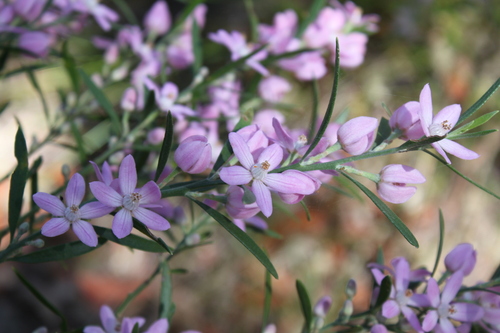
Eriostemon, Genus, australasius, Species,
- Genus & species
pink wax flower
Overview
Eriostemon australasius is an evergreen shrub in the Rutaceae reaching 3-6 feet (0.9-1.8 m) tall and 2-4 feet (0.6-1.2 m) wide, with an erect, open, sparsely branched habit. Leaves are narrow and leathery, 1-2.5 inches (2.5-6 cm) long, grey-green, and dotted with oil glands that are aromatic when crushed. Five-petalled star-shaped flowers about 1-1.2 inches (2.5-3 cm) across open along the stems in shades of pink, each petal thick and waxy in texture. Buds are deep pink and open over a long season. Small segmented capsules follow and split to release seed. Growth is slow to moderate. The species grows in nutrient-poor sandstone soils and is sensitive to phosphorus, root disturbance, and poor drainage, which makes it slow to establish in gardens. It is found in heath and dry open woodland. Open branching gives the shrub a sparse outline.
Native Range
Native to eastern Australia, along the coast and ranges of New South Wales and into south-eastern Queensland. Grows in heath and dry sclerophyll woodland on low-nutrient sandstone soils, often on ridges and exposed slopes.Suggested Uses
Planted in native, sandstone, and low-water gardens on sharply drained acidic soils, spaced 24-36 inches (60-90 cm) apart. Used in heath-style and habitat plantings where phosphorus levels are low. The waxy flowers are cut for small posies.How to Identify
Appearance
Size & Dimensions
Height3' - 6'
Width/Spread2' - 4'
Colors
Bloom Information
Flowers over a long season from late winter through spring, roughly August to November, with deep pink buds opening to waxy pink flowers. The main display lasts 8-12 weeks, and scattered flowers can appear at other times. Flowering is reduced in shade.
Detailed Descriptions
Foliage Description
Grey-greenGrowing Conditions
Sun Requirements
Requires 5-9 hours of direct sunlight daily
• Full Sun: 6+ hours of direct sunlight
• Partial Shade: 3-6 hours of direct sunlight
• Full Shade: Less than 3 hours of direct sunlight
Care & Maintenance
Care Guide
Grows in full sun to light shade in sandy, sharply drained, low-nutrient soil. Water to establish in the first year, then little irrigation is needed; established plants tolerate dry periods. Phosphorus-rich fertilisers and rich soils damage the roots of this Rutaceae. Wet, poorly drained soil causes root rot. The species recovers poorly from root disturbance and is slow and unreliable to transplant. Light tip-pruning after flowering keeps plants bushier, as they tend to become open with age.Pruning
Tip-prune lightly after flowering to slow the open, sparse growth and keep the plant compact. The species reshoots weakly from old leafless wood, so cutting into bare stems can kill branches. Removing spent flowers tidies the plant but is not needed for its health.Pruning Schedule
Prune: November–December
late springsummer
Container Growing
Suitable for container growing
Minimum container size: 5 gallons